
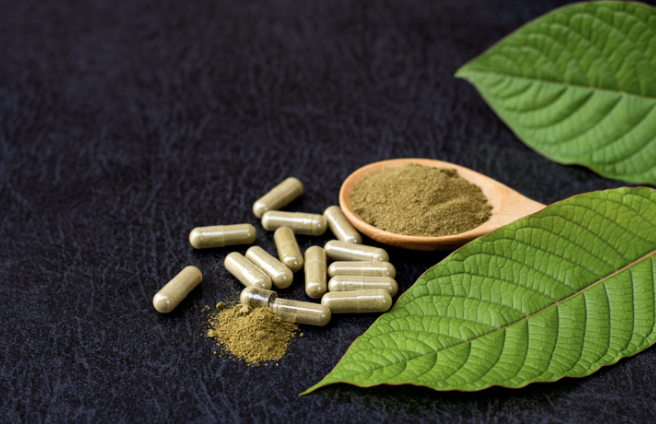
The recent push by state and federal authorities to restrict or ban kratom, including certain derivatives of the plant, highlights a contentious debate over individual health autonomy, public safety and the proper role of government in personal medical decisions. Kratom (Mitragyna speciosa) is not scheduled under the federal Controlled Substances Act and remains legal at the federal level, though it is considered an unapproved substance and is not recognized as safe or effective for medical use (FDA).
Despite this federal legality, access to kratom has been sharply curtailed by a growing patchwork of state and local laws. As of 2025, several states have enacted full bans on the possession or sale of kratom, including Alabama, Arkansas, Indiana, Louisiana, Vermont and Wisconsin (Legislative Analysis and Public Policy Association). In other jurisdictions, local governments have adopted partial bans or strict enforcement regimes. California has seen municipal-level restrictions, while Ohio has increased scrutiny of kratom products through enforcement actions and proposed regulatory changes (Stateline).
At the federal level, regulators have increasingly focused on concentrated kratom derivatives, especially products containing high levels of 7-hydroxymitragynine, often called 7-OH. In July 2025, the FDA issued public warnings and enforcement actions against manufacturers of 7-OH products, citing opioid-like potency and heightened risks of abuse and respiratory depression. While the agency has stated that these actions are distinct from natural kratom leaf, many consumers remain concerned that regulatory distinctions between leaf products and derivatives may erode over time.
From a limited-government perspective, this regulatory trajectory conflicts with long-standing commitments to personal responsibility and free markets. These principles rest on the belief that adults should be trusted to evaluate risks and benefits for themselves, particularly when their choices may reduce reliance on heavily regulated pharmaceuticals or illicit substances.
Kratom is not a novel synthetic compound. It is a plant native to Southeast Asia with a documented history of traditional use for managing pain, fatigue and physical strain. Its primary alkaloids, including mitragynine, interact with opioid receptors, but research indicates that these compounds produce less respiratory depression than many prescription opioids. For many Americans, kratom use begins only after conventional treatments prove ineffective, unaffordable or intolerable.
Although precise usage figures are difficult to verify, multiple surveys and policy analyses estimate that millions of Americans use kratom. Advocacy groups and policy researchers have frequently cited figures in the range of 10 to 15 million users nationwide, though academic studies note the need for more comprehensive population data (Stateline; American Kratom Association).
These users are not abstract statistics. They include workers managing chronic pain, veterans coping with post-traumatic stress, caregivers attempting to remain employed despite physical limitations and individuals in recovery who report using kratom to avoid relapse into opioid use. For many, kratom represents an attempt at self-reliance within a healthcare system that often offers limited or costly options.
Much of the momentum behind kratom restrictions stems from safety concerns. The FDA has cited risks associated with kratom use, including liver toxicity, seizures, dependence and rare deaths. Importantly, many reported adverse events involve polysubstance use, adulterated products, or highly concentrated extracts rather than traditional kratom leaf. Concentrated 7-OH products, which are significantly more potent than leaf-based preparations, have been the primary focus of recent enforcement actions (FDA; Brooks Healing Center).
Deaths attributed solely to unadulterated kratom leaf appear uncommon in available surveillance data and are frequently complicated by additional substances or underlying health conditions. The FDA has acknowledged that adverse event reports do not establish causation and often involve multiple contributing factors.
History offers a familiar cautionary lesson. Restricting substances through outright bans has repeatedly failed to eliminate demand and has instead driven use into unregulated markets where quality control disappears and risks increase. Past drug prohibitions have often produced more dangerous outcomes rather than improved public health.
The human consequences of kratom bans are often overlooked. A prohibition does not eliminate chronic pain or psychological distress. It removes a coping mechanism. For a working-class individual who relies on kratom to remain functional, a ban may lead to lost income, increased family stress or renewed dependence on prescription opioids with well-documented addiction risks. Veterans and others who have deliberately avoided heavy pharmaceuticals may find themselves with fewer options and worsening symptoms.
There is also a notable inconsistency in how risk is evaluated. Alcohol and tobacco, which are responsible for far greater levels of illness and death each year, remain legal under regulatory frameworks. Prescription opioids, aggressively marketed for decades, fueled a national epidemic. Meanwhile, a natural plant with a long history of traditional use and comparatively limited evidence of widespread harm faces escalating prohibitions. This disparity raises reasonable questions about how policy priorities are set and whether economic interests threatened by low-cost alternatives influence regulatory decisions.
Some states have adopted a more measured approach through Kratom Consumer Protection Acts. These laws typically establish age restrictions, mandate accurate labeling, require testing for contaminants, and prohibit adulterated or synthetic products without eliminating adult access. As of 2025, more than 20 states have enacted some version of a Kratom Consumer Protection Act, offering a regulatory model that addresses safety concerns while preserving individual choice.
Ultimately, the effort to restrict kratom reflects a paternalistic assumption that the public must be shielded from its own decisions, even when evidence of widespread harm from responsible adult use remains limited. Education, transparency and targeted regulation offer a more balanced response than blanket bans that penalize responsible users.
Banning or severely restricting kratom does not meaningfully enhance freedom or safety. Instead, it risks diminishing both at the expense of ordinary Americans seeking relief in a healthcare system that too often fails to provide it.
SOURCES
American Kratom Association. Kratom Legality by State. American Kratom Association, 2026. www.americankratom.org/aka-in-your-state
Brooks Healing Center. 7-OH Ban by State: Kratom and 7-Hydroxymitragynine Legal Status (2025–2026). Brooks Healing Center, 2026. brookshealingcenter.com/blog/7-oh-ban-by-state-2026
Food and Drug Administration. FDA and Kratom. U.S. Food and Drug Administration, 2 Dec. 2025. www.fda.gov/news-events/public-health-focus/fda-and-kratom
Food and Drug Administration. FDA Takes Steps to Restrict 7-OH Opioid Products Threatening American Consumers. U.S. Food and Drug Administration, 29 July 2025. www.fda.gov/news-events/press-announcements/fda-takes-steps-restrict-7-oh-opioid-products-threatening-american-consumers
Food and Drug Administration. Kratom-Related Adverse Event Reports from the FDA CFSAN Adverse Event Reporting System. U.S. Food and Drug Administration. www.fda.gov/science-research/fda-science-forum/kratom-related-adverse-event-reports-fda-cfsan-adverse-event-reporting-system-caers
Legislative Analysis and Public Policy Association. Kratom: Summary of State Laws. LAPPA, 2025. legislativeanalysis.org/wp-content/uploads/2025/07/Kratom-Summary-of-State-Laws.pdf
Stateline. Kratom Faces Increasing Scrutiny from States and the Feds. Stateline, 11 Aug. 2025. stateline.org/2025/08/11/kratom-faces-increasing-scrutiny-from-states-and-the-feds
