

Are wars ever justifiable? Morally? Legally? Philosophically? Any ally’s analysis might seem pointless when applied to something as atrocious as war. In international relations, “Just War Theory” offers a framework for conducting war legally.
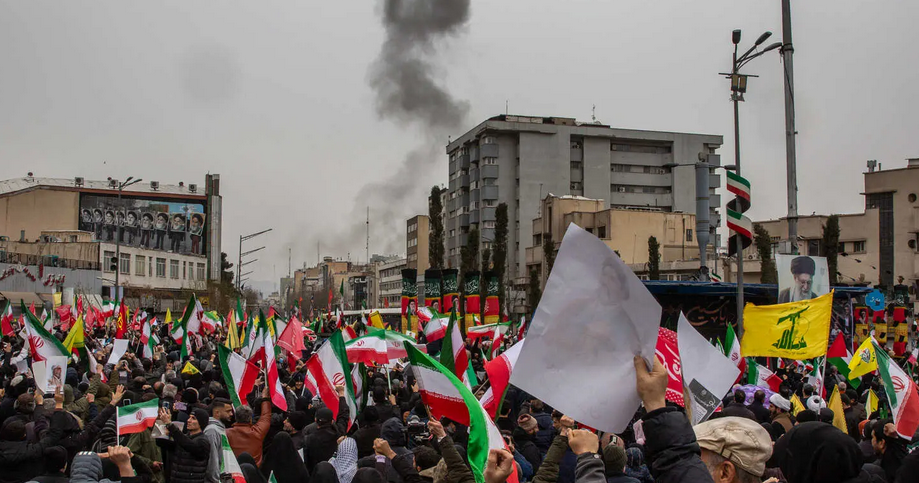
On Feb. 28, 2026, the U.S. and Israel attacked Iran. The attack resulted in the murder of the state’s Supreme Leader, Ayatollah Ali Khamenei. Since then, there has been controversy regarding the legality of the operation, especially in light of similar operations in Venezuela, which were largely criticized by the international community.
The United Nations (UN) seems to have made up its mind on the subject. In a recent statement, the international organization condemned the operation, citing it as an “unprovoked attack” that lacked “authorisation from the Security Council.”
Under the UN’s charter, an aggressive attack such as the one in Iran would, at the very least, require clearance from the UN Security Council. The issue then starts with how the attack was initiated. Not necessarily because of its aggressive nature, as even the most pacifist bodies like the UN have largely discarded the argument that wars or military attacks for dispute resolution are never necessary. But, instead, in how the norms in international law were not properly followed.
An ethical framework that underlines these regulations is the “Just War Theory,” a set of guidelines aimed at creating “Just” wars to the best extent possible.
What is the “Just War Theory”
The “Just War Theory” theory splits into three parts: Jus ad Bellum, which looks at the decision of resorting to war; Jus in Bello, which describes the rules that govern just and fair conduct in war; and Jus post Bellum, which looks at the responsibility and accountability of parties after war.
The first stage, Jus ad Bellum, contains several components to determine whether a state has correctly decided to resort to war. These are “having a just case, being a last resort, being declared by a proper authority, possessing right intention, having a reasonable chance of success, and the end being proportional to the means used.”
The second stage, Jus in Bello, considers the two broad principles of discrimination and proportionality. The two principles determine whether the targets for war were legitimate and whether the amount of force used was appropriate given the war’s objective.
The third stage, Jus post Bellum, acknowledges the need for creating a system of accountability and responsibility for the termination of war and its subsequent transition to peace.
The framework holds great credibility in both academic and practical fields. Academically, it is a well-established field dating back to the 4th century, with the Christian Theologian St. Augustine of Hippo. In practice, it overlaps greatly with the UN Charter, particularly Chapter VII, which outlines the appropriate responses to “Threats to the Peace, Breaches of the Peace, and Acts of Aggression.” The chapter, similarly to the “Just War” framework, encourages the use of diplomacy rather than aggression in the face of a disagreement. It also recognizes the possibility of relying on military attacks as a last resort in cases that threaten or disturb peace.
Applying the “Just War” Framework
Considering the conflict is ongoing, the first two stages are relevant to the analysis of the Iran attack.
It is easy to see what features of Jus ad Bellum could be problematic for the U.S. and Israel. Primarily, “having a just cause” is already controversial due to the lack of solid explanations that have been released as to the overall purpose of the attack.
In a recorded video, Trump claimed the attack addressed Tehran’s “unending campaign of bloodshed and mass murder targeting the United States,” which is an overly broad, far from satisfying, justification. The justification aims to be preemptive, in which a nation decides to strike first based on the knowledge that another nation will issue a strike, rather than preventive, where there is no immediate precipitating threat.
Whether or not the justification is valid, the abruptness of the attack speaks for itself.
In a recorded message, Israeli Prime Minister Benjamin Netanyahu offered a concrete, but not fully compliant, reason: “The aim of the operation is to put an end to the threat from the Ayatollah regime in Iran.” The provided reason is still not a “just” cause for instituting regime change, as it undermines the basic principle underlying the UN’s respect for national sovereignty.
The decision is not a last resort, especially given that the attack occurred amid diplomatic conversations between the U.S. and Iran, which others, such as Iranian Foreign Minister Abbas Araghchi, had interpreted as becoming productive.
The Jus in Bello analysis is slightly problematic. Although the U.S. and Israel complied with the first principle of attacking legitimate targets in a war, the second principle of proportionality remains ongoing, and the decision on its legality is therefore pending.
Whether the attack is a smart economic decision or will result in greater peace is still uncertain, but what is certain is the illegality of the approach behind it.
Acknowledgement: The opinions expressed in this article are those of the individual author, not necessarily Our National Conversation as a whole.
The image accompanying this article was taken by Arash Khamooshi of the New York Times.