

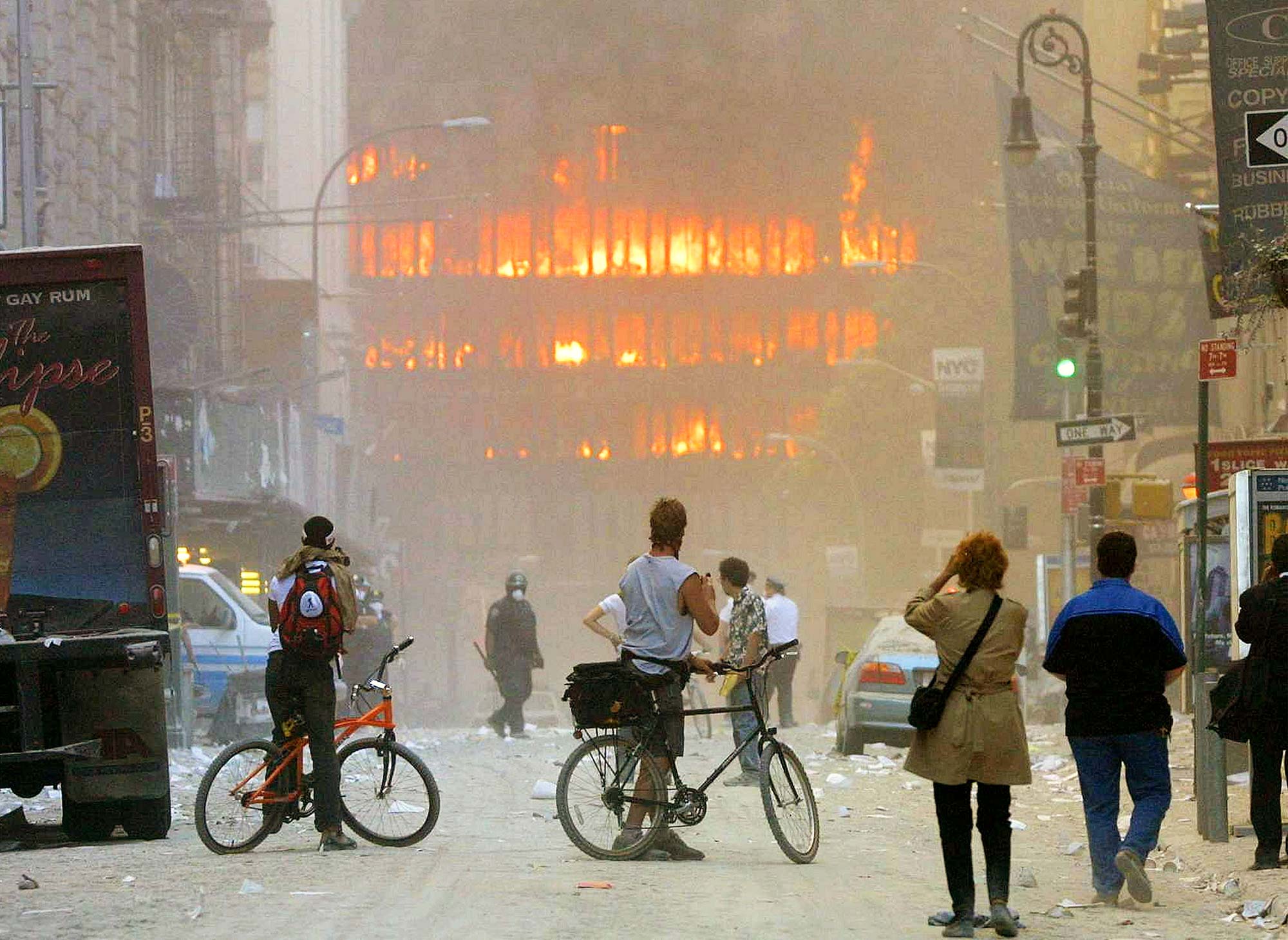
Twenty-five years after September 11, 2001, Americans face a different challenge: how do we ensure that a generation born after 9/11 understands the impact of what terrorism can do to a society?
For millions of young Americans, September 11 is something learned in history, rather than a personal memory. They did not watch the Twin Towers’ collapse on live television. They did not experience the fear that followed, did not witness in real time the firefighters, police officers, journalists, and ordinary citizens as they risked their lives to save strangers.
Forgetting the lessons of 9/11 would be a grave mistake.
The attacks, carried out by 19 al-Qaeda hijackers, killed 2,977 people. The victims of the attack were not only Americans, they also came from countries and communities across the world. They were parents, children, coworkers, travelers, and first responders whose lives were impacted because a terrorist organization decided that political and ideological objectives justified mass murder.
That is the first lesson the youth of America need to understand:
Terrorism is never justified by ideology.
America’s younger generations should also learn to distinguish between political activism and extremism. Americans have every right to criticize their government, oppose wars, protest foreign policy, and defend causes they believe in. Freedom of speech exists precisely to protect dialogue and disagreement.
The US should know that a group of people in Palestine annually celebrate the 9/11 anniversary.
But there must be a moral boundary.
Supporting the rights of Palestinian civilians, criticizing Israel, opposing U.S. military policy, or questioning the Iranian government does not automatically make someone a supporter of terrorism. At the same time, celebrating the mass murder of civilians, or glorifying organizations that deliberately target them, should not be dismissed as ordinary political expression.
That distinction is becoming increasingly important in the new age of social media.
Within seconds of going online, young people can encounter highly emotional videos and manipulated images containing selective historical narratives. Extremist organizations understand this environment; they can present violence as heroism, terrorists as revolutionaries, and victims as statistics.
This is why media literacy is an essential part of the fight against extremism.
Americans should thoroughly question what they see online: Who created this content? What facts are missing? Is the source credible? Is violence being justified simply because the victims belong to an opposing group?
America also has the responsibility to teach history honestly. The rise of al-Qaeda emerged from a complicated geopolitical environment, including the Soviet-Afghan war and the international networks that developed around it. That history should be studied carefully—not reduced to simplistic claims such as the United States “created” al-Qaeda or directly funded Osama bin Laden.
The lesson of 9/11 is not that Americans should fear Muslims, immigrants, or people from different countries. Terrorism has no ethnicity or religion, and extremism can emerge in many different ideological forms.
The lesson is that democratic societies must remain vigilant against anyone who believes violence against innocent people is an acceptable political tool.
The youth of America should question their leaders. They should protest. They should debate. They should demand accountability.
However, they should prioritize protecting something more fundamental: the value of human life.
Remembering 9/11 is not about living in fear. It is about refusing to become indifferent to terrorism.
Twenty-five years later, that may be the most important lesson that Americans can pass onto the next generation.
