

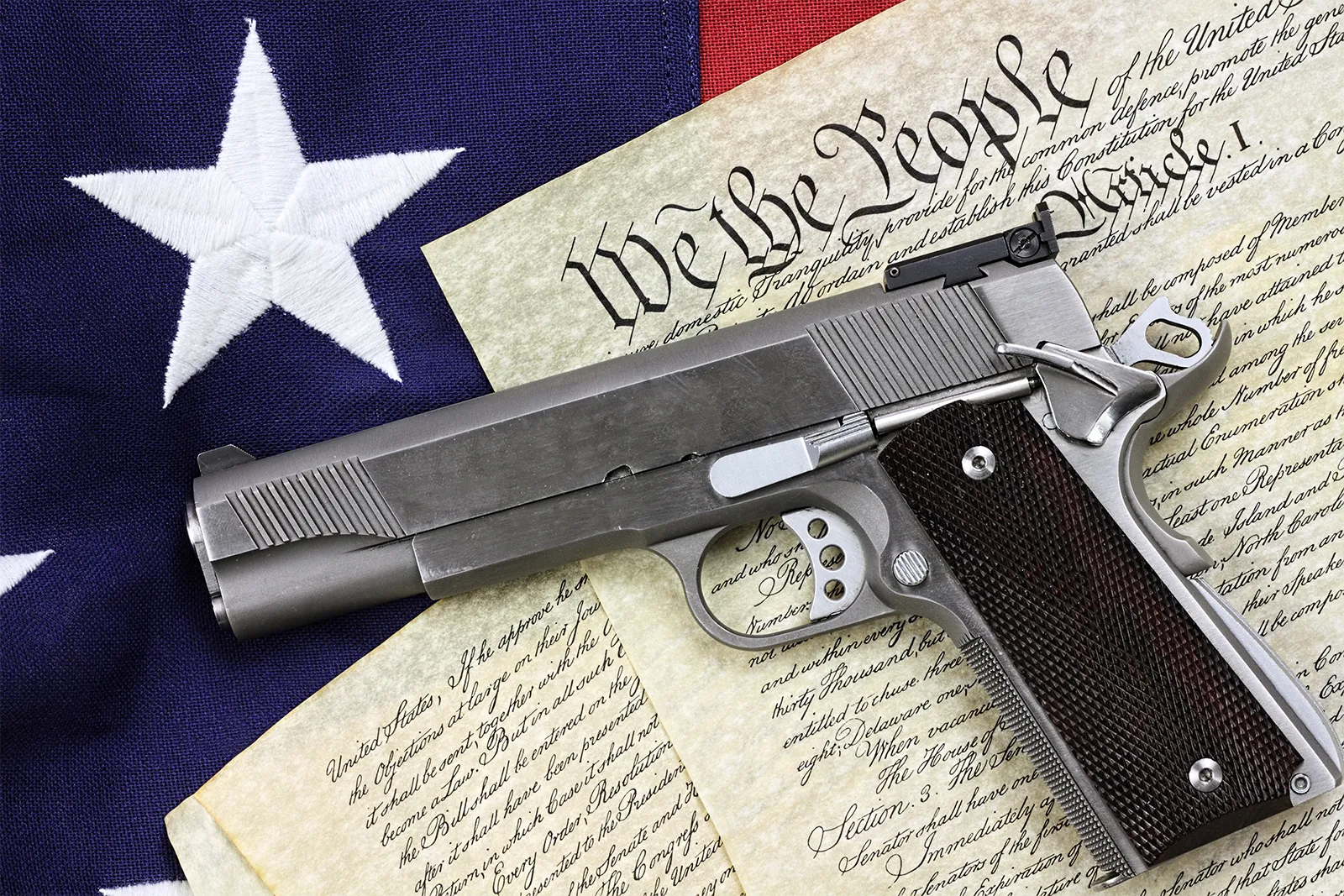
The debate over gun purchases in the United States is no longer simply a disagreement over the Second Amendment. It is a broader political and social conflict over individual freedoms, public safety, and the government’s responsibility to prevent avoidable deaths. While conservatives defend Americans’ right to own firearms for self-defense, gun-control advocates argue that stronger regulations are necessary to prevent shootings and protect communities.
The recent shooting at Silver Rail Elementary School in Bend, Oregon has brought these concerns into focus once again. Tragedies like these raise difficult questions about firearm access, responsible ownership, and whether existing safeguards are sufficient. However, one shooting alone cannot prove that a particular gun law has failed. Instead, lawmakers should examine the evidence before deciding whether regulations should be expanded or removed.
The Political Push to Expand Gun Access
The Trump administration has moved to roll back federal firearm regulations, arguing that certain restrictions place unnecessary burdens on law-abiding gun owners and firearm dealers. According to Axios, the administration’s efforts include changes to federal gun rules and oversight.
Supporters argue that Americans should not face unnecessary obstacles when exercising their constitutional rights. Critics warn that weakening oversight could make it more difficult to prevent firearms from reaching people who pose a danger to themselves or others.
Both arguments deserve consideration. However, the central question is whether reducing regulations can protect gun owners’ rights without compromising public safety. That question should be answered through evidence rather than political assumptions.
What the Numbers Reveal
According to Pew Research Center, 44,447 Americans died from firearm injuries in 2024, including 27,593 suicides and 15,364 homicides. These figures demonstrate that gun violence extends beyond mass shootings to include suicide and other firearm-related deaths.
More recent data presents a complicated picture. The Trace reported that 354 mass shootings occurred during the first nine months of 2026, compared with 327 during the same period in 2025. That represents an increase of approximately 8.3%. However, overall shooting deaths declined compared with recent years.
These figures do not establish that the administration’s regulatory changes caused the increase in mass shootings. Because the data covers January through September, including months before some changes took effect, more research is needed to determine whether the rollback has affected public safety.
Nevertheless, these trends deserve attention. If lawmakers believe reducing regulations will not increase risks, they should be willing to evaluate the results transparently.
How Does America Compare With Other Countries?
International comparisons offer additional perspective. According to Pew Research Center’s analysis of 2023 data, the United States had an age-adjusted firearm death rate of 13.2 per 100,000 people. Brazil’s rate was higher, at 17.4 per 100,000, demonstrating that firearm violence is influenced by factors beyond the number of guns alone.
New Zealand offers another example. Following the 2019 Christchurch mosque attacks, which killed 51 people, the government introduced major restrictions on certain firearms and established a buyback program.
Although New Zealand’s response provides a useful example of how a government can reconsider its gun laws after a tragedy, its policies cannot automatically be applied to the United States. The countries differ in their legal systems, firearm ownership and constitutional protections. International comparisons can inform the debate, but they cannot independently prove that a particular policy will produce the same results in America.
Balancing Constitutional Rights and Public Safety
The Second Amendment protects an important constitutional right, and responsible gun owners should not automatically be treated as threats. Firearms can serve legitimate purposes, including self-defense and protecting one’s family.
Recognizing that right, however, does not mean every regulation is unnecessary. Research reviewed by the RAND Corporation indicates that certain measures, including background checks, waiting periods, and safe-storage laws, can reduce specific types of firearm harm.
The challenge is determining which regulations are effective, which impose unnecessary burdens, and which need further research. Lawmakers should evaluate each policy on its merits rather than assuming that all gun restrictions work or that all of them violate constitutional freedoms.
A Debate That Requires Evidence
The American gun debate will not be resolved by one shooting or one political administration. It reflects a deeper disagreement about individual liberty, government authority, and public safety.
The available data does not show a simple increase or decrease in every measure of gun violence following the administration’s regulatory changes. Mass shootings increased during the first nine months of 2026, while overall shooting deaths declined. More research is necessary before drawing conclusions about the effects of the rollback.
Ultimately, the question is not whether Americans must choose between the Second Amendment and public safety. It is whether the country can protect the constitutional rights of responsible gun owners while taking reasonable steps to prevent avoidable deaths.
Protecting constitutional freedoms and protecting human life should not be competing objectives. Gun policy should be guided by evidence, accountability, and a willingness to put public safety ahead of political loyalty.