
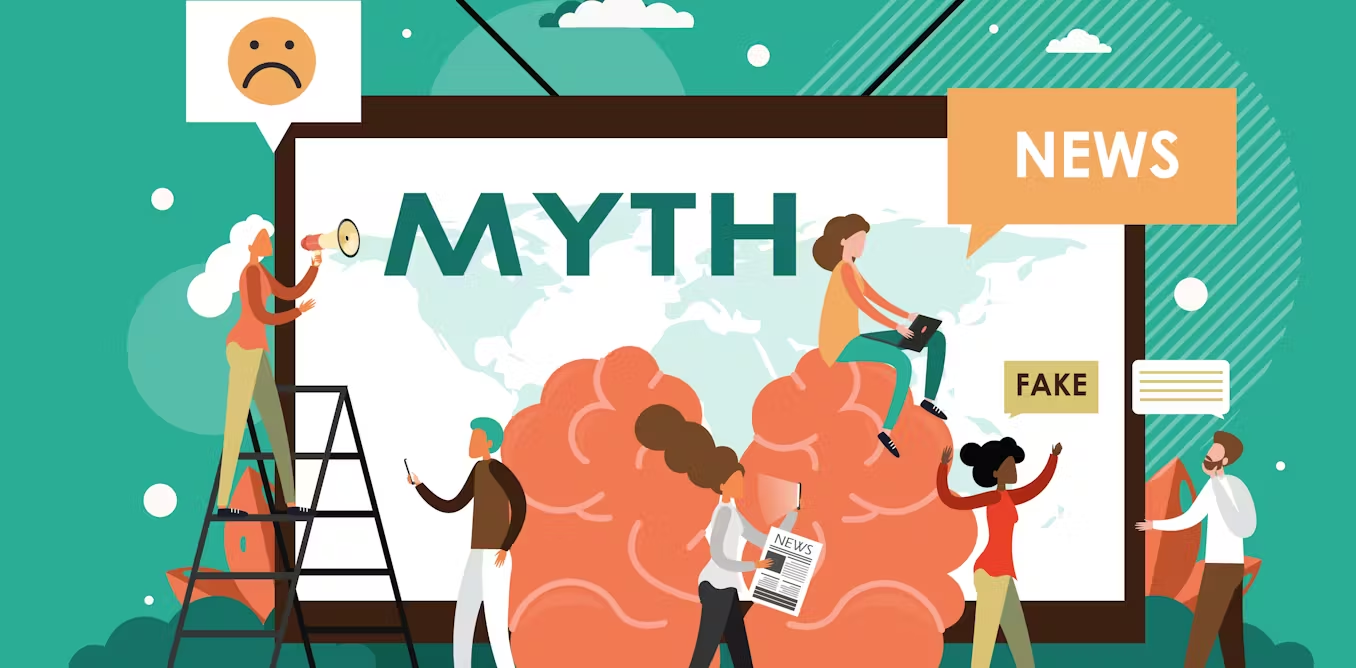
Living in the digital era, we are constantly bombarded with an overwhelming amount of information every day, whether we realize it or not. As we encounter an increasingly broad swath of content, misinformation has become a growing concern. Efforts must begin from all sides involved to harness the overwhelming flow of information. We need to ensure that social media is a tool for empowering us rather than spreading misinformation that can lead to harmful consequences.
For younger generations, such as millennials and Generation Z, social media has become an integral part of daily life and a major source of information on topics such as health-related content. It is estimated that 90% of Americans use social media to acquire health information, making the credibility of this information closely tied to users’ awareness and behavior.
However, the likelihood of encountering misinformation on social media is alarmingly high. For example, during the COVID-19 pandemic, 57.7% of Instagram posts recommended about the coronavirus included misinformation. The prevalence of false information, especially during a public health crisis, could distort individuals’ perceptions. This is particularly true for those with limited literacy or who rely on social media as their primary information source to learn about the situation and how to protect themselves.
Moreover, exposure to health information on social media can lead to heightened responses and panic, a study even indicates it’s potential to cause anxiety and depression. This highlights the urgent need to address the issue to prevent further harm to public health.
Technological advancements, like using artificial intelligence (AI) to identify misinformation, bring a glimmer of hope. However, many Americans remain wary of AI’s ability to effectively tackle this issue. A survey in November 2021 revealed that only 38% of U.S. adults supported social media companies using algorithms to detect false information, and less than a quarter believed AI could outperform human moderators.
This skepticism is quite understandable, as AI often fails to distinguish between real and fake news due to its reliance on human judgment rather than objective truth. Also, creating a universal fake news detector is daunting, making it difficult to develop a tool that can effectively eliminate all misinformation. Consequently, the burden of distinguishing between truth and falsehood continues to rest heavily on social media users’ shoulders.
Given the persistent problem of misinformation, it is worth considering who should bear the responsibility as we move forward and the potential damage health misinformation can cause. The information acquisition process involves multiple parties, including the source of the information, the platform and the users themselves. Users should exercise critical judgment to extract accurate information, while platforms, social media firms in this case, should also take responsibility for verifying the integrity of the information available, especially when it concerns public safety and wellness.
Despite doubts about AI’s effectiveness, another survey in 2021 found that over half of American respondents believe social media companies should be involved in setting standards for using algorithms to detect false information. As technology evolves, social media firms must take part in creating and enforcing regulations to protect the integrity of the information their users encounter.
Content creators must be held accountable for the validity of the information they share, as they are the initial players in the information-sharing process. The relentless flow of information is evident, with healthcare digital advertising spending estimated to have surpassed TV ad spending for the first time in 2021, accounting for 46% of all healthcare ad expenditures. This shift highlights the urgency for companies to establish internal regulations ensuring the accuracy and credibility of their social media content.
Starting with the healthcare sector, these efforts should be expanded to other areas, creating a more trustworthy information ecosystem. While the increased availability of information online provides unparalleled access to knowledge, it also enables the rapid spread of misinformation. Tackling this issue demands collaboration among all stakeholders to ensure the advantages of this convenience outweigh the risks.
Acknowledgment: The opinions expressed in this article are those of the individual author.
