
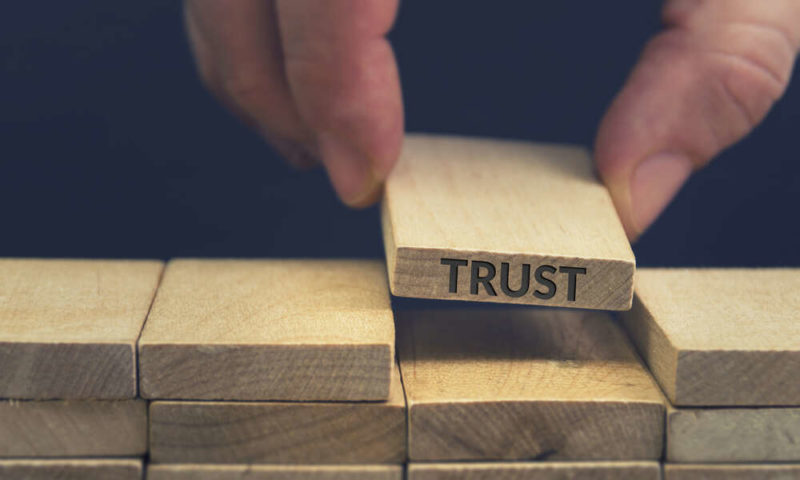
The United States is the world’s oldest constitutional democracy. It is a nation built on the concept of universal political equality above all else. Abraham Lincoln once described it as a government “of the people, by the people, for the people.” Currently, however, the people’s faith in the U.S. government is at an all-time low.
Much of the decline in trust can be attributed to the overall political divisiveness. U.S. citizens regard the state of politics and certain policies pursued during the last 60 years to be non-representative of public opinion or hazardous to the health of the nation.
Furthermore, 2 out of 3 Americans find the truth difficult to discern when officials speak. So not only is there a widespread distrust of policy, but most Americans are concerned that the government persistently obscures the truth.
Measurements of public trust, or more specifically, an assessment asking “who says they trust the government to do what is right just about always/most of the time” began in 1958 at 73%. Things began to change in 1964 when the government increased the number of men it drafted and began to deploy for military service in Vietnam. The steep decline stems from the public realization that the government was willing and able to pursue its own interests regardless of public opinion. By 1974, public trust had plummeted to 36%.
The highest number recently polled was in 2001–54%–just before the 9/11 wars in the Middle East began. In George W. Bush’s eight years in office, public trust in government went from 54% to 25%. It has not risen above 26% since.
Today in 2024, the public trust in the federal government sits at 16%. It is not just the government that the public is disenchanted with but the overall binary nature of the American political system. About a quarter of Americans do not feel represented by either party, and 28% have unfavorable outlooks on both parties. The top two words Americans say come to mind when describing politics are “corrupt” and “divisive.” When asked how they feel about politics Americans typically say “exhausted.” It seems the problem is getting worse.
How can a state that draws legitimacy from the public survive a crisis such as this? The answer is frighteningly unclear. Regarding the election in 2020, a Monmouth poll shows 30% of Americans believe that sitting President Biden won due to voter fraud. Regardless of the legitimacy of such a claim, it is alarming that so much of the voting population gives credence to it.
The 2024 election will be unusual because it will most likely be the incumbent President Biden versus former President Trump. No matter the outcome, the conclusion is unlikely to resolve the trust issue in the United States.
