

South African politics has been thrust into the spotlight with the recent arrival of Afrikaner refugees to the U.S.. Many in the legacy news have observed that this White House gladly accepts refugees of white European descent, but not those of African or Middle Eastern heritage. In what seems to be a common theme in modern American politics, the Democratic Party is once again inserting race into a conversation about basic values and human rights. On the contrary, the refugees from South Africa are welcome because they are here for the American Dream — and are highly capable of achieving it. Migrating to America would provide more than creature comfort to the Boer people: basic safety and the ability to fulfill the potential they desire.
Boer History
Boer settlers of Dutch origin first settled in South Africa in the mid-17th century as part of a chain linking sea routes from the Netherlands to the East. The apartheid regime of anti-African discrimination dominated the latter half of the 20th century until its fall in 1994. Since then, the African National Congress or ANC has ruled South African politics, which has moved considerably to the Left.
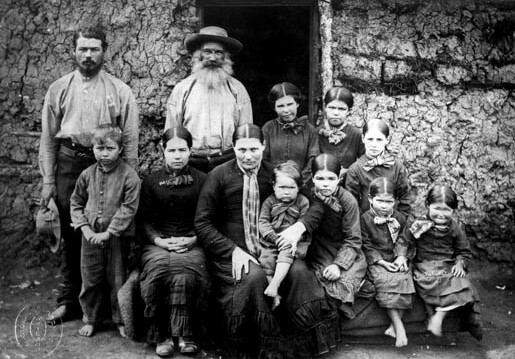
The Afrikaner people have been farming the land for hundreds of years, and their knowledge of the profession is well-known. Despite only comprising four percent of the population, Boer farmers produce at least one-fifth of all the food in South Africa. This community is a prime example of the kind of immigrants the U.S. should be looking to assimilate into its diverse population. However, there is one problem: they are being hunted for their land.
Predictably, attacks on Boer farmers are occurring several hundred times per year since 2018. Though numbers are hard to estimate due to the breakdown of effective policing, these murders should not go unnoticed. Moreover, these killings are more than random acts of crime. Recently, the Economic Freedom Fighters (EEF) Party, including their leader, Julius Malema, were shown leading chants of “Kill the Boer, Kill the Farmer.”
Belittling the Boer
Upon their immigration to the U.S., Boer farmers can our country grow, much like generations of immigrants did, before the waves of mass migration crash upon open borders. Many Democrats routinely accuse people of racism for simply observing that it is unrealistic to care for an unchecked wave of migrants. Doing so would include and incentivize people to enjoy the benefit of our social programs, but never to integrate or become Americans as so many migrants before them. To racialize this issue in such a way would be to discriminate against Afrikaners for their skin color, even if that effect is unintentional.
The Right to Be Choosy
Some Republicans, angered by Biden’s border policy, have shunned the inscription at the bottom of the Statue of Liberty that reads, “Give me your tired, your poor, your huddled masses yearning to breathe free.” However, the last few words of that line are what set the Boer refugees and other refugees around the globe apart. There are those who want to contribute to the American experiment: the Boer. There are also those who seek our open borders simply to take advantage of our benefits programs: illegal immigrants. From a moral standpoint, the U.S. should act to give refuge to those in need. But, it should not give in spite of its national interests or the security of its people. The Afrikaner refugees are both in need of a safe harbor and able to contribute if accepted.
Mercy to the guilty is cruelty to the innocent.
Adam Smith
There is no doubt that millions of people from horribly despotic regimes would love to come to the United States. However, the U.S. simply does not have the capacity to be the migrant safe house of the world. It does not have any moral obligation to take in refugees with checkered pasts. As Adam Smith once wrote, “Mercy to the guilty is cruelty to the innocent.” For proof of this concept, simply see the 2024 presidential election results in border counties.
Tensions have been inflamed on both sides of the aisle. Needless to say, there needs to be a comprehensive plan for immigration going forward. The U.S. should return to a limited and selective immigration policy that brings in the best talent from around the world. Those who value law and order, democratic values and individualism — regardless of outward appearance — will always be welcome here.
Acknowledgement: The ideas expressed are those of the individual author.
