

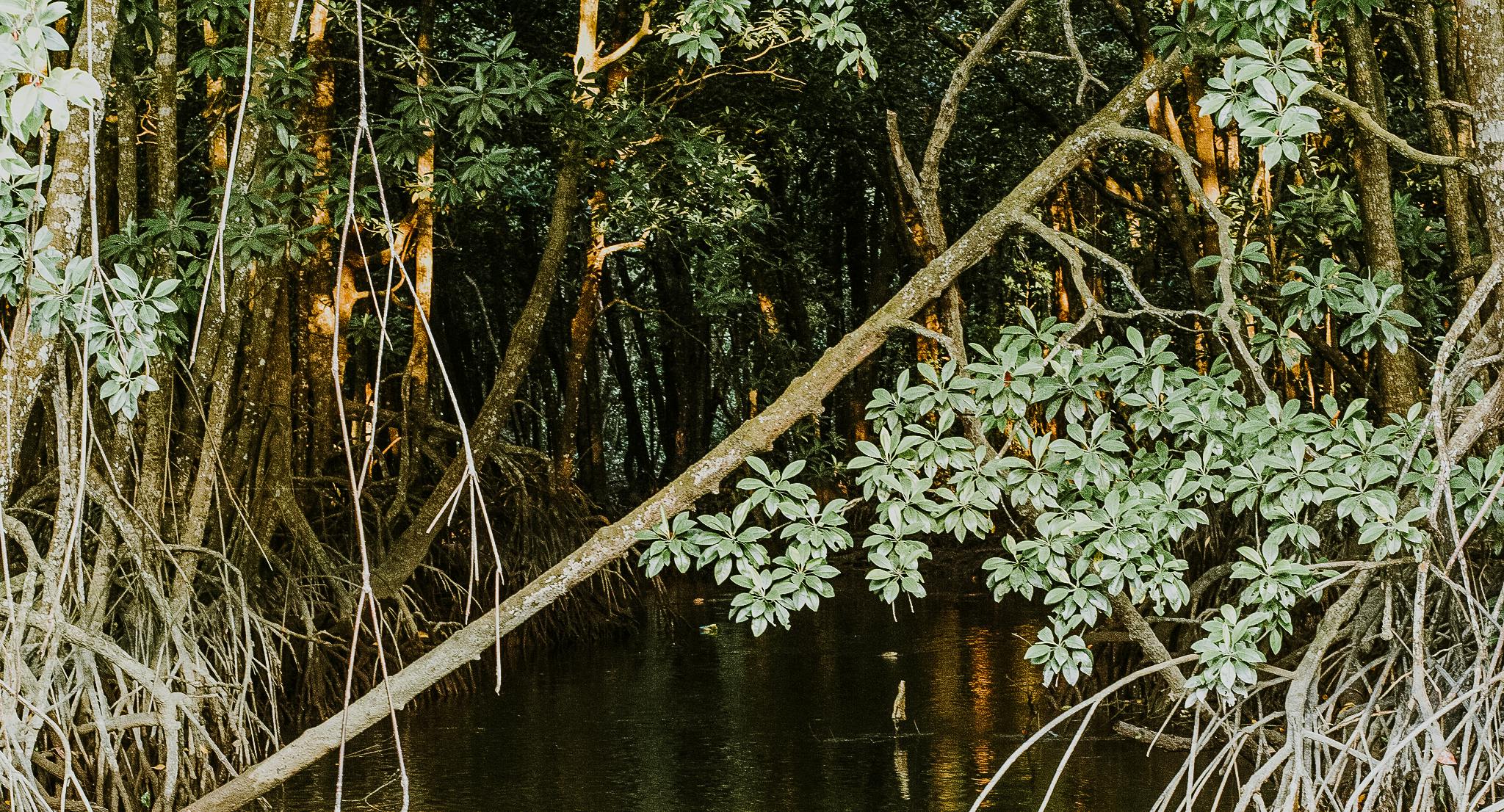
Mangrove forests are among the most valuable ecosystems on Earth, providing critical ecological and economic services. They serve as natural barriers against storm surges, store large amounts of carbon and support diverse marine life.
However, they are rapidly disappearing due to deforestation, coastal development and climate change. By restoring mangrove habitats, we can combat climate change and strengthen the resilience of coastal communities, helping our future and economy in the process. This proposal advocates for a nationwide mangrove restoration initiative that combines federal funding, community involvement, and private sector incentives to restore and protect mangrove ecosystems along the U.S. coasts.
Operative Definitions:
- Mangroves: coastal trees or shrubs that thrive in brackish (partly salty) waters and provide ecological, economic and environmental benefits to our planet.
- Carbon sequestration: the natural process by which ecosystems absorb and store atmospheric CO₂.
- Carbon Offsetting: activities that reduce or sequester carbon emissions to compensate for emissions elsewhere.
- Carbon Credits: tradable permits representing the right to emit one ton of CO₂, used to offset emissions by funding projects that reduce or remove carbon from the atmosphere.
Important Facts and Statistics:
- Mangroves can sequester up to 10 times more carbon per hectare than terrestrial forests, making them vital for climate change mitigation.
- The world has lost approximately 35% of its mangroves in the last two decades due to urbanization, agriculture, and rising sea levels.
- Mangroves can reduce storm surge damage by 50%, protecting coastal infrastructure and saving billions in disaster recovery costs.
- Fish productivity will increase as mangrove area does, in turn increasing fishery yields
- Every $1 invested in mangrove restoration yields $3 in economic benefits with a net benefit of $97-100 billion for restoration over the next 30 years.
- Mangroves reduce property damage by more than $65 billion annually
Four-Point Plan:
(1) Federal Grants for Mangrove Restoration Projects: the Federal Government will allocate money annually through the Department of Agriculture and the NOAA to state and local governments, prioritizing areas most affected by coastal erosion and storm surges. Funding will be used for planting mangrove seedlings, training volunteers, and maintaining restored areas.
(2) Incentives for Private Sector Participation: offer tax credits to private landowners and companies that actively conserve or restore mangrove ecosystems on their properties, encouraging businesses and developers to partner with environmental organizations to ensure that restoration efforts extend beyond public land.
(3) Promote Mangroves as Carbon Offsets: create a Federal Certification Program for mangrove restoration as a recognized carbon offset mechanism, promoting investment in mangrove restoration projects for purchasers of carbon credits.
(4) Establish Mangrove Protection Zones: designate “Mangrove Protection Zones” under Federal and State laws to prevent further deforestation. These zones will prohibit activities such as coastal construction, aquaculture and land reclamation that threaten mangrove ecosystems. Penalties for violations will fund future restoration initiatives.
Why This Initiative Is Important
Restoring mangroves is an environmental priority as well as an economic and social need. Coastal areas are home to a significant portion of the U.S. population, and they face increasing threats from climate change, including rising sea levels and more frequent, severe storms. Mangroves act as a first line of defense, buffering coastal communities against these impacts, reducing storm surge damage and protecting lives and property. Without action, the cost of disaster recovery and repair will continue to escalate, placing a heavy burden on taxpayers.
Furthermore, mangroves have a large capacity for carbon sequestration, making them a natural tool to mitigate climate change. Taking on conservation and restoration projects will leverage this capacity and create an efficient way of helping the environment.
Economically, this initiative also aligns with the interests of diverse stakeholders. Mangroves support fisheries, enhance tourism and reduce the financial risks associated with storm damage. By providing incentives for private sector participation and creating mechanisms for carbon offset funding, this plan will integrate environmental restoration with economic growth, ensuring it is both scalable and sustainable.
By protecting mangroves, we are safeguarding coastal communities and contributing to a sustainable future without paying a heavy price.
