

Big Picture
Since the beginning of their diplomatic connections, the United States and Sudan’s relationship has been rocky. Sudan’s internal displacement and ethnic tensions have further strained the ties between the two nations.
A long history of violence and conflict set the stage for current tensions in Sudan and its neighboring countries. In 1989, Brigadier General Omar al-Bashir came to power after leading a coup against the democratically elected government. Al-Bashir’s regime was marked by internal unrest, the most notable of which was the War in Darfur.

Graphic: USAID
Presently, two military forces—the Sudanese Armed Forces (SAF) and the Rapid Support Forces (RSF)—are at war. Multiple international organizations are working to facilitate a political process to transition Sudan’s leadership to a civilian-led democratic government.
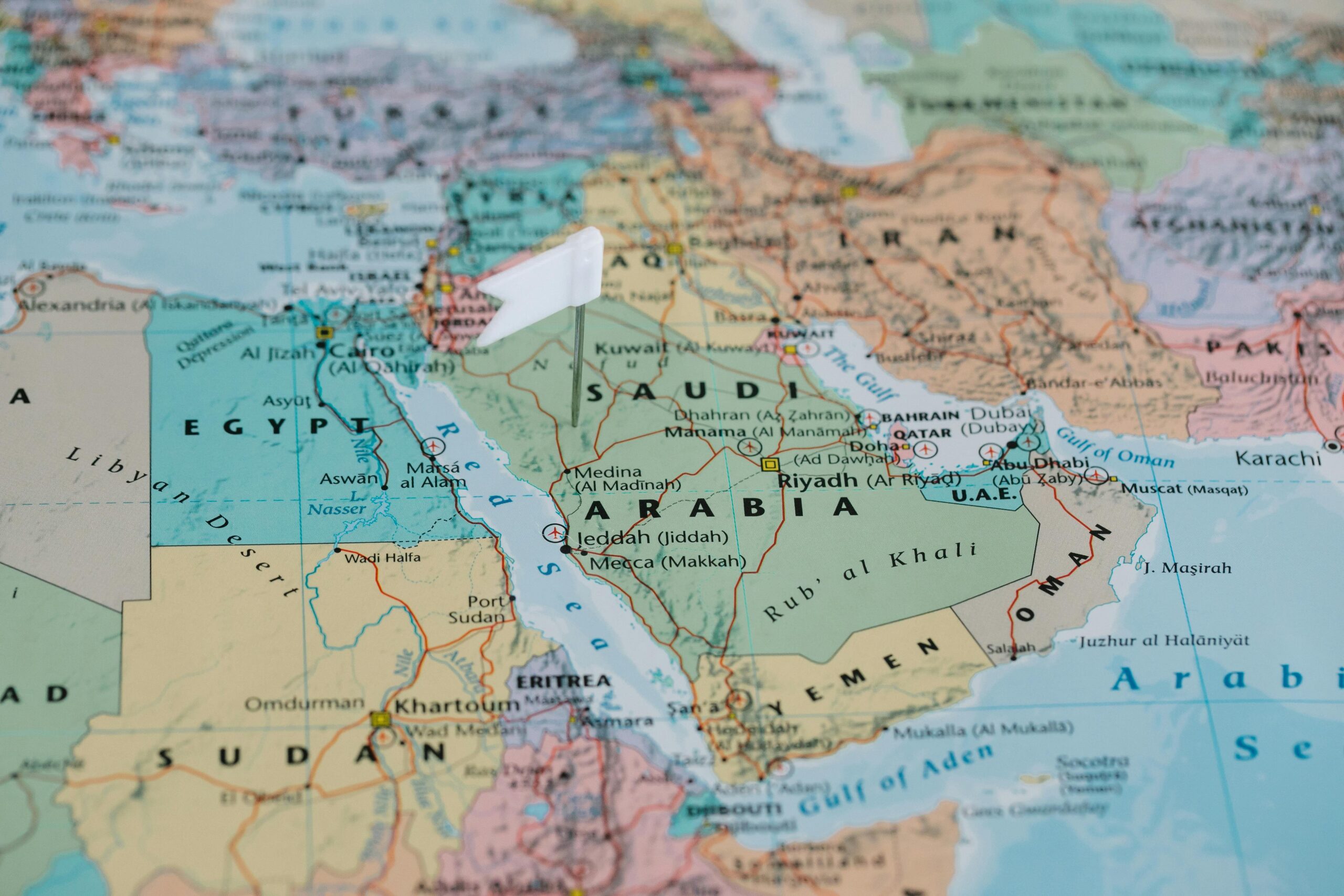
Other nations are also involved indirectly and directly in Sudan. Notably, the Wagner Group, a private military company that advances Moscow’s political goals, is working to shape Sudan’s future in favor of Russian interests. Powers in the Middle East are also exerting their influence in a form of proxy war. Saudi Arabia supports the SAF, while the United Arab Emirates has backed the RSF.
Throughout these conflicts, the U.S. government has provided foreign aid to the Sudanese people, pledging hundreds of millions of dollars in humanitarian assistance. However, after a military coup of the transitional democratic government in 2021, the United States froze much of its direct assistance aid to Sudan’s government. The State Department says it will continue to focus aid on programs that build Sudan’s democratic foundation, boost economic opportunities and encourage dialogue to address the root causes of Sudan’s persistent internal conflicts.
However, the United States’ emergency diplomacy efforts have been ineffective, and the eruption of war and instability underscores the need to change foreign policy concerning Sudan.
Operative Definitions
- Sudan: Officially the Republic of the Sudan. It is a country in northeast Africa.
- ICJ: International Court of Justice, colloquially known as the World Court. The ICJ is the judicial division of the United Nations and provides advisory opinions on international legal issues.
- War in Darfur: An armed conflict in which non-Arab communities in Darfur, the western region of Sudan, rebelled against the government in 2003. Al-Bashir’s regime responded brutally with bombings, mass killings and displacement of millions of people. This led to al-Bashir’s prosecution and eventual conviction for three counts of genocide by the ICJ.
- SAF: Sudanese Armed Forces, the military forces of the Republic of the Sudan.
- RSF: Rapid Support Forces, a paramilitary force formerly under the control of the Sudanese government. The RSF emerged from the Janjaweed militias, an Arab nomad militia group that previously fought in support of the Sudanese government.
- USAID: The United States Agency for International Development, which administers civilian foreign aid and development assistance. USAID deployed a Disaster Assistance Response Team (DART) to the region.
- UN: The United Nations, an international organization that aims to maintain international peace and security and harmonize the actions of nations. It includes coalitions to address human rights abuses.
Important Facts and Statistics
- Sudan faces the world’s largest internal displacement crisis, with over 7.1 million people displaced within the country. Of these, 4.5 million were displaced since mid-April, when fighting between the RSF and the SAF erupted.
- More than 1.2 million people have fled from Sudan to neighboring countries.
- Of Sudan’s population of 48 million, over half need humanitarian assistance, according to USAID.
- Total U.S. humanitarian aid for Sudan and its neighboring countries has been $968 million since fiscal year 2023.
- The State Department’s budget is around $60 billion annually, and only about half goes to USAID.
- Only 16% of the UN’s goal of $2.7 billion in humanitarian aid for Sudan and its neighboring countries has been met.
5-Point Plan
- Increase effective humanitarian aid. USAID should increase its emergency response to alleviate human suffering, provide food to avoid famine and establish corridors that allow civilians to flee to safety. DART must assess humanitarian needs to determine the most cost-effective ways to deliver assistance promptly. USAID should continue to work with the UN and with local organizations to distribute food and essential medicine and to prevent sexual exploitation and trafficking. Also, USAID must work to develop a roadmap that offers safe transportation out of conflict zones and areas of extreme hardship.
- Facilitate negotiations for a ceasefire and peaceful government transition. Negotiating a ceasefire would prevent deaths in Sudan and foster an environment more conducive to democracy. The U.S. should facilitate direct talks and restore political negotiations between civilian politicians representing pro-democracy groups and SAF and RSF leadership. These negotiations would work to ban the use of arms for political purposes, allow unfettered humanitarian aid and end hostilities immediately. A ceasefire is essential for the country to transition leadership in an acceptable manner.
- Increase public attention on Sudan. The current silence by U.S. officials on the critical region is deafening. Legislators currently seem insincere about solving the crisis in Sudan because they have not publicized the matter in accordance with its scope. USAID’s Response Management Team (RMT) in D.C. can play a large role in increasing publicity by regularly issuing press releases to major news outlets and utilizing official social media accounts to share updates. The RMT should also hold congressional briefings to keep legislators informed and involved and pass resolutions to officially recognize the situation. This process would bring more resources to Sudan and further increase the well-being of the region and its neighbors. By doing so, it will also signal to other nations that involvement in the cause is important.
- Condemn human rights violations. Given the long history of disregard for humanitarian law by the SAF and the RSF, the United States needs to collect evidence for potential prosecutions. Both the SAF and RSF are actively involved in hampering aid delivery, and they demonstrate a disregard for human life. Legislators must closely monitor the situation and work with the United Nations to bring in the ICJ if necessary, as was done for al-Bashir over two decades ago. Imposing costs on the perpetrators of violence would demonstrate a strict policy that adheres to moral and international standards, eventually weakening the two military forces and instead promoting democracy and condemning egregious violations of human rights.
- Prevent overall instability and disintegration in Sudan. More broadly, the escalations in Sudan are worsened by damage to infrastructure (including internet, electricity and health facilities) and severe economic instability (which includes very high inflation rates). Legislators also must work with Sudan cooperatively to ensure that the country objects to deals by strong external powers that may cause further economic instability. Also, once markets and supply chains are restored to an acceptable level, USAID should work with the UN to provide multipurpose cash assistance. Multipurpose cash assistance gives individuals agency and freedom to use the aid as it best fits them. In all relations, the U.S. must remain transparent, reasonable and decisive to successfully implement a democratic civilian government.
Why This Initiative is Important
Altering U.S. foreign policy by providing more humanitarian aid, facilitating negotiations, increasing public attention, condemning human rights violations and preventing disintegration is imperative to the millions of displaced Sudanese people and to the region as a whole. A total disintegration of Sudan would prove catastrophic for geopolitics and humanitarian causes. We must work with other nations and organizations to prevent further human rights violations and promote democracy in the interest of the people. Especially as we move towards a more multipolar world order, U.S. involvement is imperative to showing other states that we are a nation that is capable of effective humanitarian aid, promotes democratic values and does not fail to ignore egregious human rights abuses.
Acknowledgment: The opinions expressed in this article are those of the individual author.
Sources
Doxsee, Catrina. (2023, April 20). How Does the Conflict in Sudan Affect Russia and the Wagner Group? Center for Strategic and International Studies. https://www.csis.org/analysis/how-does-conflict-sudan-affect-russia-and-wagner-group.
Gavin, M. (2023, April 20). Sudan in Crisis. Council on Foreign Relations. https://www.cfr.org/blog/sudan-crisis.
Hamzawy, Amr. (2023, May 3). The Looming Danger of State Disintegration in Sudan. Carnegie Endowment for International Peace. https://carnegieendowment.org/posts/2023/05/the-looming-danger-of-state-disintegration-in-sudan?lang=en.
Hudson, C. (2024, February 7). The Great Sudan Policy Reset. Center for Strategic and International Studies. https://csis.org/analysis/great-sudan-policy-reset.
Miller, Matthew. (2024, March 20). United States to Provide Additional Humanitarian Assistance to Sudanese People and Host Communities. U.S. Department of State. https://www.state.gov/united-states-to-provide-additional-humanitarian-assistance-to-sudanese-people-and-host-communities/
Mohammad, Talal. (2023, July 12). How Sudan Became a Saudi-UAE Proxy War. Foreign Policy Magazine. https://foreignpolicy.com/2023/07/12/sudan-conflict-saudi-arabia-uae-gulf-burhan-hemeti-rsf/.
Osman, Mohamed. (2024, 31 January). Sudan Conflict Fuels World’s Largest Internal Displacement. Human Rights Watch. https://www.hrw.org/news/2024/01/31/sudan-conflict-fuels-worlds-largest-internal-displacement
United States Agency for International Development. FY 2023 Budget Justification. https://www.usaid.gov/cj/fy-2023#:~:text=The%20President’s%20Fiscal%20Year%20.
United States Government. (2022, April 22). Sudan Fact Sheet. U.S. Department of State. https://www.state.gov/countries-areas/sudan/#:~:text=U.S.%20policy%20in%20Sudan%20is%20focused%20on%20ensuring%20that%20Sudan,encouraging%20an%20open%20and%20inclusive.
United States Government. (2022, October 24). U.S. Relations With Sudan. U.S. Department of State. https://www.state.gov/u-s-relations-with-sudan/.
UN Migration. (2023, October 16). Sudan Faces World’s Largest Internal Displacement Crisis. https://www.iom.int/news/sudan-faces-worlds-largest-internal-displacement-crisis
UN Office for the Coordination of Humanitarian Affairs. Sudan Situation Report. https://reports.unocha.org/en/country/sudan/.
U.S. Agency for International Development. (2024, April 15). The Humanitarian Crisis in Sudan: One Year On. https://medium.com/usaid-2030/the-humanitarian-crisis-in-sudan-one-year-on-15adb7a0880a.
Wong, E., & Crowley, M. (2023, May 3). How U.S. Efforts to Guide Sudan to Democracy Ended in War. The New York Times. https://www.nytimes.com/2023/05/03/us/politics/us-sudan-democracy-war.html.
