

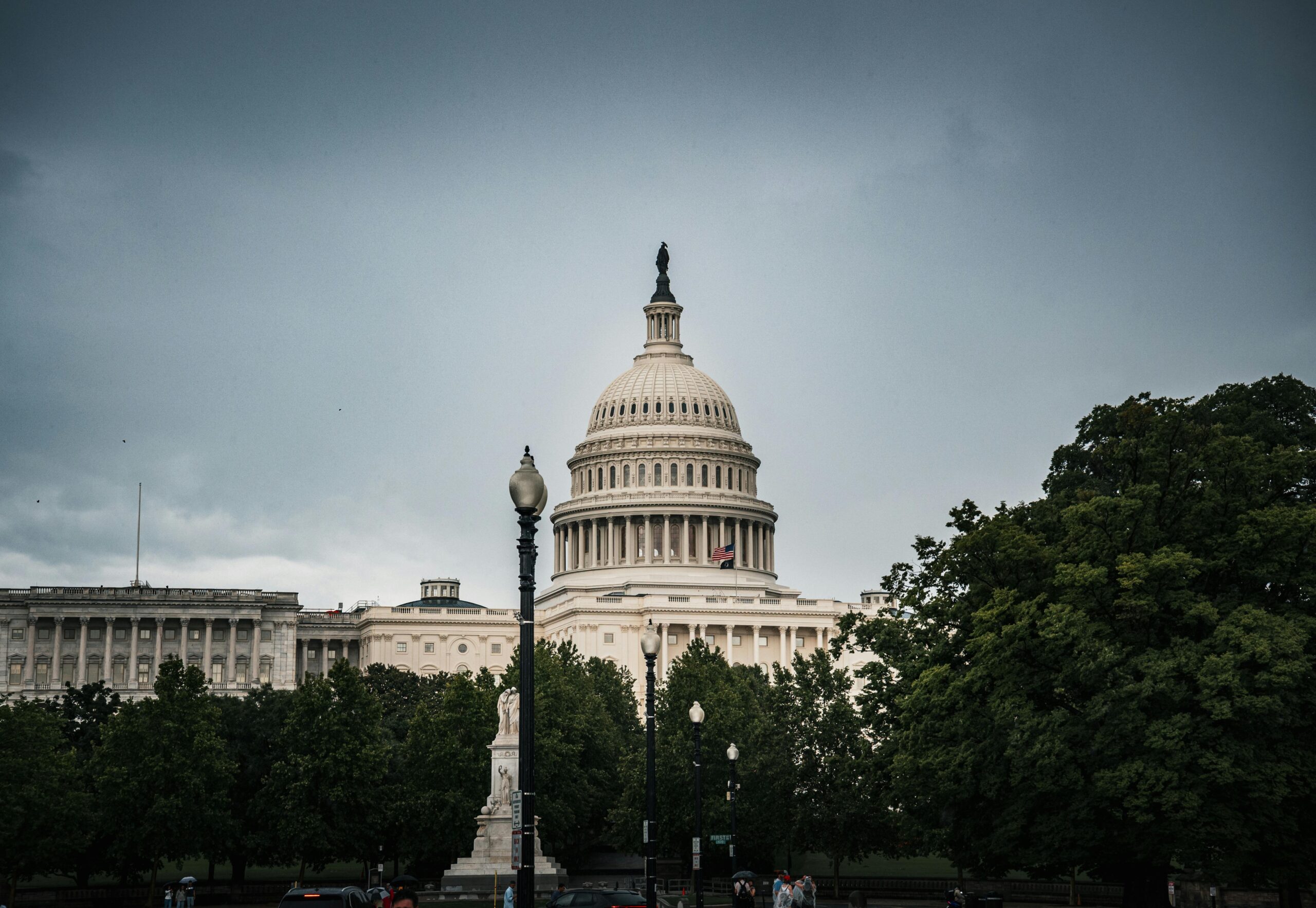
On August 11, in a show of force, President Trump deployed the National Guard and hundreds of federal officers in Washington, D.C., to combat crime. This move is not only inefficient for what it claims to accomplish, (reestablishing “law, order, and public safety”) but also a warning of his use of power.
To do this, Trump invoked section 740 of the District of Columbia Home Rule Act, which states that “special conditions of an emergency nature” allow the president to take over the Metropolitan Police Department (MDP). In this case, the conditions that informed Trump’s decision are the “crime, bloodshed, bedlam and squalor” the president promised to rescue the capital from in a press conference.
Crime in Numbers
Trump’s justification for the crackdown relied on D.C.’s crime rates. During the conference, Trump listed countries with lower crime rates than Washington, such as Bogota and Mexico City. He claimed that murders in Washington reached the highest rate “probably ever” with a homicide rate of 41 per 100,000 in 2023.
In a presidential memorandum issued, Trump stated, “It is a point of national disgrace that Washington, D.C., has a violent crime rate that is higher than some of the most dangerous places in the world.”
Although 2023 showed the highest homicide rates in the past 20 years, homicide rates are declining. They dropped to 26.6 per 100,000 in 2024. According to the U.S. District of Attorney’s Office, the city’s overall crime rate from 2023 to 2024 decreased by 35 percent and hit a 30-year low. While it is true that D.C. has one of the highest crime rates of U.S. capitals and higher crime rates than Bogota or Mexico City, it does not have one of the highest city crime rates in the world and is actually seeing an overall downward trend.
Crime reduction is a concern for many U.S. cities. However, Trump’s use of the National Guard to solve the problem can not be justified as necessary, considering the decreasing crime rates that occurred without any militant force. Military forces, as opposed to police forces, are not suited to regulate this issue due to different training and little involvement with citizens, according to the Center for Strategic and International Studies.
Crime Data Reliability
Crime data statistics have been questioned for their reliability. Jeff Asher, a crime analyst based in New Orleans, conducted research that showed publicly available crime data published by the MDP is inconsistent with FBI data. These mismatching statistics offer room for distrust in the MDP and whether crime is actually decreasing in the city.
However, despite these discrepancies, the quality and quantity of the data published by the MDP more strongly represent inconsistencies due to reporting issues or underreporting rather than intentional cover-up. The inconsistencies of the MDP’s crime data are subject to a number of factors present in any other crime data of other cities.
Regardless of the rate at which crime has decreased in D.C., statistics still show a drop in violent crime overall. As in several other metropolitan cities, crime is a prevalent issue in D.C., and an increase in crime lethality adds to an overall perception of increasing crime in the city.
However, the rash nature of Trump’s deployment of National Troops still overlooks long-term and effective ways to address the protection of public safety without using costly resources and overstepping the balance of powers. Moreover, Trump’s goal was to make people feel safer from crime, but the presence of the military has raised a sense of unease among a couple of citizens.
Define “Criminal”
Moreover, the rhetoric Trump uses to describe criminals as “youth,” “roving thugs” and “slums” refers to the gang and homeless populations of the city targeted with this militant force.
In a Truthsocial post, Trump also called for a change in D.C. law to “prosecute ‘minors’ as adults, and lock them up for a long time, starting at age 14.” This is concerning many as an effort to lower the legal age of a “minor.”
All things considered, Trump’s agenda to deport immigrants persists. His fight against criminals in D.C. aligns with the correlation between crime and marginalized communities in metropolitan areas. Attorney General Pam Bondi already issued an order on Thursday in response to Trump’s wishes for the Police Department to provide “assistance with the enforcement of federal immigration law as deemed necessary.”
Historical Parallels
Trump’s goals are reminiscent of the 1970s and 80s ‘War on Drugs’ which was popularized by former president Richard Nixon. It infamously and disproportionately targeted Black communities and people of color. Trump’s threat to increase prosecution echoes the mass incarceration that followed Nixon’s ‘War on Drugs.’.
As demonstrated with the ‘War on Drugs’, simply removing individuals from society and placing them in detention centers is not going to fix the societal issues that have continued to exist within our borders. Trump falls short of a reasonable answer for solving the prevailing subliminal causes of crime and homelessness.
The Bigger Picture
Trump’s decision to ultimately deploy troops serves a larger goal to federalize D.C. law enforcement against U.S. citizens and tests the limits of his power as president. With the 30 day limit on Trump’s power to take over the MDP, he would either need to gain — or avoid — approval from Congress to continue a crackdown on D.C.
This once again raises the question of how much the president is willing to breach the constraints of his power and what he will use it for. His use of the D.C. Home Rule Act reveals how much declaring a state of emergency is based on the president’s evaluation of what constitutes an emergency.
What the National Guard does in D.C. under Trump is also important to understanding whether the deployment is practical or not. If this is merely a show of force or power, Trump’s use of the National Guard is not resourceful.
Going Forward
Trump’s last deployment of the National Guard in L.A. is currently undergoing trials for whether the president violated the 1878 Posse Comitatus Act. Following suit, D.C. has issued a lawsuit against Trump, leaving the president to return control of police forces to the D.C. police chief with permission to continue pursuing immigrant deportations.
The president is too comfortable deploying the National Guard against U.S. citizens to solve domestic issues. Although this use of that power has yet to prove effective for its purpose, we must be aware of the potential consequences that come with its use.
Acknowledgment: The ideas expressed are those of the individual author.
