

Russia launched a drone attack on Ukraine on Sep. 7, targeting a building in Ukraine’s governing district. The attack occurred after several negotiations, promises and meetings with other world leaders by President Trump to end the war in Ukraine over several weeks. NATO fighter jets shot down Russian drones found in Poland that same week.
Israel struck Qatar with a military attack to target Hamas officials who were attempting to sign a US-backed cease-fire deal to stop attacks on Gaza. Israel also launched an attack in Yemen, adding to Israel’s ongoing violence in the West Bank and other Middle Eastern countries.
These are just a few events that are ongoing products of the US’s incessant entrenchment in foreign affairs. Despite President Trump’s statements promising to solve the war in Ukraine and Israel’s genocide in Gaza like he solved “six wars in six months”, it will be difficult to do so without undermining the US’s imperial power.
Like his predecessors, Trump and the current trajectory of U.S. foreign policy will likely prolong tension-provoking violence between the US, Russia, and China years after the Cold War, in the wake of a declining US empire. Likewise, endless support for Israel’s conquest in Gaza perpetuates imperial violence supported by the US. Ultimately, this will gravely impact the lives of civilians–Ukrainians, Palestinians and more.
A New? Cold War
Since Russian President Vladimir Putin invaded Ukraine in February 2022, the US has allocated $187 billion in aid to Ukraine to defend against Russian offenses. Russia and China have strengthened an alliance and increased trade against their Western counterparts. Ultimately, Ukraine is caught in a proxy war between imperial powers with large spheres of influence in the East and the West, exhibiting growing bipolarity with China since the end of the Cold War.
So, why Ukraine? With Russian influence diminished after the end of the Cold War and US power declining, Ukraine is pivotal in the competition to dominate global markets. Notably, Ukraine’s oil and natural gas supply would bolster Western influence and diminish Russia’s grasp on oil and gas markets. Ukraine has about 900 billion cubic meters of natural gas reserves, placing it second overall for gas reserves in Europe.
Further, Russia won’t have a buffer state between itself and other European countries if Ukraine joins NATO or the EU, incentivizing Putin to seize the country for himself. Ukraine offers interest for a US desperately clinging to and using the imperial Western influence it has, with Russia working to prevent that through violence and force.
What role does the US play? While Trump claims the Russia-Ukraine war is “Biden’s War”, the conflict originates from continuous US and NATO involvement that preceded Former US President Joe Biden. Since the end of the Cold War, Russia-US relations have sought to rebuild Eastern Europe, but have had conflicting views on how to do so. According to British political scientist and former professor Richard Sakwa, the US wanted Russia to rebuild and join the existing Western order, while Russia sought to join a transformed West.
Putin sees Ukraine’s developing relationship with NATO as a threat to Russia after increasing NATO presence east of Alliance territory following Russia’s annexation of Crimea in 2014. Regarding Ukraine, the US Central Intelligence Agency (CIA) has been deeply enmeshed since 2014. It’s because of this that Trump will not see a peaceable agreement between Ukraine and Putin’s Russia
Will there be peace? Putin’s actions are aggressive and aim to diminish the sovereignty of Ukraine. A ceasefire or peace agreement will be difficult to achieve unless Trump agrees to Putin’s proposals or the costs of Russia’s invasion become too difficult to sustain through prolonged military conflict. Any concession offered by Trump and accepted by Putin will undermine the global Western dominance that the US has sought to establish in Europe since George H.W. Bush’s presidency, which is what Putin wants.
Over the course of several calls, meetings and discussions between Putin, Ukrainian President Volodymyr Zelenskyy and other Western leaders, including Trump, little progress has been made. Trump’s confidence that the war would be resolved peacefully after initial doubt about support, attempting to convince Ukraine to concede to Russia, and negotiating with Putin, is dwindling. Instead, Trump has encouraged Ukraine to fight and win, abandoning peace and prolonging the military conflict.
“I think Ukraine, with the support of the European Union, is in a position to fight and WIN all of Ukraine back in its original form,” Trump stated in a Truth Social post on Sep. 23.
Trump reinforces that with support and military equipment from the West, Ukraine will ultimately free itself from Russia’s aggression.
How will this affect Ukrainians? What do Ukrainians want? What do Ukrainians get as a result of this? War is costly. According to a recent UN report, there have been 30,457 civilian casualties since 24 Feb. 2022, with likely higher numbers and thousands more displaced.
With continued war, numbers will continue to climb. Mental stress and anxiety of war have impacted the population. Nearly a quarter of Ukraine’s population is in poverty, with increasing food insecurity.
In an attempt to increase Western influence since the end of the Cold War while maintaining cooperative relations with Russia, the US can’t have its cake and eat it too.
The Ugly in the Good, Bad and Ugly
Israel’s ongoing genocide against Palestinians in Gaza perpetuates decades of apartheid colonial violence that has increased since Oct. 7, 2023. With over 65,419 Palestinians killed, 167,160 injured and 1.9 million facing food insecurity and famine in Gaza due to Israel’s actions, US leadership is unwaveringly committed to funding and supporting a genocide.
What is the history? Before attacks by the militant group Hamas on Oct. 7, 2023, Palestinians had been denied recognition since the Egyptian rule of the Gaza Strip. The initial allocation of land for Jewish refugees after the Holocaust by Britain has created conflict over territorial ownership between Arab and Jewish states.
Why does the US love Israel? Despite growing disapproval of the US’s support for Israel and promises from the Trump administration to cut government spending, the current administration has allocated a total of $16 billion in US foreign military aid for Israel. Under a 10-year Memorandum of Understanding from FY2019 to FY2028, the U.S. pledged to provide $3.8 billion to Israel per year.
As it is, the state of Israel is none other than an extension of the US. Israel’s actions mirror the US’s own attempts for expansion, notably westward frontier expansion and the removal of Native American and Indigenous populations during the 1800s. Westward expansion operated under the justification of “Manifest Destiny”. Like the US, Israel is using methods of carceral violence based on supremacist justifications.
These parallels offer the US the opportunity to use Israel as a puppet state in the Middle East region. In exchange for arms and security advancements, Israel offers the US important information and resources necessary for the US to carry on a mission of expanding global Western influence.
Will the violence end?
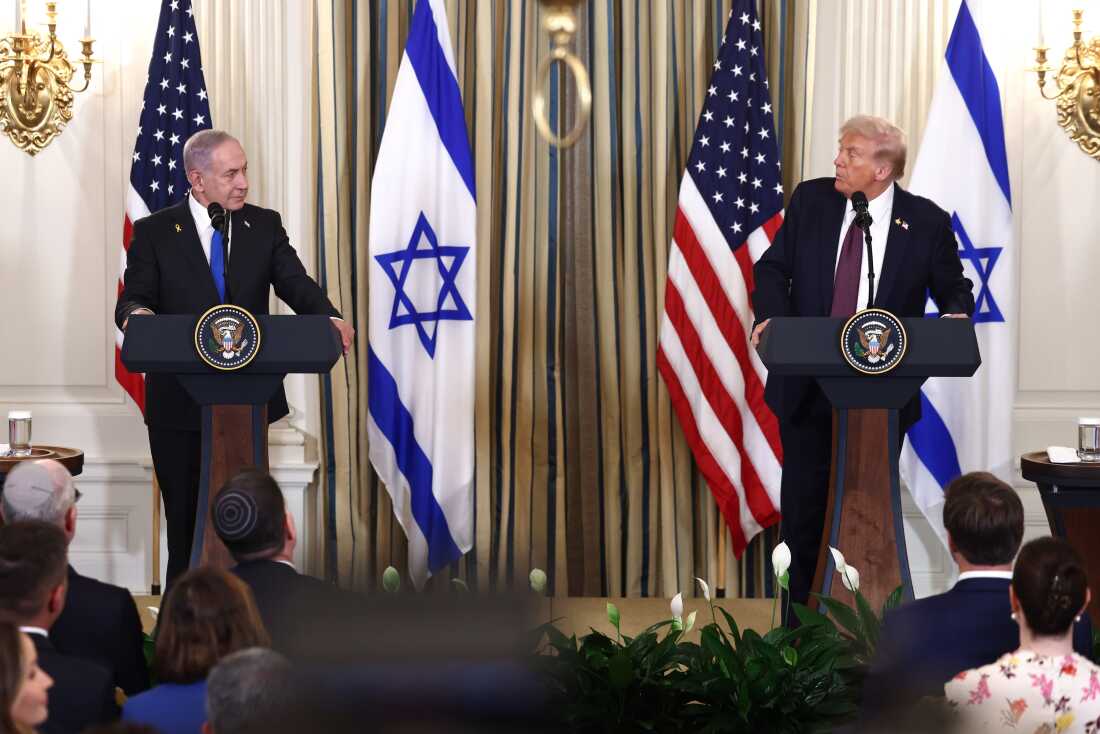
Trump has drafted a 20-point peace plan in partnership with Israeli President Benjamin Netanyahu, dependent on a response from the militant group Hamas. The plan consists of prospective redevelopment plans for Gaza and conditions for peace.
Considering the years of alignment, aid and partnership forged by the US since Israel’s conception, the support for Israel is unlikely to end through Trump and the current administration, prolonging structural violence if not genocide in the West Bank.
Though Trump and his administration stress the need for peace in Gaza and Ukraine, the imperialistic motivations underlying each issue are rooted deep in the embodiment of US foreign affairs. The Trump administration is merely following decades of US foreign involvement and the habit of global policing from economic prowess. From Europe, the Middle East and into Asia, the US has touched every cornerstone of the globe, whether by conquest or proxy.
