

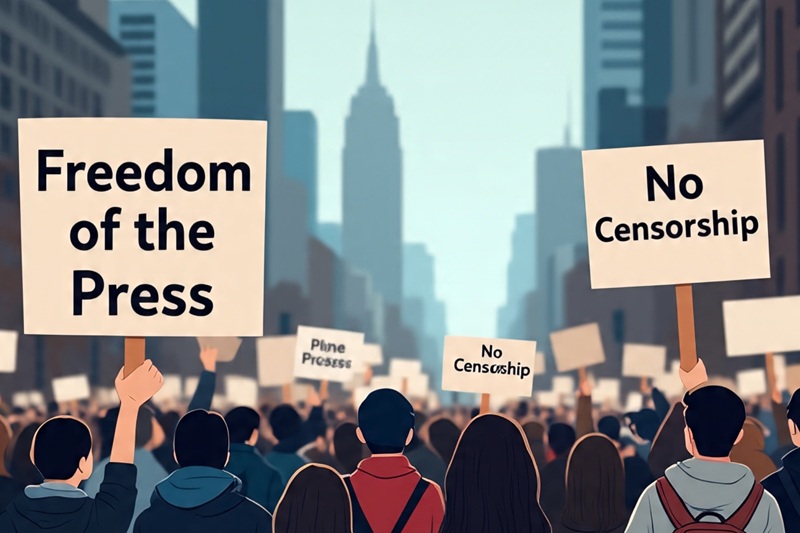
Department of War (formerly known as the Department of Defense) Secretary Pete Hegseth’s recent decision to restrict journalists’ unlimited access to the Pentagon has welcomed a barrage of criticism. The new rules announced on September 19, prohibit journalists from reporting on unauthorized information, even if it’s unclassified, and limit their movement within the Pentagon’s sensitive areas. According to Hegseth’s memo, journalists are required to sign a form stating that they will abide by these rules, and failure to comply may result in the revocation of their building pass and loss of access.
The Pentagon Press Association and other news organizations have expressed concerns that these restrictions are a direct attack on freedom of the press and America’s right to know.
While some may disagree, I believe this measure is a necessary step to protect national security and prevent the unauthorized disclosure of sensitive information.
Press freedom is not absolute, but it shouldn’t be used to compromise the country’s internal strategies or war-related decisions. Publishing secret information might generate more clicks and readers for news outlets, but it can have severe consequences for national security and the government’s ability to implement its policies effectively. Moreover, such actions can damage the US’s global reputation
By restricting journalists’ access, the government can better control the flow of sensitive information and prevent potential security breaches. This decision may be seen as restrictive, but it’s a necessary measure to ensure the safety and security of the country.
Balancing press freedom with national security concerns is crucial, as unrestricted publishing of secret information can compromise the country’s internal strategies and damage its global reputation. Restricting journalists’ access can help control sensitive information and prevent security breaches, ensuring the safety and security of the nation.
On X, Heghseth posted, “The ‘press’ does not run the Pentagon — the people do. The press is no longer allowed to roam the halls of a secure facility. Wear a badge and follow the rules — or go home.”
Chief Pentagon spokesman Sean Parnell commented that this step was needed to protect the sensitive information and also for the safety of the people who work at the Pentagon.
The reason behind this is that the US has already suffered due to the leaking of sensitive information by the media in the past. It’s not only the employees of the Pentagon who should be held accountable for the leaks, but also the journalists who try to gather unauthorized information, thereby breaching national security.
Here are some examples of when the US has had to compromise its sensitive information in the recent years, justifying why Hegseth’s decision of blocking journalists into the government internal machinery was more about protecting national security, rather than choking press freedom.
Edward Snowden leaks (2013)
Snowden leaked intelligence documents to The Guardian and The Washington Post, revealing classified information about US surveillance programs. The leaked documents exposed the extent of US surveillance on citizens and foreign leaders. The leaks sparked a global debate about privacy, security, and government transparency. Snowden’s actions were widely praised and criticized, with some viewing him as a whistleblower and others as a traitor. The leaks led to changes in US surveillance policies and increased oversight.
Reality Winner case (2017)
A former Air Force member and NSA translator, Reality Winner, was charged with leaking a classified report to The Intercept, compromising national security. The leaked report contained sensitive information about Russian interference in the 2016 US presidential election. Winner’s actions were seen as a serious breach of national security. The incident highlighted the importance of protecting classified information and the consequences of unauthorized disclosure. Winner’s case sparked discussions about the role of whistleblowers and the need for government transparency.
Trump administration leak
Sensitive military information was leaked on March 24 through the Signal app, reportedly due to a mistake, raising concerns about data security. The chat’s members were Vice President JD Vance, top White House staff, three Cabinet secretaries, and the directors of two Intelligence Community agencies. The high-profile leak occurred when National Security Advisor Mike Waltz erroneously added Jeffrey Goldberg, the editor-in-chief of The Atlantic magazine, consequently leaking the secret information with the press.
The leak reportedly contained information about US military operations. The leak’s impact on national security and US military operations is still being assessed.
In the Trump administration’s Signal leak, journalists played a significant role in reporting and exposing the sensitive information that was shared. The Atlantic’s editor-in-chief, Jeffrey Goldberg, was accidentally added to a Signal group chat where top officials discussed a US military strike on Houthi rebels in Yemen. This led to The Atlantic reporting on the leaked information, which included operational details and tactical information.
The Atlantic Post’s report, ‘Here Are the Attack Plans That Trump’s Advisers Shared on Signal,’ highlighted a concerning breach of national security. When leaks compromise sensitive information, they not only embarrass the government but also potentially jeopardize national interests. If the press prioritizes sensationalism over security, it can indeed pose a threat to the nation. Given these risks, I support the US Department of War’s decision to limit journalists’ access to sensitive information, ensuring that national security takes precedence over unfettered press freedom.
