
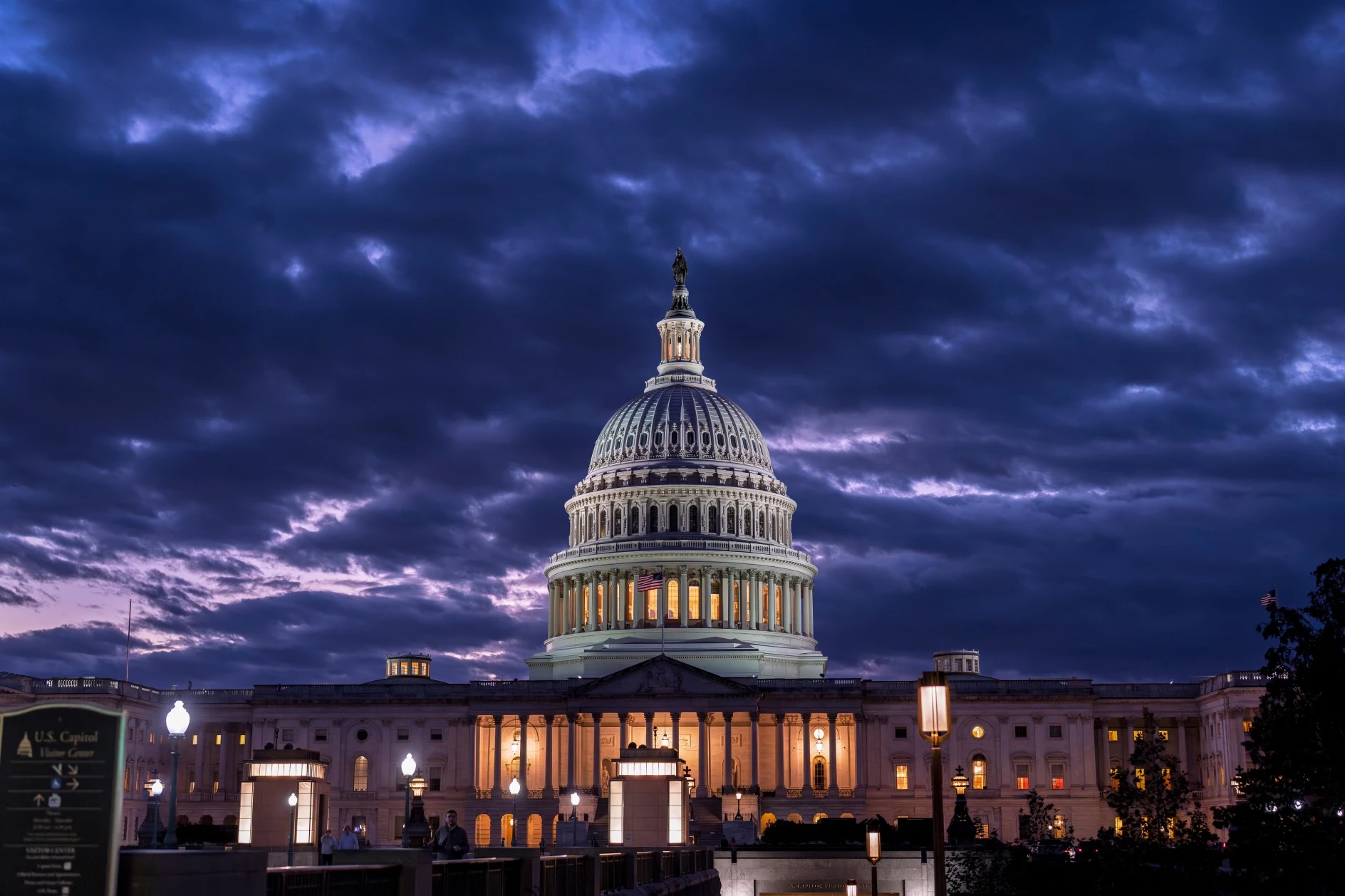
The U.S. federal government shut down on October 1, resulting in the now second-longest federal government shutdown since President Trump’s first term in Dec. 2018. The end of the shutdown is still unclear as Congress reaches day 30 with no resolution to the legislative impasse. While lawmakers have been playing the blame game, American citizens have been paying the price.
Republican and Democratic lawmakers in Congress failed to compromise on federal spending appropriation bills by the end of FY2025, resulting in a government shutdown. The House of Representatives approved a continuing resolution to fund the government through November 21, later failed in the Senate. Republicans hold 53 seats in the Senate and need 60 votes to approve the temporary spending bill. However, Democrats refused to support the bill unless Republicans agreed to extend expiring subsidies for Affordable Care Act (ACA) premiums, reverse cuts to Medicaid and other federal spending levels.
Since then, funding bills that passed through the House have failed in the Senate 13 times.
Over 730,000 federal employees are working without pay, while roughly 670,000 workers have been furloughed. 1.3 million active-duty personnel and over 750,000 National Guard and reserve personnel are also required to serve potentially without pay.
Those working without pay include air traffic controllers, who missed their first full paycheck on Tuesday. Isolated flight delays have already occurred due to a controller shortage in the Federal Aviation Administration (FAA) before the shutdown. Air traffic issues and delays are expected to increase as the shutdown continues and workers worry about their paychecks, according to National Air Traffic Controllers Association (NATCA) President Nick Daniels and Transportation Secretary Sean Duffy.
“I’m watching air traffic controllers going to work. I’m getting the stories. They’re worried about paying for medicine for their daughter. I got a message from a controller that said, ‘I’m running out of money. And if she doesn’t get the medicine she needs, she dies. That’s the end,’” Daniels said at a news conference on Tuesday.
Although Trump signed an order to pay troops during the shutdown on Oct. 15, military families are still uncertain about their future paychecks. According to Treasury Secretary Scott Bessent, the government will soon run out of ways to compensate the military and troops, “aren’t going to be able to get paid” by Nov. 15.
For the poorest Americans, funding for anti-poverty programs such as Head Start, Women, Infants and Children (WIC) and low-income heating assistance is growing uncertain throughout the shutdown. Nearly 6.7 million women and children under WIC, 750,000 children and families under Head Start and 6 million households under low-income heating assistance rely on federal funding for affordable childcare, energy costs and nutritional support.
Monthly benefits for food and grocery assistance will be cut on Nov. 1 for 42 million Americans in the Supplemental Nutrition Assistance Program (SNAP), leaving states to aid low-income families. Although House Democrats have urged the U.S. Department of Agriculture (USDA) to use money from its contingency fund to keep SNAP funded, the USDA rejected the request, stating that this action is not legal based on the exclusivity of contingency funds for “natural disasters like hurricanes, tornadoes, and floods.”
On Wednesday, the Trump administration released a preview of what 2026 Obamacare premiums would look like. Insurance rates will increase significantly, with subsidies for many Americans under Obamacare set to expire by the end of the year unless extended by Congress. Funding through Obamacare helped a large portion of poorer Americans gain access to healthcare.
Two weeks into the shutdown, the Trump administration cut roughly $28 billion in grants and funding to blue states for infrastructure projects and energy funding. This includes the $18 billion allocated to New York’s subway and Hudson Tunnel projects. An additional $8 billion in green energy plans will be canceled by Office of Management and Budget Director Russ Vought.
Trump has seized the opportunity of the government shutdown to meet with Vought to discuss “temporary or permanent” spending cuts to damage Democratic lawmakers, including mass firings and federal spending slashes. These efforts align with the administration’s plans in Project 2025 to restructure the federal government away from Democratic and left-leaning policies and toward right-wing policies.
The Trump administration has ordered layoffs for 4,200 federal workers since Oct. 10. In response to these layoffs, several federal employee unions filed a lawsuit arguing the “Office of Management and Budget, through its Director Russ Vought, violated the law through its threats to engage in the mass firing of federal workers during a shutdown.” On Oct. 28, U.S. District Judge Susan Illston granted the unions’ requests for a preliminary injunction, which extends the temporary prevention of thousands of layoffs.
Meanwhile, President Trump is continuing construction on a $250 million ballroom. Moreover, Congress members still receive pay during the shutdown.
In real time, the impacts of the government shutdown alone have been concerning for Americans and will continue to worsen the longer lawmakers of both parties fail to reach an agreement and play the blame game instead.
Acknowledgment: The ideas expressed in this article are those of the individual author.
