

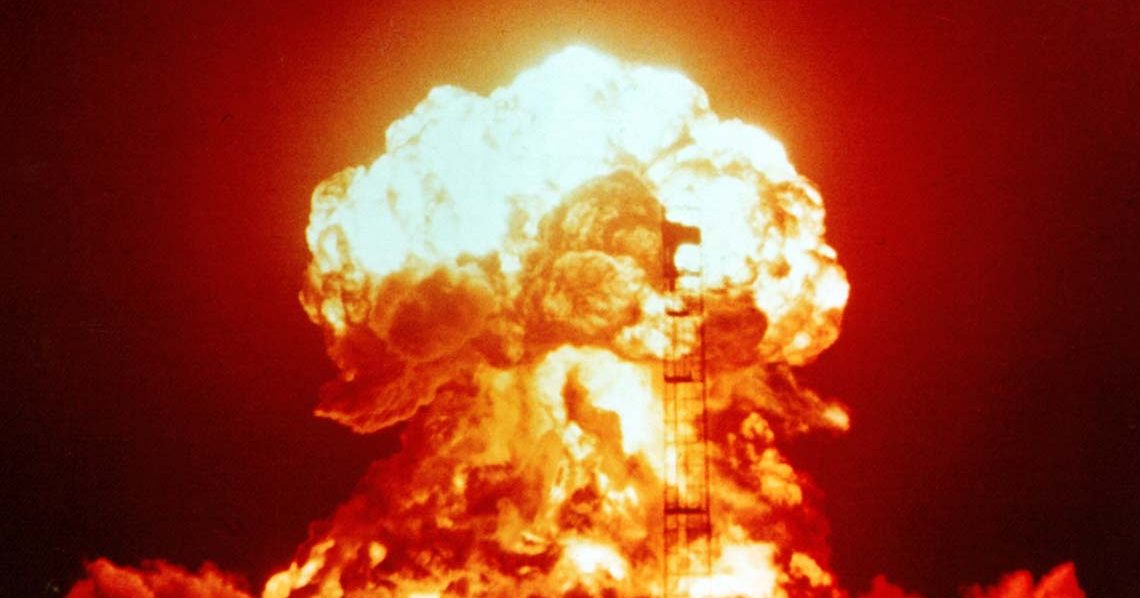
In a move that has reignited global debate on nuclear proliferation, the United States is preparing to restart nuclear testing after a 32-year pause. This decision, announced by President Donald Trump, would appear to challenge the Comprehensive Nuclear-Test-Ban Treaty (CTBT) of 1996, which was adopted by the United Nations General Assembly and prohibits all nuclear explosions. Although not all nations have ratified the treaty, the U.S. signed it, and the country has not conducted a nuclear test since 1992.
Trump’s announcement has drawn international criticism, with concerns centered on environmental harm, heightened geopolitical tensions, and the potential for an arms race.
However, in an era of multifaceted global conflicts, this step may be a necessary assertion of strength to deter aggression and ensure national security.
As a proponent of “peace through strength,” President Trump has framed the resumption of testing as a defensive measure against rising threats.
Whereas critics argue it undermines global disarmament efforts, here are the key reasons why this decision merits support:
Assurance of Compliance with International Norms
Administration officials have emphasized that the planned tests will not violate the CTBT. Defense Secretary Pete Hegseth described them as a “responsible way” to sustain a credible nuclear deterrent without crossing prohibited thresholds.
Similarly, Energy Secretary Chris Wright clarified that these would involve “subcritical experiments”—non-explosive tests designed to verify the safety and reliability of the U.S. nuclear arsenal.
By adhering to these parameters, the U.S. aims to modernize its capabilities while respecting international agreements, demonstrating a commitment to restraint even as it bolsters defense.
Persistent Threats from Adversaries
The United States faces enduring enmity from various actors, including state sponsors of terrorism and non-state groups. From the Iranian hostage crisis to the 9/11 attacks, the nation has been a prime target for those seeking to undermine its influence. President Trump’s “peace through strength” doctrine posits that a robust military posture discourages aggression, fostering stability without initiating conflict. Recent diplomatic efforts, such as brokering ceasefires between Israel and Hamas or targeted strikes on Iranian nuclear facilities, underscore this approach—actions taken decisively but without broader escalation.
As the world’s preeminent power, the U.S. confronts threats from terrorist organizations like Al-Qaeda and state actors pursuing their own nuclear ambitions. Resuming testing signals resolve, reinforce alliances, and deter potential attacks in an increasingly volatile world.
Hypocrisy in Global Nuclear Practices
The U.S. pioneered nuclear technology during World War II through the Manhattan Project, led by J. Robert Oppenheimer, but voluntarily halted testing in 1992.
But not all countries did that! Meanwhile, nations like China, Russia, and North Korea have continued or expanded their programs, often in secrecy, with minimal repercussions from the international community.
Thus, in his announcement, President Trump highlighted this disparity: “Because of other countries’ testing programs, I have instructed the Department of Energy to resume testing our nuclear weapons on an equal basis.”
He accused Russia and China of advancing their arsenals covertly, while in a 60 Minutes interview, he alleged secret testing by China, Russia, Pakistan, and North Korea. Trump contrasted this with America’s transparency:
“Russia’s testing, and China’s testing, but they don’t talk about it. You know, we’re an open society. We’re different. We will talk about it,” Trump said.
America’s Track Record of Global Leadership
The United States has a storied history of safeguarding international order, from ending World War II, even though it came at the cost of atomic bombings on Japan that included the killing of innocents, but the US stood beside Japan since then, by providing security guarantees to that nation and aiding allies in crises.
After the 2008 Mumbai attacks, U.S. intelligence assisted India in investigations; in Afghanistan, American forces fought terrorism despite misperceptions; and even in Iran, the U.S. has historically promoted stability, adding a recent one with the ceasefire between Israel and Hamas, freeing remaining hostages. These efforts have earned enemies, including those in the Middle East who threaten shared interests.
The US is still also facing threats from active terrorist organizations like Al-Qaeda, which are still active and a threat to the US.
