

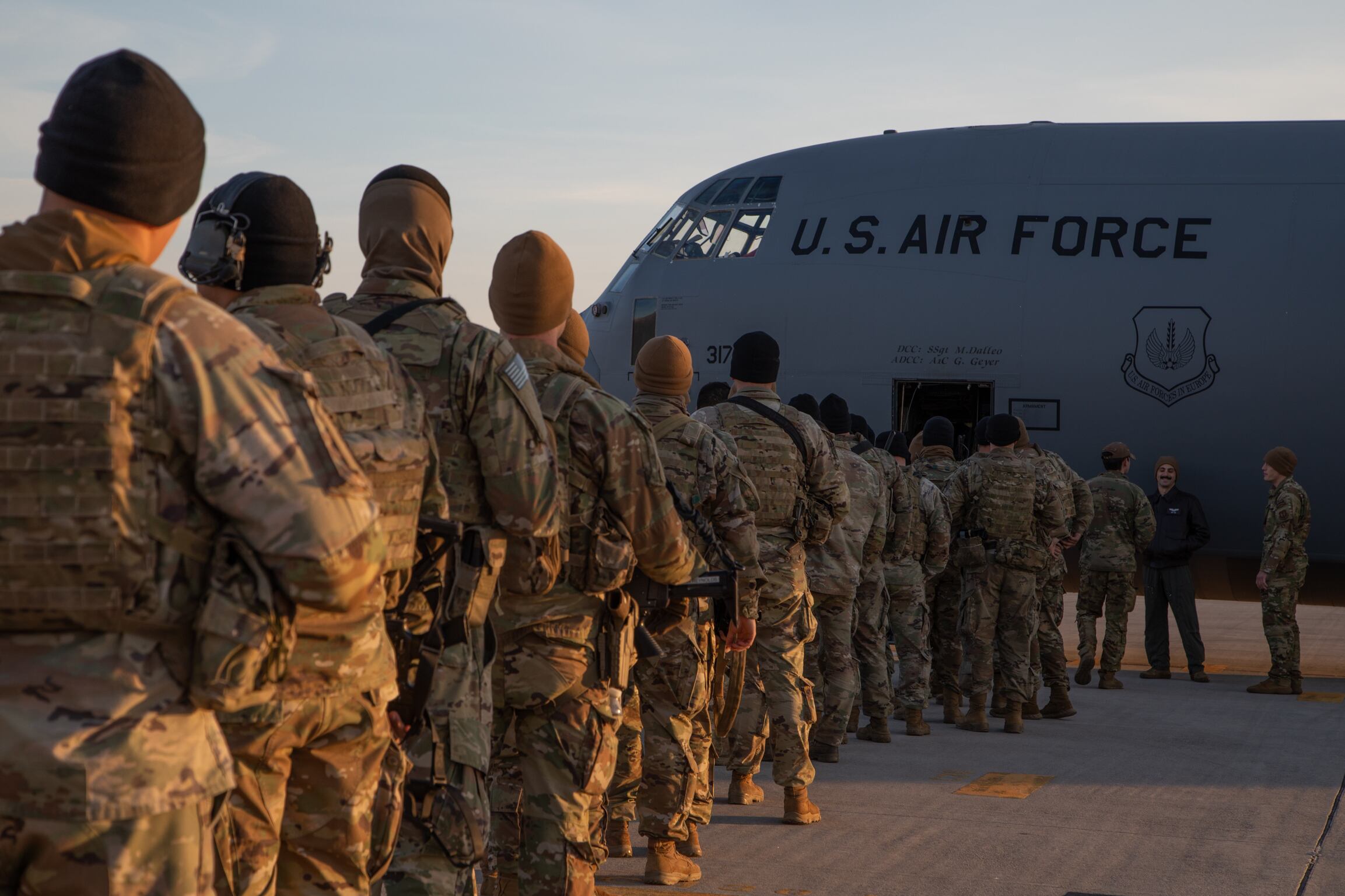
As we have just celebrated Veterans day, it seems worthwhile to examine America’s current complicated relationship with our armed forces. Just two years ago a Gallup poll found “confidence in the U.S. military” was at its lowest in two decades, hovering around 68% for Republicans, 62% for Democrats, and 55% for Independents. These numbers are only a few percentage points higher than during the Cold War, when Americans were concerned with Nuclear War and the threat of the Soviet Union. Why are Americans showing similar concern now? The Gallup columnist who examined this poll concluded the decline was due to the failed War on Terror. While this is undoubtedly partially to blame, it veils a greater problem of partisanship and public disconnect creeping into the way Americans view the military.
When looking for a cause of this concerning trend, it is easy to lay blame at the foot of President Donald Trump. After all he has routinely butted heads with his Generals, most notably Gen. Mark Milley, a vocal critic of his administration, who he retains so much dislike for, that even senior level officials who simply worked under Milley have faced retribution, being recently fired by Secretary of Defense Pete Hegseth. Trump and his defense secretary show no qualms about firing military officials for anything they see as a political tilt, politicizing the military and making such firings seem justified. The President’s use of the national guard to curb crime in American cities has further hoisted the military from a foreign defense role, into one more reminiscent of domestic policing. According to a Reuters poll only 38% of Americans support troop deployment in D.C., and this is likely even lower in regards to cities outside the capital. Troops policing Americans does nothing to dispel illusions of partisanship sweeping the armed forces.
However, since the aforementioned Gallup poll was taken during Biden’s tenure, these were trends building during and after Trump’s first term. In fact, voters saw Biden as weaker on the issue of defense and military leadership than his three predecessors. The former President’s failed withdrawal from Afghanistan is likely to blame for most of this negative view, but pushback against DEI initiatives such as allowing openly transgender Americans to serve in the military also earned him significant criticism.
Whether it is Trump’s politicized firings and domestic deployments or Biden’s social reforms and bringing the War on Terror to an embarrassing conclusion, Americans are steadily seeing the military as a tool for partisanship. However, partisanship is not the singular reason for the public’s disconnect from the military. Political Scientist Peter Feaver has noted that fewer people serving has weakened trust in the institution: “Our survey found if you serve, you’re likely to have higher confidence in the military than somebody who didn’t serve. And even if you didn’t, if your family member served, you’re likely to have high confidence compared to somebody from a family without any veterans.” Feaver goes on to state that as the amount of veterans declines so does true confidence in the military, where stated confidence instead becomes an outward gesture based on social acceptability, rather than assurance in or understanding of those serving. No longer is the soldier your loved one, or a friend, but a stranger who is increasingly taking on tasks you disagree with.
Distrust in once revered institutions is nothing new as of late, but the fractured relationship we have with those who defend us has concerning implications. The armed forces have failed to make recruitment benchmarks in recent years, making a promising turn in 2025 during which all quotas were filled (minus the spaceforce); however, these numbers could be deceiving as nearly a quarter of new recruits drop out within their first two years of service. Partisanship and failed operations have done nothing but discourage young Americans from putting on a uniform, just as the older brass are being fired or quitting for similar reasons. This limits the preparedness for war and makes every American less safe. And if the choice of war is put on the table, we are now so disconnected from those who serve that it is hard to understand the weight of the decision. As civilians, it is easy to forget that security is an ever-present concern while we rest safe at home. But if we are truly to honor the sacrifice made by our veterans, we must examine our leaders’ choices and hold them accountable with the same effort and dedication with which they serve.
