

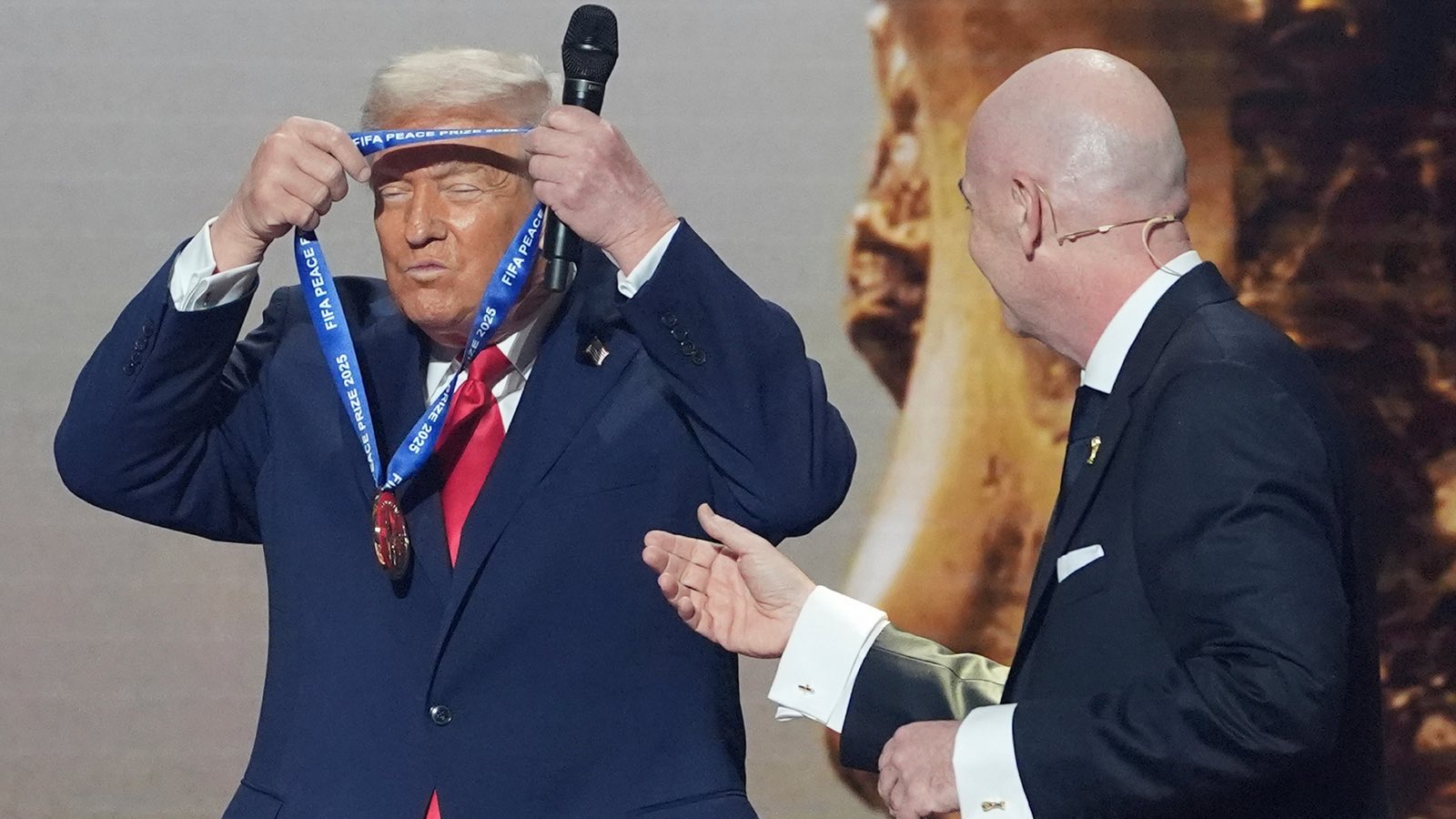
U.S. President Donald Trump received the inaugural FIFA Peace Prize, which ignited significant debate, with critics questioning the decision’s impartiality. The American Civil Liberties Union (ACLU) issued a statement warning that FIFA risks becoming a “stage for authoritarianism.”
Despite the award’s intent to celebrate unity, it led to backlash from various quarters, who argue it compromises FIFA’s neutrality and overlooks Trump’s divisive policies.
This controversy also draws parallels to past award recipients, such as the Nobel Peace Prize given to Muhammad Yunus, the interim leader of Bangladesh following the ousting of Prime Minister Sheikh Hasina in 2024. Yunus’s tenure has been marred by reports of ongoing human rights violations, prompting calls to revoke his Nobel Prize.
If figures like Yunus are deemed worthy of such honors despite these issues, one might question why Trump—who was democratically elected as the 47th President of the United States and has positioned himself as a mediator in global disputes—should not receive similar recognition for his initiatives to end wars since taking office?
Trump’s administration has introduced a refreshed approach to international relations, fostering alliances where tensions once prevailed and realigning partnerships to prioritize American interests. FIFA’s commendation highlights Trump’s “extraordinary actions for peace,” particularly in brokering deals that have de-escalated several protracted conflicts.
A hallmark of Trump’s foreign policy has been his role in facilitating the Gaza peace deal, hosted in Egypt in 2025. This agreement– known as the Abraham Accords –united Arab and Muslim nations on a common platform, isolating actors like Iran and diminishing support for groups such as Hamas. The accords emphasized a vision of global peace that rejects the legitimacy of terrorist organizations, aiming to disarm and neutralize threats like Hamas through diplomatic pressure.
In under a year, the Trump administration has been credited with halting or mitigating several conflicts, including:
- Israel and Hamas: A ceasefire was brokered in October 2025, leading to a prisoner exchange where Hamas released 20 living hostages and the remains of 28 deceased individuals, in return for Israel freeing nearly 2,000 Palestinian detainees and repatriating 360 Palestinian bodies.
- Armenia and Azerbaijan: A joint peace declaration was signed on August 8, 2025, after decades of hostility. Facilitated by Trump, the non-binding agreement outlines a regional economic framework and infrastructure investments, though experts note it lacks mechanisms for long-term stability.
- Democratic Republic of Congo and Rwanda: A peace accord signed on December 4, 2025, calls for a permanent ceasefire, disarmament, refugee repatriation, and economic integration. Despite ongoing skirmishes, the deal aims to address root causes, with some analysts critiquing its focus on U.S. resource access over enduring peace.
- India and Pakistan: A ceasefire was established in May 2025 following a brief escalation, with Trump’s team intervening to avert a potential nuclear crisis.
- Cambodia and Thailand: Hostilities ended with a ceasefire on July 28, 2025, after five days of clashes. Trump personally engaged with both nations’ leaders, and Secretary of State Marco Rubio dispatched envoys to facilitate talks in Malaysia.
- Iran and Israel: While no formal ceasefire exists, the Trump administration proposed a Gaza war peace plan to address the broader Israeli-Palestinian conflict.
- Serbia and Kosovo: Economic normalization pacts were advanced under Trump, paving the way for potential future peace agreements.
- Ethiopia and Egypt: Tensions over a major hydropower dam were managed during Trump’s first term, though challenges remain.
- Russia and Ukraine: Efforts to resolve this ongoing war persist, with U.S. initiatives under Trump showing continued commitment, albeit without a full resolution yet.
These achievements underscore Trump’s proactive stance on peace, contrasting with what some perceive as selective outrage from liberal critics. If Nobel laureates like Yunus can retain their honors amid allegations of rights abuses and demands for Hasina’s extradition from India for potential capital punishment, Trump’s democratic mandate and diplomatic successes warrant equivalent consideration.
President Trump merits the FIFA Peace Prize not merely for his bold rhetoric but for his tangible results in de-escalating global hotspots and forging unlikely alliances.
Regardless whatever the critics are saying, in an era of endless conflicts, Trump’s unorthodox approach has delivered measurable progress, proving that leadership rooted in strength and negotiation can indeed make the world safer, earning him this well-deserved recognition as a catalyst for global unity.
