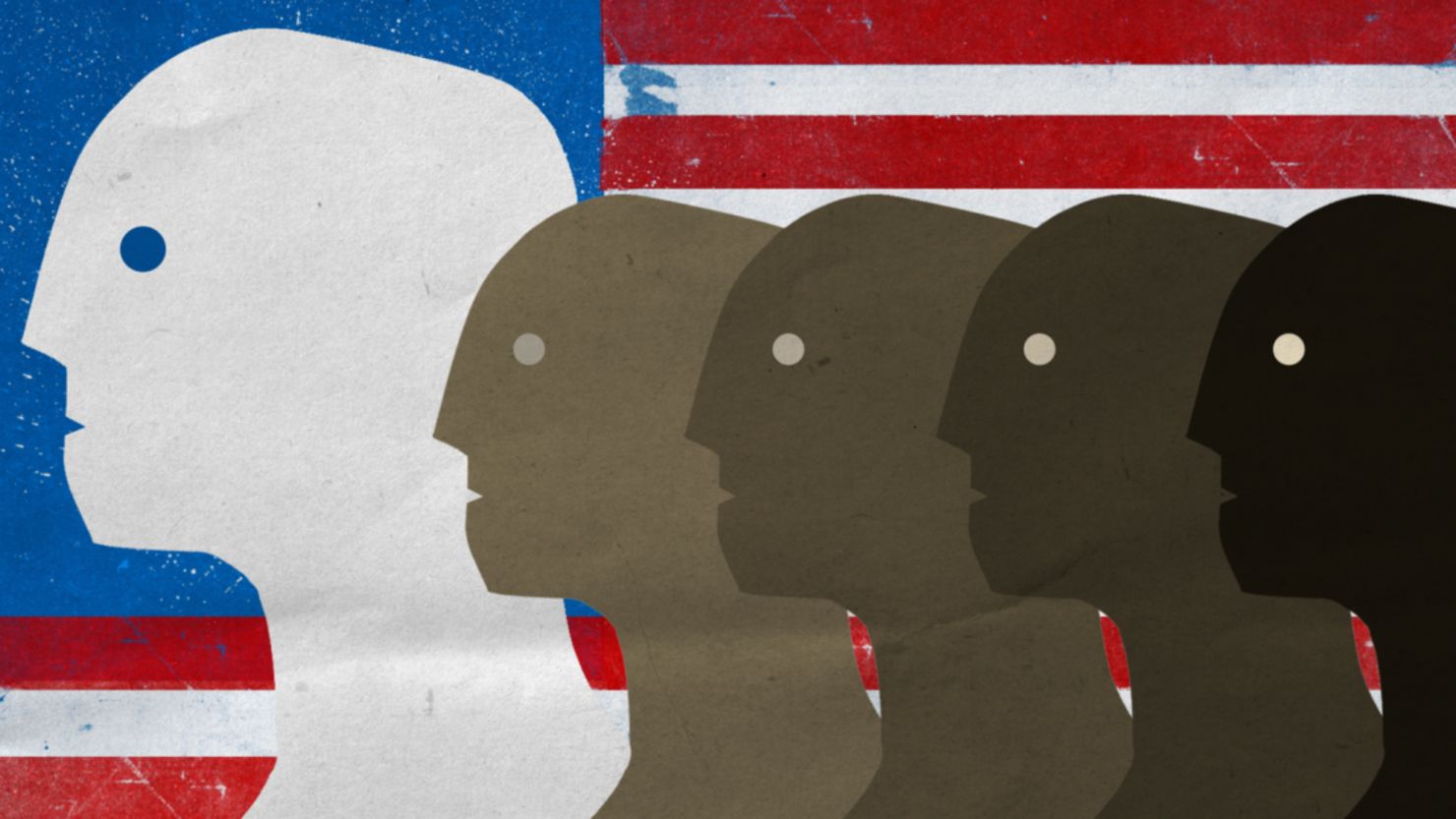
In the first year of Trump’s second term, national communication has grown angrier and more divisive, particularly surrounding culture. People across social media platforms now amplify familiar themes: claims of “real Americans” under threat, accusations of “outsiders” changing the country, and warnings of cultural decline. These ideas, once on the fringes of white supremacist spaces, are now echoed by the highest political leaders, blending extreme narratives with mainstream discourse.
In yearly reports, organizations such as the Southern Poverty Law Center have documented how coded political language, or “dog whistles”, allow extremist narratives to spread under the guise of cultural preservation or patriotism. For example, when political leaders or their allies use language like “replacement” in relation to culture, they are really echoing the racist “Great Replacement Theory,” which falsely argues that immigrants and/or minorities are overtaking white populations. In the last decade, this conspiracy has inspired several deadly acts of violence, including the 2019 El Paso shooting and the 2022 Buffalo massacre, where attackers explicitly cited the theory as their motivation.
Kathleen Belew, an expert on white power movements, notes that when national leaders adopt the language of hate groups, the distinction between mainstream and extremist politics blurs. A recent Department of Homeland Security report underscored this concern, highlighting that racially or ethnically motivated violent extremism is the most persistent and lethal threat in the U.S.—a problem fueled by online misinformation and inflammatory rhetoric.
What makes the normalization of racist rhetoric so dangerous is its subtlety. The more Americans hear racially coded language or conspiracies, the less shocking it sounds. Ideas that might once have been recognized as bigoted are now being viewed as “patriotic concern.” According to the Arnolt Center for Investigative Journalism, extremist content is increasingly amplified by both mainstream networks and social media algorithms, giving hate groups unprecedented access and influence. Over time, these messages have the potential to shift cultural norms and alienate communities.
This erosion of civility also affects how the U.S. is viewed abroad. The Guardian recently reported that foreign diplomats and analysts see Trump’s nationalist messaging as aligning the United States with far-right populist movements in Europe. This kind of rhetoric weakens America’s reputation as a defender of democracy and creates tension among allies who once looked to us for moral leadership. Furthermore, research from the University of Chicago Project on Security and Threats (CPOST) shows that extremists often view extremist political statements as validation for their skewed worldview. When influential figures say things like “take back our country,” many of these groups interpret that as a literal call to action. Even when such language is framed symbolically, it emboldens those ready for violence.
The overall effect is clear: prejudice disguised as patriotism corrodes democracy. Racist rhetoric doesn’t merely render debate; it fosters resentment, diminishes civic participation, and destroys the shared principles of equality and diversity that make up a healthy U.S. society. Public officials have an obligation to recognize the power of their words, and citizens should also play a role by calling out coded hate speech, supporting credible journalism, and investing in education that strengthens media literacy and public knowledge. Rhetoric can either unite a country or drive it further apart, and when language rooted in white supremacy becomes normalized, it risks reshaping America’s political identity in ways that future generations may struggle to reverse. Democracy depends on active resistance to hate.