On Jan. 3, the U.S. executed a military strike to capture Venezuelan President Nicolás Maduro and his wife on drug and weapons charges. The couple was arrested in Caracas and taken aboard an FBI aircraft, arriving in New York that same Saturday afternoon.
In a recent press conference, Trump said the U.S. would “run the country until such time as we can do a safe, proper, and judicious transition.” Later adding that the U.S. government seeks “peace, liberty, and justice for the great people of Venezuela.”
On the same day as the strike, the Constitutional Chamber of Venezuela’s Supreme Court ruled that Vice President Delcy Rodríguez will act as president in Maduro’s absence.
In a public statement, Rodríguez opposed Trump’s assertion, claiming that Maduro was the legitimate Venezuelan President and demanded his and his wife’s immediate liberation. “We’re ready to defend Venezuela,” Rodríguez said, framing the U.S. operation as an attack.
Since then, Trump has threatened Rodríguez with repercussions if she refuses to cooperate with the U.S.
On the one hand, many citizens, especially those living abroad, seemed relieved at the prospect of the end of Maduro’s authoritarian presidency, which has plagued the country for over a decade. But, on the other hand, the operation is a clear violation of international law and Venezuela’s sovereignty, especially since the democratic transition seems to be secondary to the U.S.’s economic interests.
The takeover of another state constitutes a violation of international law, and, even under exceptional circumstances, such as the possibility of a shared dissatisfaction from Venezuelan citizens towards their governance, would at least require deliberation by the U.N. Security Council.
There is also room for concern on the motivations behind the U.S.’s takeover. For one, if the well-being of the Venezuelan citizens were truly a part of the U.S.’s decision to take over after the capture, as Trump’s statement in the press conference implies, then the facilitation of free elections would be the first priority, and not issuing orders on the oil market.
However, this is exactly the opposite of what is occurring. U.S. officials have told Rodríguez to crack down on drug flows, kick out Iranian, Cuban and other operatives of countries or networks hostile to Washington, and reorient oil operations towards U.S. control and markets. While the facilitation of free elections was also mentioned by U.S. officials, it was framed as a distant expectation for Rodriguez — a request far from urgent.
It also is far from comforting that Trump had expressed the possibility of an invasion in Venezuela even back in 2017.
Disregarding concerns of motivation, it is undisputedly unacceptable for a state to independently change another state’s regime. The act is clearly a violation of Chapter 1, Article 2 of the U.N. Charter, which provides that “all Members shall refrain in their international relations from the threat or use of force against the territorial integrity or political independence of any state.”
I cannot find any reasoning that categorizes the U.S.’s actions as anything but a violation of this article. I am not posing whether the U.S. has any right to hold Maduro under American Law, rather, I am questioning the subsequent self-proclaimed take over: a statement that directly opposes and undermines Venezuela’s own Supreme Court.
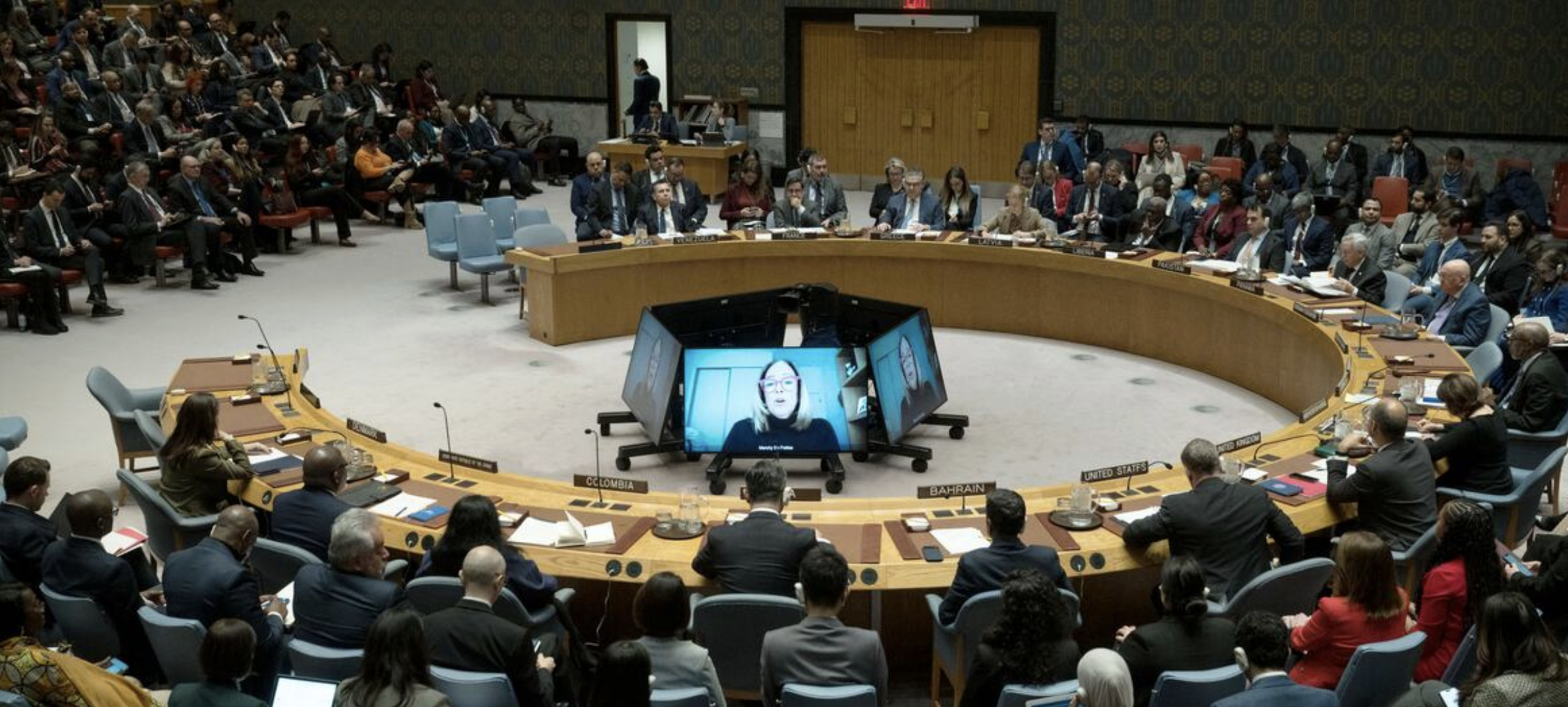
In the emergency U.N. Security Council meeting held on Jan. 5, several states criticized the U.S. for its operations. In a statement delivered by American Diplomat, Rosemary DiCarlo, U.N. Secretary-General António Guterres expressed concern on “the potential impact on the region and the precedent it may set for how relations between and among states are conducted.”
American Economist Jeffrey Sachs also pushed heavily for the respect of a state’s sovereignty, warning for the Security Council to shift away from discussing Maduro’s governance and towards the legality of the operation.
I share this concern and question the role of the U.N. in such a clear scenario where a state’s sovereignty has been violated. I question whether the U.N.’s power is truly limited to the provision of a platform for emergency Security Council meetings where free discussion is fostered, but no enforcement of international law is ensued.
To find a balance between respecting a state’s independence while simultaneously holding them accountable to international law, is one of the primary issues in the current international community. In my view, a proper version of the operation would require the exhaustive process of garnering approval from the U.N. Security Council — a process the U.S. clearly did not undergo.
The real question is why the U.N.’s Security Council never intervened with Maduro’s dictatorship to begin with. Venezuela is recognized as a state by the U.N., and its government should therefore be held to the Security Council’s scrutiny. The burden of responsibility then also falls on all member states who did not previously act against Maduro.
In fact, the same pattern can be seen today, as member states have failed to respond to U.S.’s violations.
A possible reason could be the difficulty in achieving the aforementioned balance that satisfies international law without undermining sovereignty, but the U.S.’s status as a global superpower is definitely a major component as well.
On both ends, Venezuela’s sovereignty has been disrespected. On one end, the Supreme Court of Venezuela had named Rodriguez as the rightful actor of President in Maduro’s absence. For the U.S. to overrule this by claiming it will “run the country,” is to completely undermine the sovereignty of the state. It is one thing to charge and seize Maduro, it is entirely different to claim to now have power over that country.
On the other end, the U.N.’s Security Council did not have practical action to secure a free and democratic government for the Venezuelan people – another violation of sovereignty.
The account for sovereignty should not be purely determined by a state’s authority, but, instead, should take into account the sovereign desires of the state’s citizens. In a perfect world, a state’s leadership should be a direct reflection of its citizen’s desires, but until such a world is achieved, the risk of equating sovereignty to the authority’s power cannot be taken.
The international community should uphold international law, and so bears responsibility for yielding to the U.S. Condemning the U.S. for not adhering to international law, but then refusing to defend it is a deep act of hypocrisy.