

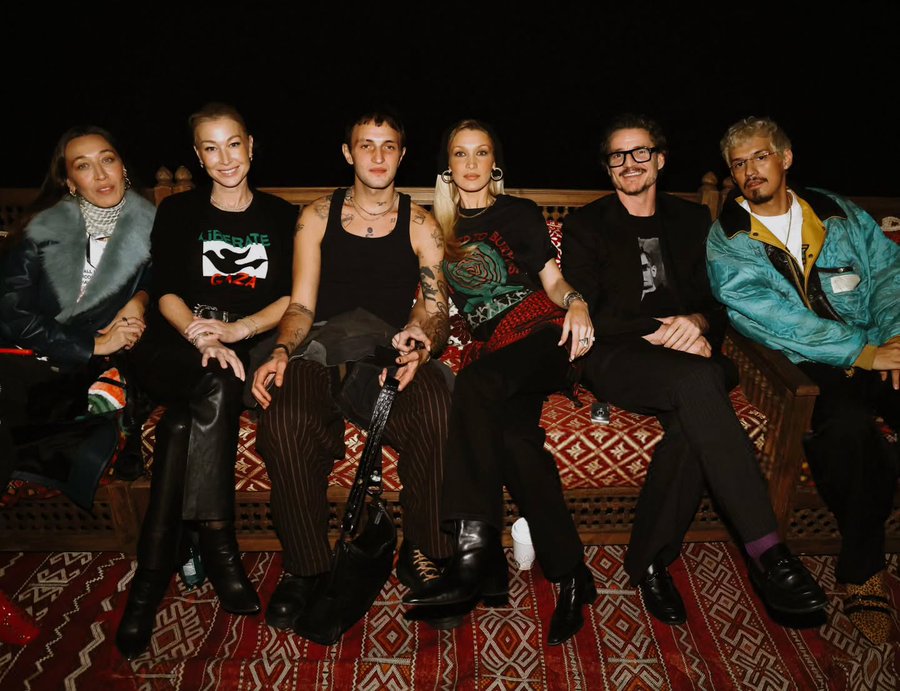
In a media landscape often dominated by distance and abstraction, Artists for Aid offered something different, fundraising rooted in community can be an intimate and human experience. Held in Los Angeles for its third annual year, Artist for Aid was created and funded by artist Mustafa, who established this event as a response to the humanitarian cries and lack of attention they received, rooted in his personal belief that art can be a vehicle of responsibility as much as expression. The event brings together public engagement and music to direct action in support of humanitarian relief efforts supporting Sudan and Palestine.
Co-hosted by Bella Hadid and Pedro Pascal, Artists for Aid featured around 20 artists who donated their performances and time to raise funds for the Sudanese American Physicians Association and the Palestine Children’s Relief Fund. All earnings from the night are evenly split between the two organizations, both of which provide direct medical care and emergency support to communities impacted by ongoing conflict.
What sets Artists for Aid apart from other benefit concerts is its purpose, fundraising was not treated as a secondary element, but rather is a core focus of the night. Between performances, artists and speakers emphasized the importance of this cause and why it matters, highlighting the emergency medical aid and surgical aid. With clear transparency, it has helped transform attendance into participation, reinforcing the impact of this event.
That personal investment was especially evident in the role through the event hosts, particularly Bella Hadid. Hadid spoke openly about her advocacy for Palestine being deeply connected to her father, Mohamed Hadid’s history and lived experiences, referencing her family’s displacement and the way those stories shaped her understanding of injustice. Bella Hadid only emphasized her involvement in making Artists for Aid more important, rooted not in performance, but in responsibility to her platform to support humanitarian relief. By centering aid rather than rhetoric, the fundraiser reflected a commitment rooted in empathy and personal responsibility.
Inside the venue, the atmosphere was filled with clear intention. Rather than focusing on being a typical entertainment space, the room felt warm and communal. Performances were met not only with applause but with moments of silence during reflection. Artists across genres shared the stage without hierarchy, united by a common goal rather than personal promotion.
That tone was echoed by the artists who took the stage throughout the night. Performers like Lucy Dacus, Shawn Mendes, and Rex Orange County brought distinctly different sounds to the stage, yet unified in tone. Their performances carried vulnerability while offering emotional entry points that resonated with the audience. Using personal testimony, poetry, and intentional pauses allowed the weight of the cause to settle in the room. Across genres, the artists treated the stage as less of a space for self-promotion but rather a platform for collective reflection.
Together, the artists helped shape Artists for Aid into something cohesive and grounded. Their collective goal and restraint gave the event its sincerity, proving that music does not need spectacle to move people, only intention.
