

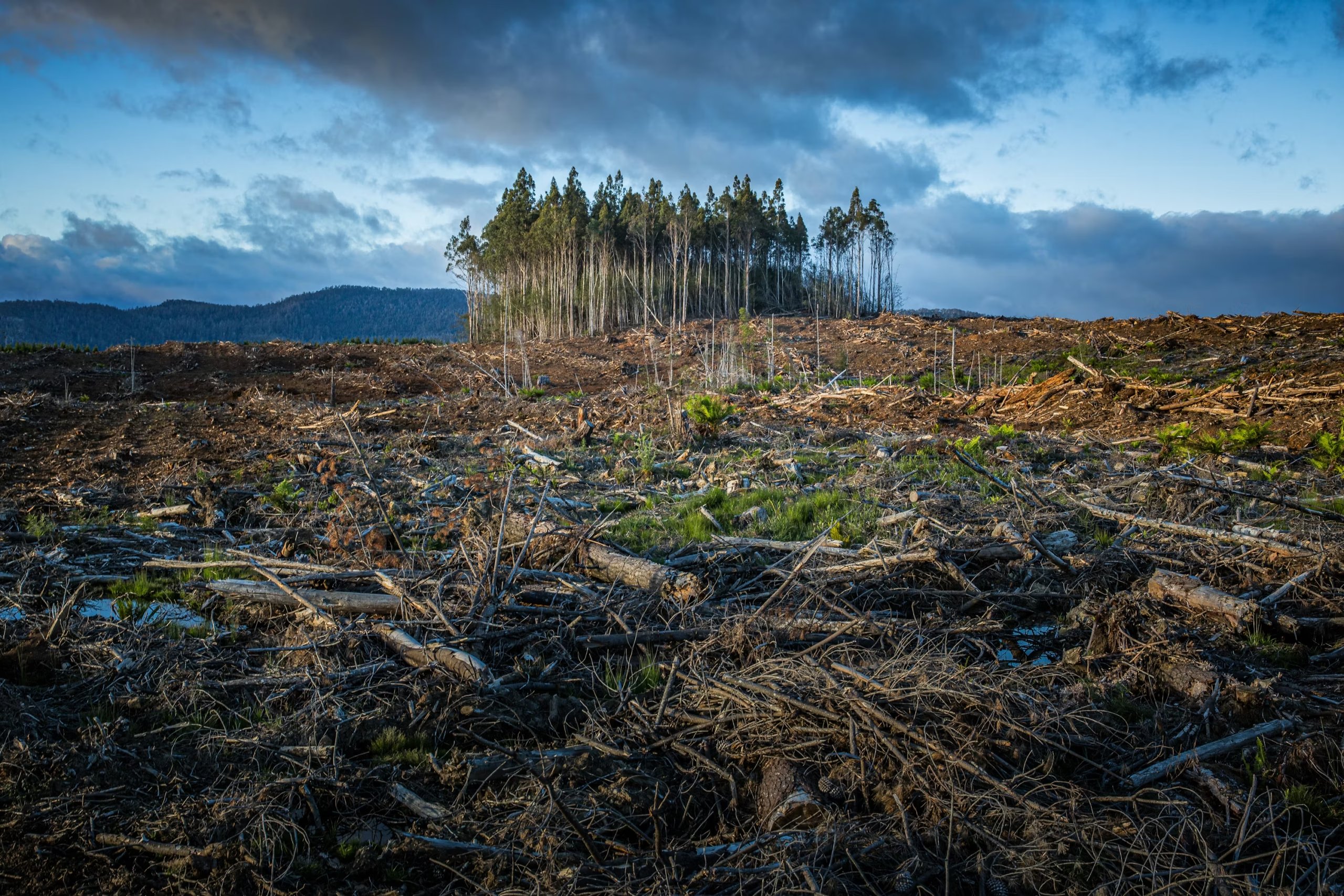
People aren’t really talking about climate change anymore. In the past 15 years, climate change has gotten from no coverage to a few minutes of coverage at presidential debates. In the 2024 election, only 22% of voters ranked it as a top three issue. Concern about climate change has also dipped across the political spectrum, with Democrats, Independents, and Republicans all expressing less concern about it than they did in 2021. This same study shows that clean energy sources have dropped in terms of favorability, whereas oil and gas have gone up. However, counteracting climate change and reducing our impact on the planet is still a worthy goal. Climate change impacts everything from natural disasters, to the food we eat, to the air we breathe.
Climate change and environmentalism are very partisan issues in American politics. They enjoy a very high level of support from Democrats, but most Republicans see it as low priority, or even a hoax. However, this was not always the case in American history. Theodore Roosevelt, a Republican, is often considered the “conservationist president.” During his time in office he would protect 230 million acres of public land, establishing 150 national forests, 51 federal bird reserves, 4 national game preserves, 5 national parks, and 18 national monuments. During his first State of the Union address in 1970, President Nixon designated the environment as the defining issue of the decade. George H.W. Bush pledged to be the first “environmental president”, and was the first president to make climate change a major issue of concern for the federal government. However in the 1990s Republicans would shift towards anti-environmentalism, due to environmental regulations hindering economic development.
While climate activism was initially focused on pressuring governments and industries to take action to combat the causes and impacts of climate change, such as reducing greenhouse gas emissions or reducing pollution, in the 2010s and 2020s it became a blend of various causes meshed together. Environmentalism would be combined with various leftist causes like queer rights, defunding the police, decolonial thinking, and many other issues. The Sierra Club, America’s oldest and most influential environmental group, would fall victim to this, releasing an “equity language guide” encouraging its members to not use the term “American”, pledging to defund the police, and dedicating 108 Full Time Equivalents to DEI, but only two focused on protecting the Arctic Refuge. It is perfectly fine to advocate for progressive causes, but at a certain point, the climate movement forgot about the climate.
If we want to see a successful renewal of the climate movement, we have to turn it into a matter of science and national interest, rather than another topic for the endless culture war. China understands this, and now 74% of all large scale wind and solar projects are being built in China, compared to 6% in the United States. Turning climate activism into a scientific and technical problem will not only allow for us to find real and tangible solutions to mitigate climate impact, but it will also create jobs for Americans. We should emphasize our national pride regarding our national parks, and stress the importance of protecting our public lands. Yes, America is an economic superpower, but it’s also so much more than big business. The U.S. was the first country in the world to establish a national park, and our historical appreciation and love for the natural world is something to be proud of. Climate change is not a partisan belief but a concrete reality, and a renewed climate movement must appeal not to political ideology, but to our shared interests: prosperity, security, and the preservation of the land that has shaped who we are as a people.
