

Hi, I am Dustin Parvin, a former United States Army Ranger School instructor and First Sergeant, and I am here to address what I believe is wrong with America. This is not an article designed to cater to emotions. It is an article designed to speak plainly. That is how empathy with accountability works. I speak this way because I care about future success, not temporary comfort.
The biggest misconception America has about accountability is that it is mean. Holding people accountable is not embarrassing, and it is not cruelty. It is doing the right thing for their future goals. Yes, delivery matters. Yes, tone matters. But the concept of accountability itself is not harmful. Avoiding correction is.
When classmates, peers or colleagues fail, and no one speaks up, silence becomes participation. Nobody enjoys failure, so why normalize it by refusing to correct what is clearly below standard? Research on goal setting and performance demonstrates that feedback tied to clear standards improves task performance and motivation (Locke & Latham, 2002). Feedback that is specific and actionable increases effectiveness in structured environments. Accountability is not emotional aggression. It is performance alignment.
I have been making corrections for over 20 years. That is leadership. Corrections do not disappear when you lead something meaningful. When I took over as a high school coach, the program had not won a league championship in 24 years. We won the league championship this year. That result did not happen because I avoided hard conversations. It happened because I made corrections and held the team to a higher standard. That is performance-based criticism applied with purpose.
High-performing teams actively seek feedback. Elite military units conduct after-action reviews that focus primarily on what went wrong and how to improve. Research on deliberate practice confirms that improvement comes from identifying weaknesses and correcting them, not from celebrating what went right (Ericsson et al., 1993). Excellence grows where correction is normalized.
Here is the harder truth. Accepting correction requires humility. Slowing down and asking, “Was I wrong?” requires maturity. When someone approaches with a suggestion for improvement, it is worth pausing before reacting. Research on emotional regulation shows that individuals who pause and evaluate before responding make better decisions under stress (Gross, 2015). That pause is not weakness. It is discipline.
When poor performance goes uncorrected, it becomes culture. Culture is shaped by what leaders tolerate. Organizational research shows that unaddressed underperformance lowers morale and overall effectiveness (Edmondson, 2018). Environments where standards are not enforced eventually lose psychological safety and productivity. Standards protect people. They do not oppress them.
Winning feels good because achievement activates neurological reward systems associated with motivation and reinforcement. Accountability produces measurable outcomes. Outcomes build confidence. Confidence strengthens culture. If a team has a sales goal and no one is making calls, the mission fails. If peers hold each other accountable and execute, the mission succeeds. Accountability produces tangible results.
There is a difference between correcting someone and attacking them. Leadership is not the same as popularity. Correction does not require humiliation. It requires clarity. Effective feedback is task-focused, respectful, and direct. Studies on feedback effectiveness show that delivery grounded in respect improves acceptance and reduces defensiveness (Locke & Latham, 2002). The goal is improvement, not ego.
High performers consistently ask one question: How can I get better? Individuals who actively seek feedback improve faster than those who avoid it (Ericsson et al., 1993). Elite organizations analyze errors and refine systems. That is how excellence is built.
Emotional discipline is critical in giving and receiving correction. Discipline is habit formation aligned to the mission. It is not punishment. It is structure. When someone receives criticism, the ability to stop, think, and respond determines growth. Emotional control allows correction to become fuel rather than friction.
The long term cost of avoiding hard conversations is failure. Sometimes that failure is minor. Sometimes it is catastrophic. Research in safety culture demonstrates that open communication and accountability prevent systemic breakdowns and human error (Reason, 2000). Silence is not kindness. Silence can create risk.
Accountability is uncomfortable. Growth often is. Correction is not being mean. It is building stronger individuals, stronger teams, and ultimately a stronger country.
References
Edmondson, A. C. (2018). The fearless organization: Creating psychological safety in the workplace for learning, innovation, and growth. Wiley.
Ericsson, K. A., Krampe, R. T., & Tesch Romer, C. (1993). The role of deliberate practice in the acquisition of expert performance. Psychological Review, 100(3), 363–406.
Gross, J. J. (2015). Emotion regulation: Current status and future prospects. Psychological Inquiry, 26(1), 1–26.
Locke, E. A., & Latham, G. P. (2002). Building a practically useful theory of goal setting and task motivation. American Psychologist, 57(9), 705–717.
Reason, J. (2000). Human error: Models and management. BMJ, 320(7237), 768–770.
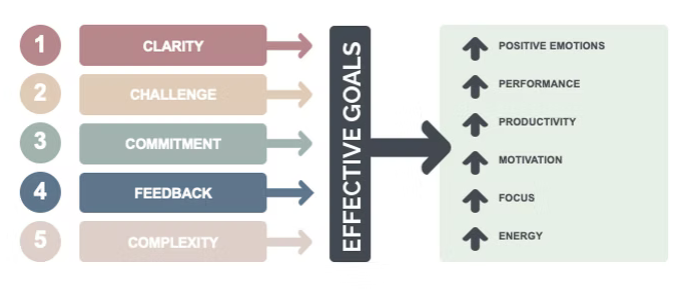
The image accompanying this article is a figure illustrating Goal-Setting Theory as set forth by Latham & Locke. This image was created by Kelly Kampino, whose article explaining the Goal-Setting Theory can be found here.
