
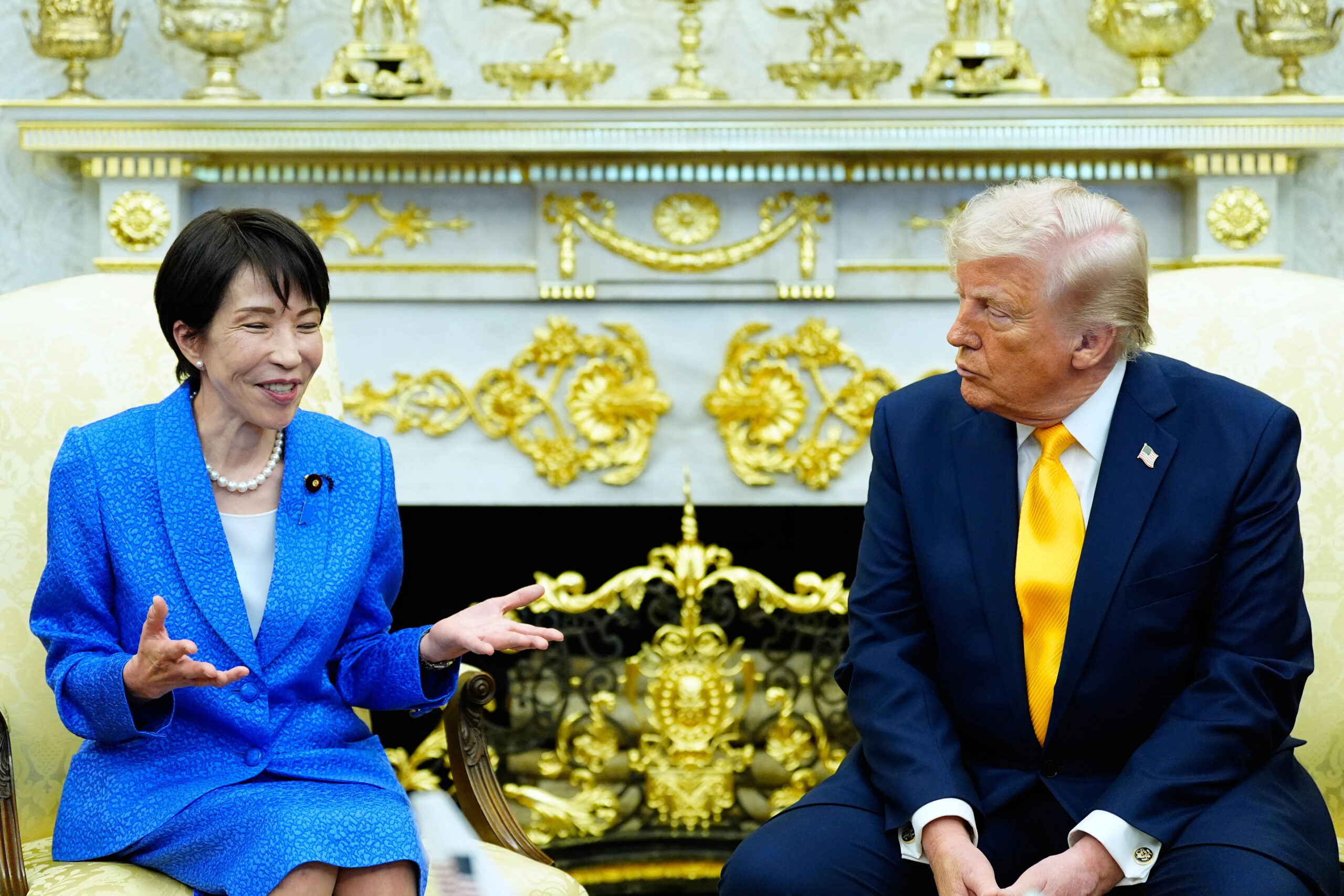
Historically, previous presidents have avoided speaking about the 1941 attack on Pearl Harbor, framing it as a tragedy rather than an act of aggression from Japan, in order to focus on maintaining and strengthening ties with Japan. However on March 19, President Trump, per usual, broke from this tradition in presidential conduct while meeting with Japanese Prime Minister Sanae Takaichi. When asked about why Japan and other American allies had not received notice of the U.S.-Israeli plan to attack Iran, President Trump replied “We didn’t tell anybody about it because we wanted surprise. Who knows better about surprise than Japan, OK? Why didn’t you tell me about Pearl Harbor, OK? Right?”
The Japanese media has not reacted to this off-the-cuff statement so positively. Some criticize President Trump for so carelessly mentioning a tragic event, whereas others are angry that Prime Minister Takaichi did not speak up, with concerns of damaging relations between the U.S. and Japan. For instance, Toru Tamagawa, a news commentator for TV Asahi said that the comment showed “an unpleasant side of President Trump. . .He doesn’t care at all that the Japanese prime minister is sitting next to him.” However Izuru Mizuhara, a professor of Japanese politics at the University of Tokyo said that “many Japanese would probably shrug off the joke, seeing it as just another over-the-top remark by Mr. Trump.” However he also said that, “This is something that absolutely shouldn’t be said. He might start saying things like, ‘Hiroshima and Nagasaki were fine, weren’t they?’ For Japanese people, we can’t accept that.”
However, while the media has mostly focused on this remark and its subsequent reactions, much more was covered at this meeting, and much of it was productive. Japan reaffirmed its commitment to maintaining communication with the United States regarding the current conflict in the Middle East. The two leaders also discussed tensions with North Korea, particularly focusing on their resolution to completely denuclearize the East Asian nation.
The White House has boasted about the results of the talk. Making points that the President accelerated market access to Japan for American farmers, ranchers, and producers. Japan agreed to build multiple modular reactor power plants and gas generation facilities in the U.S., and the two countries will work to strengthen supply chains and energy security, particularly in regard to critical minerals. Japan and the U.S. will also further deepen their partnership in science, space, and technology development.
While President Trump’s comment was shocking, it is unlikely that he was actively trying to disrespect the Japanese people. Trump has praised Japan and its leadership many times, and former Prime Minister Shinzo Abe was his close friend. However, in the future, it is important to remember that what is a humorous remark to a Western audience may be interpreted differently by other cultures. This event is another stark reminder that the old standards of presidential conduct are, perhaps unfortunately, long gone. On the other hand, it is somewhat unfortunate that a very productive meeting with a great friend of the United States got overshadowed by one statement. However, it isn’t necessarily the media’s fault, since the public is much more interested in scandal and controversy than trade deals. In such a geopolitically turbulent time, with much friction between America and its allies, it is nice to have a reminder that the U.S. can cooperate with countries around the world to make progress.
