

The Earth has existed for approximately 4.5 billion years, enduring countless unimaginable catastrophes.
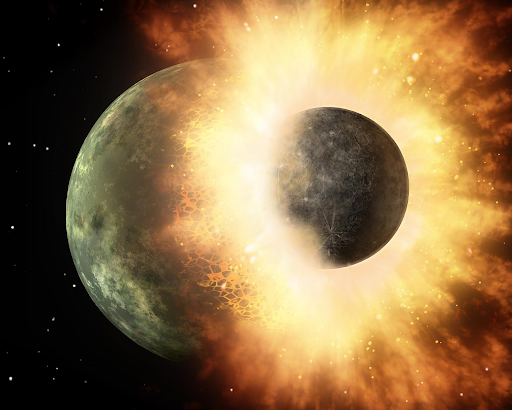
Erratic climate events, such as tropical storms and global floods, have occurred since liquid water first appeared on the planet. Wildfires have been a natural occurrence for hundreds of millions of years, long before the rise of Homo sapiens. Geologically, processes like plate tectonics, continental drift, and supervolcano eruptions have destroyed numerous ecosystems and significantly reduced biodiversity. The effects of Ice Ages seem minor when compared to the Snowball Earth phases, during which even the tropics were blanketed in ice, rendering most of the surface too cold and barren for complex life. Cosmic ray bursts and regular solar storms direct deadly radiation and particles toward Earth. Additionally, the mass bombardment of asteroids and comets has continuously reshaped and destroyed the Earth’s surface over billions of years, even leading to events like the extinction of the dinosaurs. Yet, all of these disasters together are insignificant compared to the planet’s impact with a Mars-sized body, which ejected a significant amount of rock from the newly formed Earth, leading to the creation of the Moon.
However, despite all these catastrophes and their resultant mass extinctions, life on Earth has rebounded every time. Since the beginning of the Archaean Eon, life has never completely vanished from our planet, and it is expected to persist for many billions of years more. If none of these events could extinguish Earth’s biosphere, we might reconsider our fear of plastic in the ocean or of carbon dioxide in the atmosphere, which threaten biodiversity. As George Carlin famously said, “The planet isn’t going anywhere, we are!”