

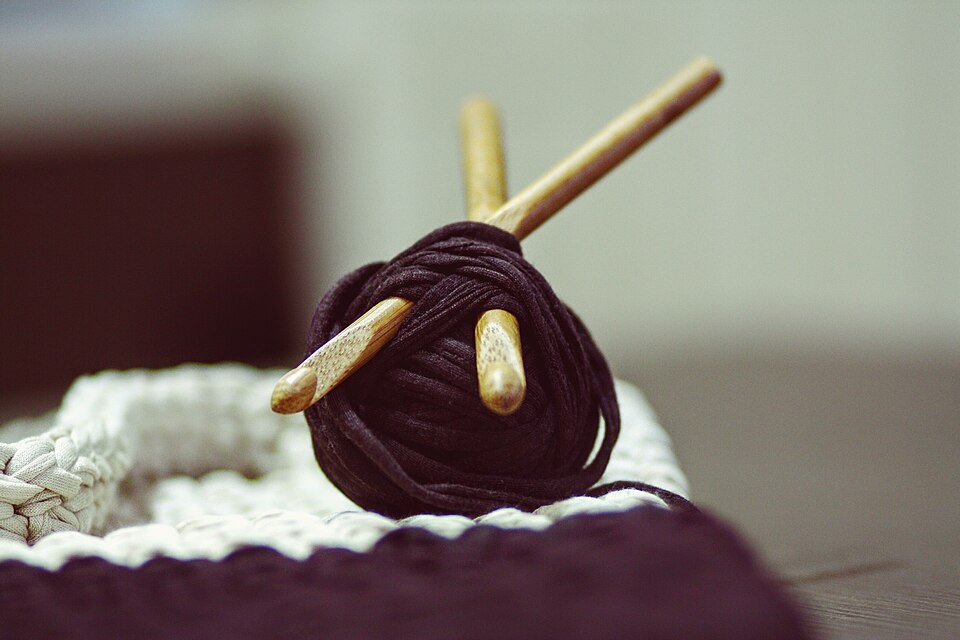
Recently the New York Times published an article discussing what they call a “comforting resurgence of grandma hobbies” (https://www.nytimes.com/2026/07/18/well/grandma-hobbies-crafts-knitting-quilting.html). In the article, journalist Kate Brennan describes a somewhat awkward exchange of words between her uber driver and herself as she explained she was on the way to a quilting class, not a bachelorette party. While seemingly politically neutral, any bold clash against modern activities and lean towards “grandma hobbies” presents an unintended potential problem that could tear apart women’s stability and place them back into prior positions in society.
What was not addressed by Brennan is that “grandma hobbies” have associations that women have tried to disconnect from for decades. Sewing, baking, knitting, and cooking amongst many other activities have roots in a longstanding history where these labors are specific to our sex. They are so connected with “traditional” societies that for many, including those of the opposite gender, it evokes feelings of discomfort due to being framed as domestic. The privilege to do these activities for fun rather than for social necessity puts in our hands a responsibility to honor and avenge the generations that came before us.
On one hand, our livelihoods should have the ability to remain unstigmatized, but on the other hand, that is not our reality. If we succumb to domestic living without clearly broadcasting our association with the progression towards gender equality, it’s almost as though we are making a statement against our own political rights. Now more than ever, with the MAGA movement promoting family in a way that to some feels a threat to women’s working prosperity, Brennan’s assertion that Gen-Z increasingly enjoy “grandma hobbies” puts the female sex at risk as one that’s ready to be tamed.
Although the article is seemingly gender neutral, the majority of the article’s public media displays women ‘reconnecting’. And as inequality has done in the past with racial minorities and other disadvantaged groups, it has placed us in the position of defense as we shape over the coming years how our sex is viewed in the public eye. Any action on behalf of a woman influences how men will treat us in the future. If we don’t want to be treated as housepets as we have in the past, it’s best we be clear with our assertions and avoid misunderstandings.
