

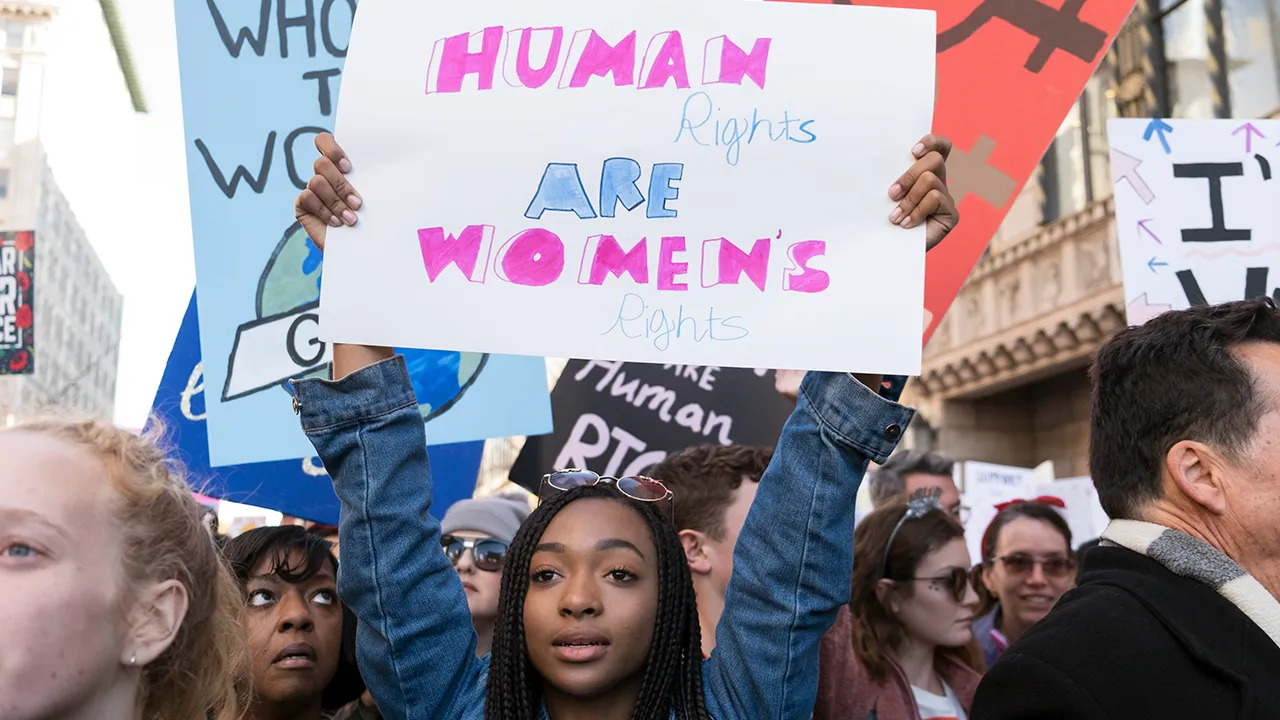
It may come as a shock to individuals who have been told otherwise that feminism and women’s rights are not the same concept. It is unclear when the two ideas were interconnected, however, in modern culture, especially digital media culture, you cannot believe in women’s rights and say you’re not a feminist. Common arguments used to respond to those who try to disconnect the two are to ask them to get rid of all of the things they received from feminism, and deem them oppressed. However, there is a vast amount of undebatable arguments that sit below the surface as to why the two are not the same.
The most simple is that the idea of “women’s rights” is a term that speaks for itself, while feminism, despite popular belief, is not. Women’s rights simply encompasses women’s ability to have liberty and the same access legally as men. The idea of feminism drives beyond that; feminism is a movement shaped by its authors. To make the statement “feminism believes in equality” is logically incorrect, because feminism is a social movement with a variety of different perspectives. Additionally, a similar statement of “it’s only fourth wave feminism” is also incorrect, because quotes from multiple early authors of first wave feminist literature associate themselves against systems of religion (primarily Christianity), traditional family structure, and women who chose to partake in the two. Overall, this reasoning fundamentally separates feminism from “women’s rights” or “women’s equality” because it associates equality with debatable ideas, not solid concepts.
As time passes on in societies, the definitions of popular movements tend to change. Feminism is not exempt. Today, feminism is associated with “pro-choice” and other political movements. Advertisements like Nike’s “Dream Crazy” highlight current feminist perspectives of toxic sameness – the common definition of “feminism” today not only believes in underlying oppression, at a systemic level, but its method of dismantling oppression is by disconnecting women from traditional roles and placing their value in their success in typically masculine settings. Arguably, feminism as a movement does not create equality on the level of both sexes and their typical gender distinctions, but it disconnects women from the idea of gender altogether, taking their groundedness away from biological-social connections, and arguing that men and women should not be distinct social groups, only distinct biologically. The most important subnote here is that identifying feminism’s wins for women’s legal advancement does not take away these tensions between morality and underlying sexist trajectories.
The underlying issue in all of this is rooted in the lack of thought given to “pro-women” ideas and the irresponsibility associated with modern “girlhood”. The blind acceptance of anything that seemingly positively influences women or places them on an equal level to men, regardless of the fact it does not properly represent the essence of womanhood, is an issue by which society has turned into a gender-confused warzone. This is not to say gender diversity does not exist, as we see intersex individuals being born for many years, but false gender diversity has blurred the line between “pro-women” and “pro-sameness”. This rhetorical dystopia reflects the very ideas we were warned about in previous years, which could be considered “Orwellian”, and unfortunately, it has torn apart classical ideas of women’s rights and any true opportunity for respect of our sexual difference.
