

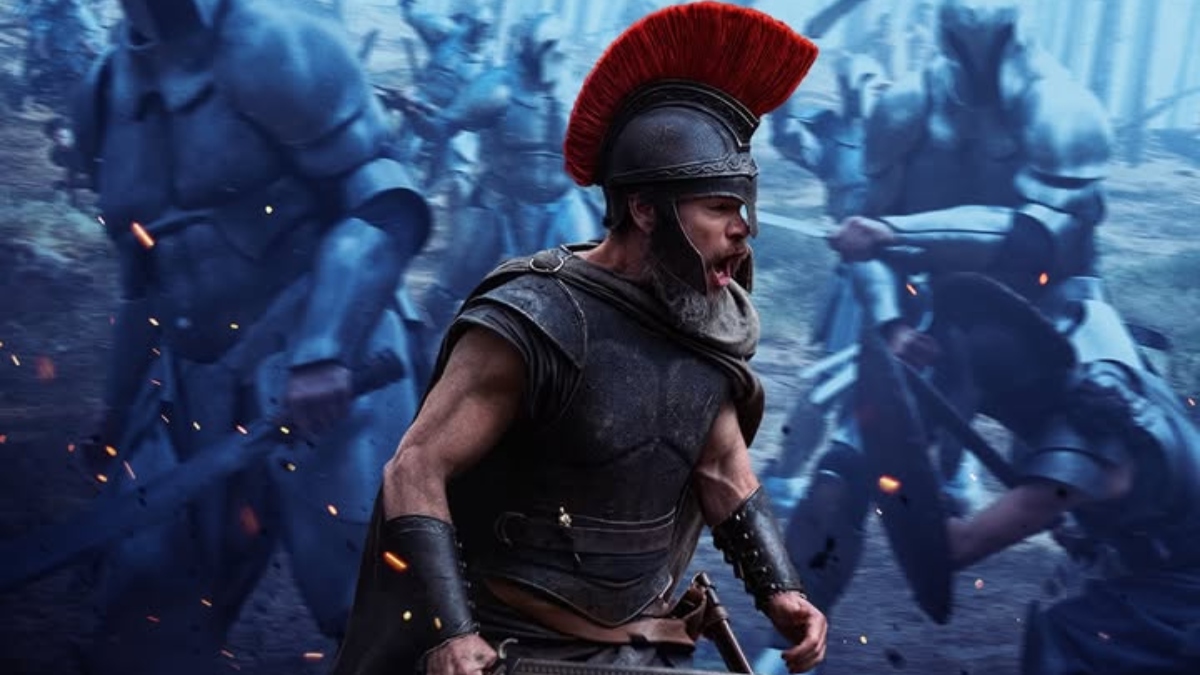
For many people, The Odyssey is one of those books they recognize by name but have never actually read. Written nearly 3,000 years ago by the ancient Greek poet Homer, the epic has long been regarded as one of the foundations of Western literature. Yet despite its influence, it often carries the reputation of being a difficult classroom assignment rather than an engaging story.
Today, however, The Odyssey is experiencing an unexpected resurgence. From Christopher Nolan’s upcoming film adaptation to the growing popularity of Epic: The Musical and renewed interest on social media, Homer’s tale of Odysseus’ journey home has found a new generation of readers and audiences. As one of history’s oldest surviving stories returns to the cultural spotlight, an important question emerges: Why is a 3,000-year-old story still capturing people’s attention today?
While the Odyssey has remained a staple of literature classrooms for generations, recent years have introduced the ancient epic to audiences far beyond academia. A combination of new adaptations, social media, and renewed interest in Greek mythology has transformed Homer’s work from a required reading assignment into a cultural phenomenon once again.
One of the biggest drivers of this renewed attention is Christopher Nolan’s adaptation of The Odyssey. Known for Films such as Oppenheimer, Interstellar, and The Dark Knight, Nolan’s decision to bring Homer’s epic to the big screen has generated widespread interest from both longtime fans and people who have never read the poem. At the same time, Epic: The Musical, a concept album inspired by The Odyssey, has gained millions of listeners online, introducing younger audiences to the story through music rather than traditional literature. Across platforms like TikTok and YouTube, creators have also begun breaking down the poem’s characters, themes, and mythology, making the ancient text feel more accessible than ever before.
Together, these cultural moments have given The Odyssey a second life. Rather than remaining a story confined to classrooms or history books, it has become part of today’s entertainment and online conversations. Yet while modern adaptations may explain why people are discovering the epic, they do not fully explain why it continues to resonate nearly three millennia after it was written.
While modern adaptations have introduced new audiences to The Odyssey, they are only part of the reason the story has survived for nearly 3,000 years. Its lasting appeal comes from the universal themes at its core. Rather than simply telling the story of Odysseus’ journey home after the Trojan War, the epic explores perseverance, identity, leadership, temptation, and the search for belonging, experiences that remain just as relevant as they were in ancient Greece.
Although few readers will ever encounter mythical creatures or angry gods, many can relate to overcoming obstacles, making difficult decisions, and finding their way through uncertainty. Those timeless themes have allowed The Odyssey to connect with generation after generation, proving that while the world has changed dramatically, many of the questions people ask about themselves and their lives have not.
The recent resurgence of The Odyssey is about more than a renewed interest in Greek mythology. It reflects the lasting impact that classic literature continues to have on modern culture. From novels and films to television shows and video games, Homer’s epic has influenced countless stories, introducing themes and storytelling techniques that continue to shape the way narratives are told today.
Reading The Odyssey is not simply about finishing one of history’s oldest books. For many, it offers an opportunity to better understand a story that has inspired generations of writers, filmmakers, and artists. Whether readers are drawn in by a new film adaptation, a musical, or simply curiosity, the epic provides insight into ideas that remain surprisingly relevant in the modern world.
Not every work of literature continues to attract new audiences centuries after it was written. Yet The Odyssey has endured because it speaks to experiences that transcend time. As a new generation discovers Homer’s epic, its resurgence serves as a reminder that some stories continue to matter not because they are old, but because they still have something meaningful to say.
Acknowledgement: The opinions expressed in this article are those of the individual author, not necessarily Our National Conversation as a whole.
1 Comment
I still remember reading The Odyssey in 11th grade, over 50 years ago. I was able to recall several of the scenes before we got to the movie the other night. I think Christoper Nolan really brought the scenes to life in a very compelling way. Some movies you watch one day and forget them the next. Not this one.