
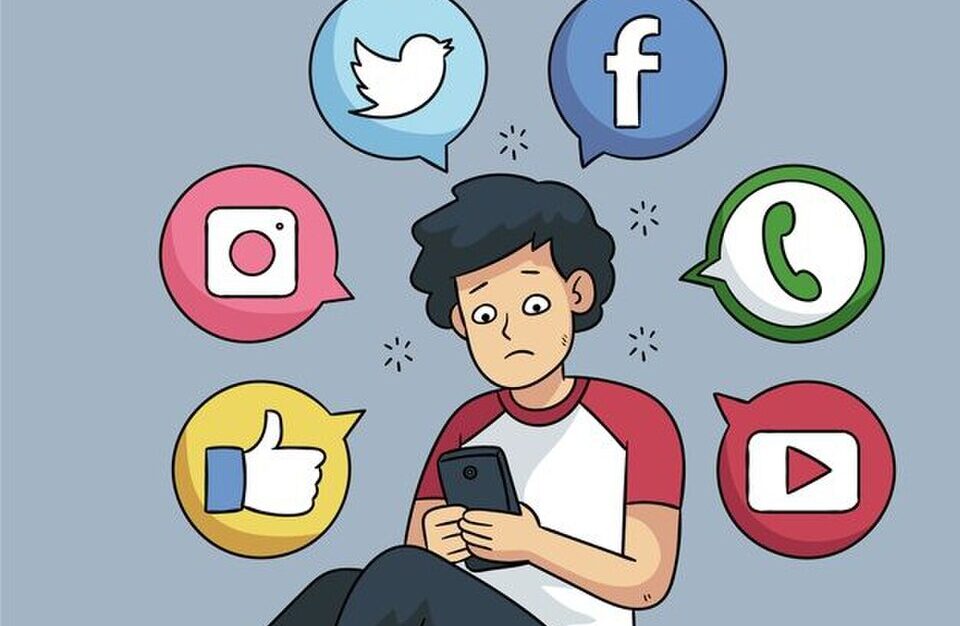
We live in the Information Age. Knowledge is more accessible than ever before, but it’s not just search engines that provide this access. Social media platforms have allowed for people across the globe to take a glimpse into each other’s lives. People can know what is taking place in another part of the world just by opening Instagram Reels or TikTok. In this way, social media acts as a vehicle for globalization, increasing visibility, and interconnectedness around the world. Of course, this has its benefits, but is it a good thing to be exposed to so much content constantly? The digital world is now heavily integrated into our lives, there is no doubt about it. In a time where so much of our day is taken up by scrolling on our phones, it’s important to be cognizant of what media we are consuming, what its effects are, and who is benefitting from it.
The speed at which information spreads online has fundamentally changed how people interact with current events, entertainment, and even one another. Rather than actively searching for information, users are often passively presented with endless streams of content curated specifically for them. This personalization can create the illusion that people have more control over what they consume than they actually do. In reality, much of what appears on social media feeds is the result of algorithmic decisions designed to maximize engagement. This distinction matters because users are not choosing content independently; they are interacting within systems that constantly adapt to their behavior and encourage repeated use.
Additionally, social media algorithms are built to boost the content that is the most engaging; whether it is positive or negative engagement does not matter. Because of this, users are bombarded with the content that garners the most reactions, whether those be likes and shares or angry comments. Regardless of the nature of these reactions, both the makers of the respective video and social media corporations themselves benefit from them.
Economic incentives explain why emotionally intense content tends to dominate online spaces. Social media companies operate within an attention economy, where user engagement directly translates into profit. Every click, comment, share, or additional minute spent scrolling creates value for platforms because it generates advertising revenue and produces more user data. In this environment, content creators are similarly rewarded for producing material that captures attention as quickly as possible. This creates a feedback loop where users consume reactionary content, creators continue producing it because it performs well, and algorithms further promote it because it keeps people engaged. The result is a system where sensationalism is not accidental, but structurally ideal. While many users recognize that algorithms influence what they see, fewer consider how strongly financial incentives shape the type of information that becomes visible in the first place.
In some cases, this means that viewers are repeatedly shown graphic, intense, or violent photos and videos, because of how reactionary this kind of content is. As a result, people, especially those who are on social media frequently, can easily become desensitized to otherwise upsetting material. It’s similar to how many experts suggest that exposure to violent video games can desensitize children to the violence these games depict – a marketed and user-based version of tragedy. The more you are exposed to something, the more comfortable with it you become. I don’t mean that social media is turning everyone into a sociopath, but we have to recognize the harm of information overload, especially when it comes to interacting with intense content. Constant exposure to large amounts of content makes it difficult to distinguish between events and their respective levels of gravity. A person may encounter videos about wars, natural disasters, celebrity scandals, local politics, advertisements, and personal updates from friends within the span of only a few minutes. This rapid switching between topics compresses serious issues into the same format as “GRWMs” or “Glow-up Tips,” making all content compete equally for attention regardless of importance. Over time, the sheer volume of information can create emotional fatigue, where users feel overwhelmed or powerless rather than informed. Instead of motivating action, this excessive exposure may lead individuals to disengage entirely because the amount of content becomes impossible to meaningfully process.
As a social media user, you are meant to be upset with the content you consume because any reaction you have is profitable. Arguably, negative reactions are actually more beneficial than positive ones. This kind of political outrage is ideal. Not only do hate comments boost a video or photo’s popularity – your anger is redirected– away from real life and contained in a form that is beneficial to large corporations and elites, who are often the targets of this anger. Corporate elites have designed a way to profit off of backlash.
Yes, social media can be an avenue for political mobilization. However, these movements often take the shape of trends rather than successful routes for change. Sharing posts, changing profile pictures, or reposting information can create a feeling of involvement without necessarily producing long-term political engagement. Sustained political movements generally require organization, resources, leadership, and continued public attention, which are qualities that are difficult to maintain within platforms designed around constant novelty. Not to say that there are no examples of effective social media political campaigns, but these movements often have a relatively short shelf life on social media before the next “big thing” cycles in. This does not mean online activism is meaningless, since social media has undeniably increased awareness around many issues and facilitated large-scale organizing efforts. However, awareness alone does not automatically translate into institutional change.
Social media itself is not inherently harmful, nor is globalization through digital spaces inherently negative. However, if platforms continue to prioritize attention above all else, users must become more conscious of how algorithms shape not only what they consume, but also how they think, react, and participate in society. In an era where information is everywhere, the real challenge may no longer be gaining access to information—it may be learning how to meaningfully engage with it.