
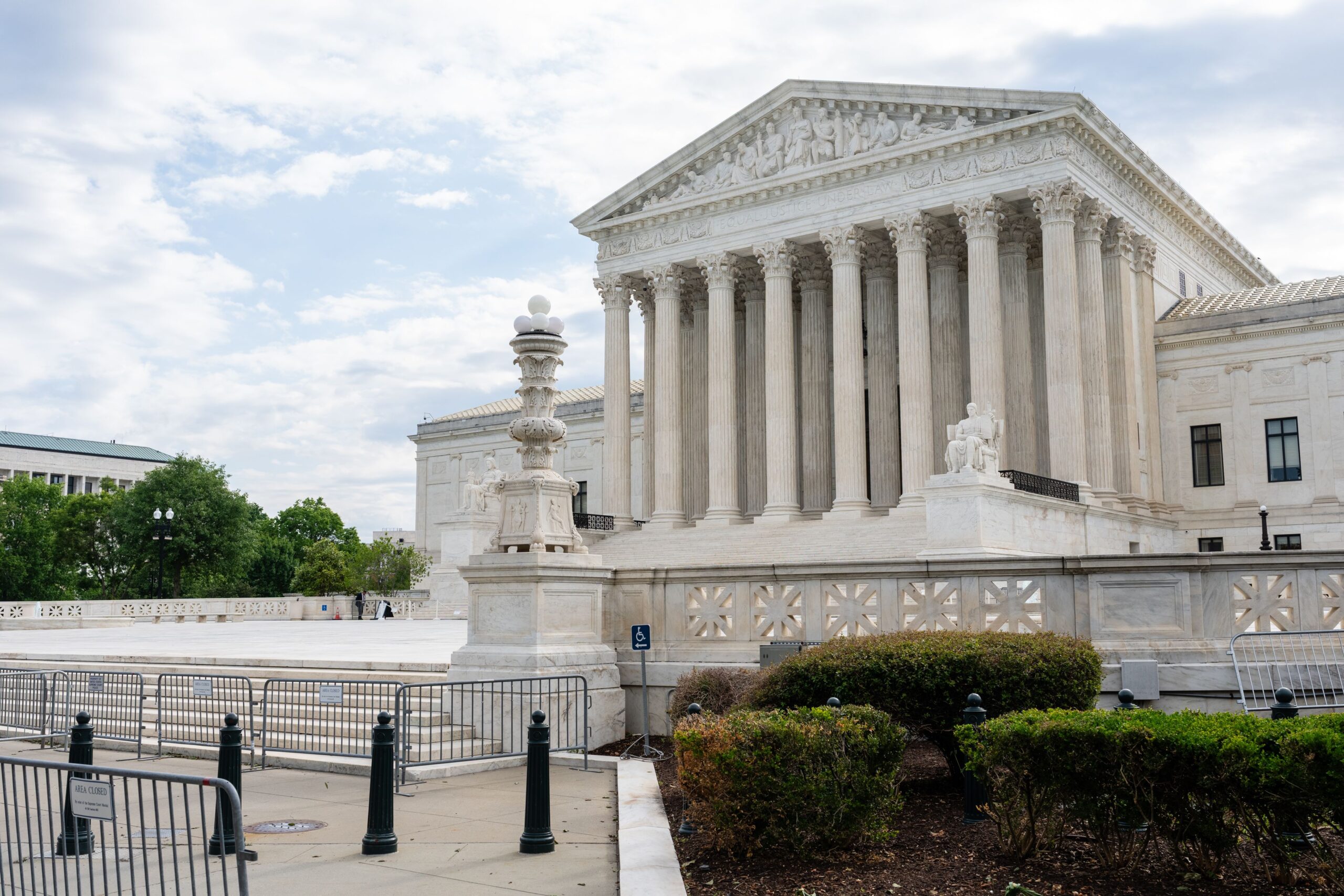
May is coming to a close which means the U.S. The Supreme Court is entering one of the busiest and most observed periods of its term. In the coming weeks, the Court is expected to release several major decisions that could shape national debates on immigration, privacy, civil rights, and presidential power for years to come.
Here are five Supreme Court cases Americans should keep an eye on before the justices conclude their term this summer:
1. Birthright Citizenship
One of the most closely watched cases involves President Donald Trump’s attempt to restrict birthright citizenship through executive action. At the center of the dispute is a constitutional question: how much authority does a president have to reinterpret a long-established understanding of the Fourteenth Amendment without action from Congress or a constitutional amendment?
Section 1 of the 14th Amendment states that “All persons born or naturalized in the United States, and subject to the jurisdiction thereof, are citizens of the United States and of the State wherein they reside.” The case will ultimately decide whether children born in the United States to certain non-citizen parents are automatically granted citizenship under that provision, which could impact future debates and immigration policy nationwide.
The decision may also address a separate but still significant issue: whether federal judges have the authority to issue nationwide injunctions blocking presidential policies while legal challenges are pending.
2. Transgender Athletes in Women’s Sports
Another closely observed case involves state laws in Idaho and West Virginia that restrict transgender athletes from competing on girls’ and women’s sports teams. U.S. Solicitor General D. John Sauer argued that “It is not gender-identity discrimination at all, much less sex discrimination.” Supporters argue that the law helps preserve competitive fairness in women’s athletics, while opponents contend they unfairly discriminate against transgender students.
Although these cases originate in only two states, the Court’s decision could set a precedent for the legality of similar restrictions nationwide. This ruling may determine whether such laws in over two dozen states remain enforceable or become vulnerable to legal challenges, thus affecting student athletes and local policy across the country.
But as debates over gender identity, athletics, and equal protection continue across the country, the Court’s decisions could be among the most significant rulings affecting school sports in years.
3. Temporary Protected Status (TPS) for Immigrants
Another case involves Temporary Protected Status (TPS), a federal program that allows immigrants from countries experiencing war, natural disasters, or other irregular circumstances to temporarily live and work in the United States. Created in Congress in 1990, TPS does not provide a path to citizenship, but it does protect recipients from deportation while conditions in their home remain unsafe.
The Court is reviewing challenges to the Trump administration’s efforts to end TPS for immigrants from Haiti and Syria. The key legal question here is can courts review a president’s decision to end TPS, or does the executive branch have the higher authority in this scenario?
The case could affect hundreds of thousands of immigrants who have built lives in the U.S. More than 330,000 Haitians and thousands of Syrians—out of about 1.3 million people in the broader program—rely on TPS protections.
While the immediate dispute focuses on Haiti and Syria, the Court’s decision could set a standard for how easily future presidents can end TPS designations for other countries, affecting the stability and planning of hundreds of thousands of immigrants who depend on this protection.
4. Cell Phone Location Data and Privacy
In an era when smartphones track much of our daily movement, the Supreme Court is considering a case with significant implications for digital privacy. The dispute centers on what legal steps law enforcement must take before obtaining a person’s cellphone location data and whether existing protections are sufficient in the age of modern technology. The issue has become increasingly relevant in recent years as police departments have relied on so-called “geofence warrants” during criminal investigations. These warrants allow law enforcement to request location data from devices that were present in a specific area at a specific time, whether investigating a major crime or a more routine offense. Critics argue that while these warrants can help identify suspects, they may also collect data from dozens or even hundreds of innocent people who happened to be nearby.
As a result, the Court must consider whether collecting large amounts of location data from many people constitutes an unreasonable search under the Fourth Amendment. Its decision could redefine digital privacy standards and limit or expand police access to data in future investigations.
5. Presidential Firing Power
Now, you may not know the names Lisa Cook or Rebecca Slaughter, but chances are you have seen the headlines about President Donald Trump attempting to remove multiple officials from independent agencies such as the Federal Reserve or the Federal Trade Commission. Now, while presidents have long had the ability to appoint and remove many government officials, the Court is now considering whether that power extends to leaders of these independent agencies that Congress designed to operate with a degree of political independence.
The dispute stems from Trump’s efforts to remove officials from agencies whose leaders have traditionally been protected from dismissal without cause. Supporters argue that, because these agencies are part of the executive branch, the president should have the authority to remove officials who implement federal policy. Opponents contend that allowing presidents to freely dismiss independent agency leaders could undermine the agencies’ ability to operate free from political pressure.
This case goes beyond individual officials—it could redefine the degree of presidential control over independent federal agencies in both Republican and Democratic administrations and thus affect how agencies operate free from political influence. The Court’s decision could impact how checks and balances function in future governments.
As the Supreme Court approaches the end of its term, Americans can expect decisions on several of the year’s most closely watched cases, with filings likely to be released before the Fourth of July. From birthright citizenship and immigration protections to transgender athletes, digital privacy, and presidential power, these decisions could shape public policy and constitutional debates for the indefinite future.
Acknowledgement: The opinions expressed in this article are those of the individual author, not necessarily Our National Conversation as a whole.