

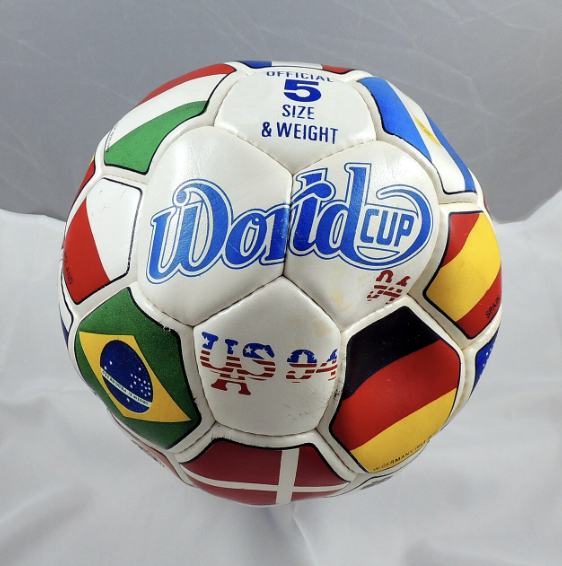
The World Cup is supposed to be a sporting event for spectators from all cultures and countries of the world to have fun, free from politics and corruption (Wikimedia Commons).
As the 2026 FIFA World Cup wraps up this month, significant allegations of corruption have emerged towards the governing body of the world’s favorite sport over several instances in its tournament this year. These include the influence of President Donald Trump in overturning Folarin Balogun’s red card, arbitrary travel bans on referees, and the prohibition of Lion and Sun Iranian Flags. But stories like these are by no means new; FIFA is notorious for improperly managing sports competitions, relationships with governments, and its billions of dollars. For an organization that claims to be apolitical and nonprofit, its history, going back decades, shows otherwise.
The hosting rights of the World Cup have been awarded on several occasions to countries that were far from the most rosy tourist destinations at the time of hosting. Only four years after the inaugural soccer championship, 1934’s World Cup took place in Italy during its period of fascist rule under Benito Mussolini. The tournament was sponsored almost entirely by Mussolini’s government, which used it as propaganda for the dictator’s regime, distracting the public from its lack of respect for freedom of speech and democracy. Similarly, Argentina was allowed to host the tournament in 1978 despite also being under a ruthless dictatorship, which killed tens of thousands of political dissidents. In both of these tournaments, the conduct of the referees during the matches, combined with their unusual outcomes in their circumstances, prompted numerous allegations that the governments of those two countries tried to give their home teams unfair advantages, especially due to investigations of said incidents being blocked. Recently, Russia, Qatar, and Saudi Arabia have all been allowed to host the world’s soccer championship by FIFA despite all three being mired in authoritarianism and marked by poor treatment of laborers who built their stadiums. If a country is not safe to travel to on a normal vacation due to risk of arbitrary detention and imprisonment, it is odd that it would be chosen to host a sporting event that brings in millions of tourists in the span of only a few weeks.
Even between World Cups, FIFA’s corruption has not gone unnoticed. In 2015, arrests of several high-profile members of the organization were arrested in Switzerland on charges of money laundering, racketeering, and wire fraud. But this was just the tip of the iceberg: as it turned out, these crimes had been going on for decades, ranging from partnering with ponzi schemers to covering up bribery that secured broadcasting and hosting rights of tournaments using illicit money channels. Because of FIFA President Gianni Infantino, who has been in charge of the organization during this and the past two world cups, investigations into these scandals have remained sparse, forcing outside organizations and even governments to conduct them instead. In a world increasingly divided by politics and plagued by crime, ordinary people deserve to enjoy the most widespread sport on the planet without having to think about either of those issues.