

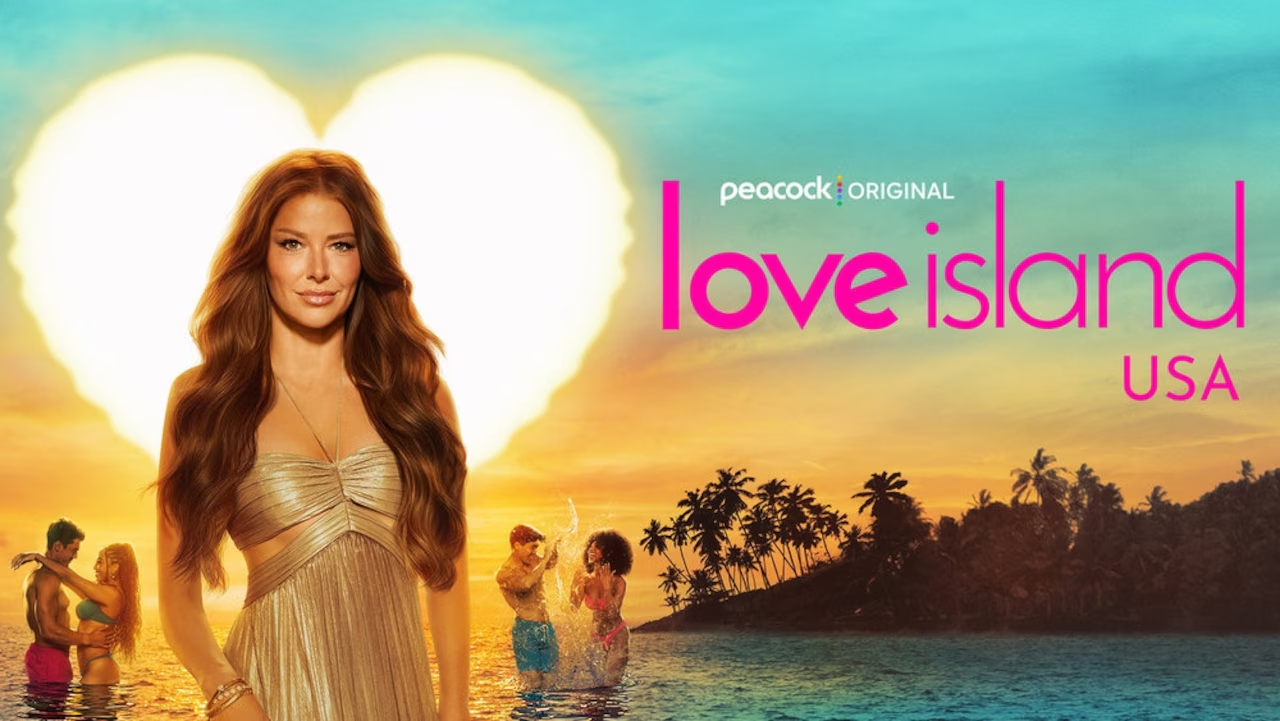
Love Island is a reality TV “dating” competition where a group of singles live in a luxury island villa. Contestants must explore their “connections,” “couple up,” do various challenges, and try their best to gain popularity with the audience in order to avoid elimination. At the end, a grand cash prize awaits the most popular couple by vote. In addition to the original contestants, new singles, or “bombshells,” are introduced into the villa to test the existing couples. To make things even messier mid-season, more new singles are introduced when the men and women split up into two different locations: the original villa and “Casa Amor.” This is meant to test the loyalty of the established couples and, of course, add onto the drama of it all. Sounds pretty entertaining, right?
So what’s the issue? I’m not disputing the fact that the contestants signed up for this and that Love Island is a popular enough show that they would have known (at least somewhat) what they were getting into. Of course, there is an incentive to participate in a show of this caliber as it provides a platform for contestants to build successful influencer careers.
However, that still does not make it ethical; this show certainly presents a lot of concerns that mirror broader patterns in our society. The show’s central business model relies on turning contestants’ emotions, relationships, and conflicts into entertainment for profit. Footage is edited, certain storylines are pushed, producers encourage contestants to say/do certain things, etc. When women in particular display suspicion of their partner’s actions, they are often framed as crazy in the edited footage and individual confessionals. It is especially alarming how emotional exploitation targets the women on the show. Producers often perpetuate negative stereotypes regarding women in relationships, framing their reactions as jealous and paranoid, rather than reasonable, to make the show more sensational and entertaining (Denby).
A contestant’s status on the show is dependent on whether the public, as well as their fellow contestants, like them or not. This pressure, combined with extreme isolation and constantly being on camera, could have a negative impact on contestants’ mental health. And then, in turn, that impact is further exploited on camera to create even more drama—all boosting the show’s popularity and filling the pockets of the production companies. And of course, this isn’t exclusive to Love Island. These same controversies surround reality television as a whole because the point is for it to be messy and dramatic—it’s what sells.
Furthermore, there has been a lot of controversy surrounding the oversexualization of the challenges in recent seasons. Things like “The Heart Rate Challenge” have made intimacy into a performance and spectacle more than a test of compatibility. According to an article from The New York Times by Shivani Gonzalez, unlike scripted television shows, Love Island does not have any sort of intimacy coordinator during these challenges, thus raising concerns about comfort and consent. Not to mention, Love Island could also be damaging to its large, young audience whose perceptions of healthy relationships may be shaped by repeated exposure to the show’s sensationalized portrayals of love, intimacy, and conflict.
In many ways, watching Love Island often feels like watching The Hunger Games: contestants vying to win the hearts of the public to not get eliminated, manufactured drama and plotlines from the production team, a set of challenges for competitors to make themselves appealing to the production team and audience, the contestants—real people—turned into characters by viewers’ parasocial relationships with them. Of course, the consequences of losing are not literal death, but rather reputational and emotional damage. Still, in an era where careers and identities are increasingly tied to public perception, that threat can be very real, especially for aspiring influencers. Despite all of the concerns and controversy, people are obsessed with this show, reminiscent of how Capitol citizens ignored the problems with the Hunger Games in favor of the excitement and thrill of sensational media.
The appetite for sensationalism doesn’t stop at television. We see it in our politics, too, where political messaging is increasingly designed around the reaction it will provoke. The same incentives that reward sensationalism in reality television increasingly shape our political discourse. Social media algorithms, news coverage, and political campaigns all reward content that provokes outrage and emotional reactions over thoughtful discussion. As a result, politics has become increasingly performative. Hostility, partisan outrage, and viral clips mocking the other side often receive more attention than compromise or substantive policy discussion. Love Island isn’t solely responsible for our culture’s obsession with sensationalism, nor should reality television bear all the blame. Rather, its success reveals something uncomfortable about what we choose to reward. As long as emotional exploitation, outrage, and spectacle continue to attract the most attention—and generate the most profit—they will continue to dominate not only our entertainment, but our public discourse as well.
References:
https://pmc.ncbi.nlm.nih.gov/articles/PMC8207292/#B2
https://www.nytimes.com/2026/06/18/arts/television/love-island-season-8-challenges.html