

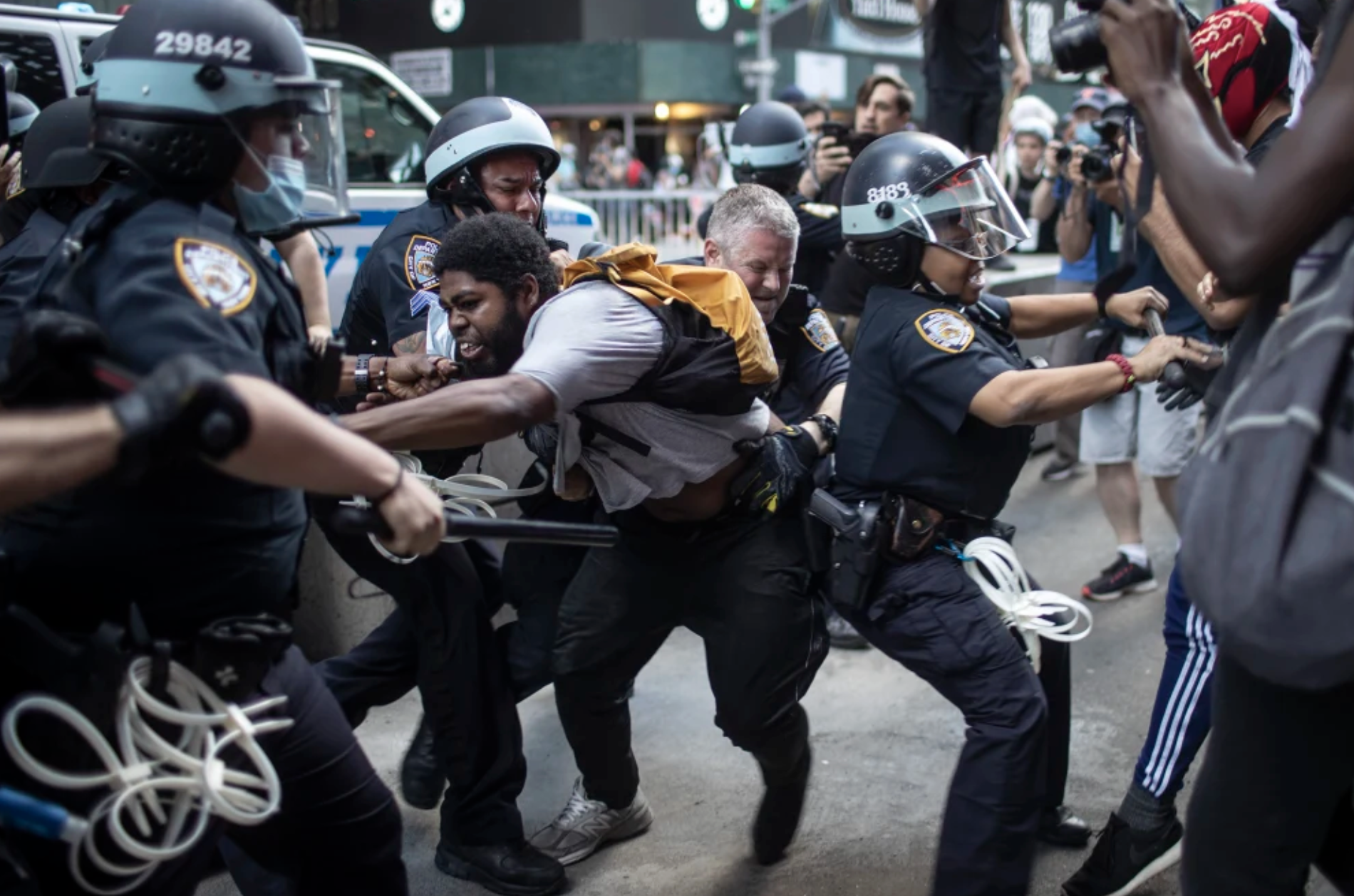
After George Floyd was killed by Minneapolis police in 2020, the whole country protested against the clear injustice. A year later, when Derek Chauvin, the policeman responsible, was ultimately prosecuted, the nation celebrated as justice was finally served.
Since then, there have been at least 4,486 victims of police brutality, according to research by The Washington Post. The George Floyd case was a singular win in what seems like an endless battle against police brutality.
The very concept of police brutality is hypocritical. A contradiction and cruel paradox. To have an institution whose objective is to protect citizens against harm become perpetrators of that very harm is the utmost case of abuse of power and corruption.
The issue lies in the amount of systemic leeway awarded to law enforcement.
The systemic leeway is codified into law with qualified immunity. Qualified immunity is a legal doctrine that protects government officials from lawsuits alleging a violation of a certain statutory or constitutional right, so long as these rights were not “clearly established” at the time.
The courts define what constitutes a “clearly established” law by considering whether a hypothetical “reasonable official” would have been aware that their conduct would result in a violation of the plaintiff’s rights. Oftentimes, to determine whether a law is “clearly established,” the courts turn to the amount of comparable cases in precedent.
The vagueness of the language is already a huge indicator as to where the doctrine leaves great space for confusion, and, consequently, great opportunity for constitutional violations. For example, in 2004, the Supreme Court reviewed Brosseau v. Haugen, where Haugen filed a lawsuit against Officer Brosseau alleging she violated his rights by using excessive force when she shot Haugen in the back as he was escaping law enforcement.
In this case, the court changed what constituted “clearly established law” several times. While the District Court initially agreed that Brosseau was entitled to qualified immunity, the Court of Appeals later reversed this decision, finding she was not. This decision was then once again reversed by the Supreme Court. If the definition of “clearly established” law was well-defined, these big disparities in judgment from court to court would not occur. The variation simply shows how flimsy the doctrine is.
A doctrine that is completely subject to a judge’s interpretation, with little to no criteria, is immediately a concern for the rule of law, as it results in a lack of consistency in the application of the law. This is especially concerning when considering how closely related the granting of qualified immunity often means the allowance of acts of police brutality.
Luckily, recent decisions suggest the court is steering towards a narrower definition for Qualified Immunity. In 2020, the Supreme Court decided that an officer was not entitled to it. Despite acknowledging that there was grounds to doubt the amount of comparable precedent, the sheer “egregious facts of this case” should already serve as evidence enough for a “reasonable officer” to realize the constitutional violations.
Initially created to protect police officers acting in pursuit of their jobs, qualified immunity has now become a barrier to police accountability, one that increasingly stands between victims of police brutality and proper constitutional enforcement.