
As the world’s most popular sports tournament comes to a close, fans are already eager for the next soccer World Cup. The next one will be hosted in Spain, Portugal, and Morocco, with three additional special matches being held in Argentina, Uruguay, and Paraguay to mark the tournament’s 100th anniversary. These countries have an extensive history and culture with the sport, with some of the world’s best players and most famous soccer stadiums to accommodate fans. But in stark contrast, the one eight years from now will be hosted in Saudi Arabia, whose national team’s performance has been historically dull and does not yet have adequate infrastructure to host major sporting tournaments. But should be the least of FIFA’s concerns about directing millions of fans into a country that is under an Islamic fundamentalist dictatorship, one of the few absolute monarchies in the 21st century. This regime has little respect for freedom of religion or political dissent, and its discrimination against women and LGBT travellers steers many tourists away from the kingdom. And similar to Qatar in 2022, Saudi Arabia has trapped many workers on the construction fields for its future stadiums in squalid conditions, under the oppressive kafala system. If FIFA wants to maintain its commitment to human rights and democracy, it should show Saudi Arabia the red card.
FIFA’s Questionable Host for 2034
 By Edward Kim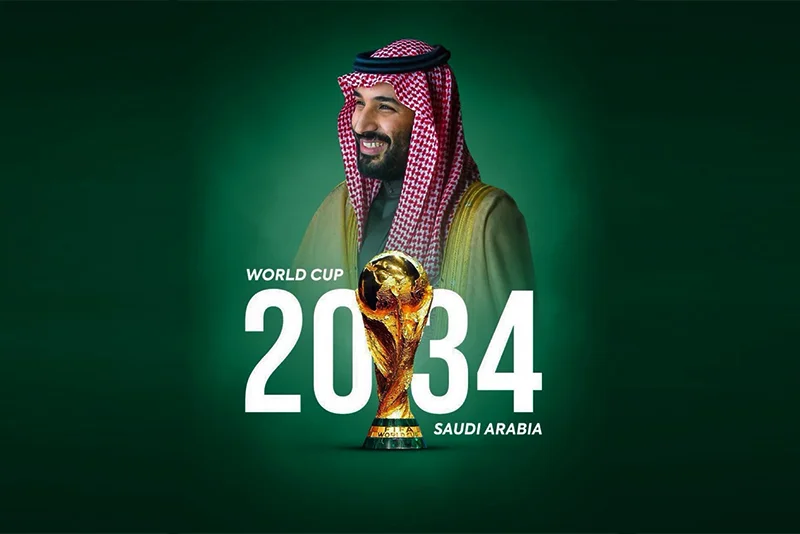
Edward Kim
I have been interested in politics ever since the 2016 election, and have always dreamed of becoming a writer and debator!