

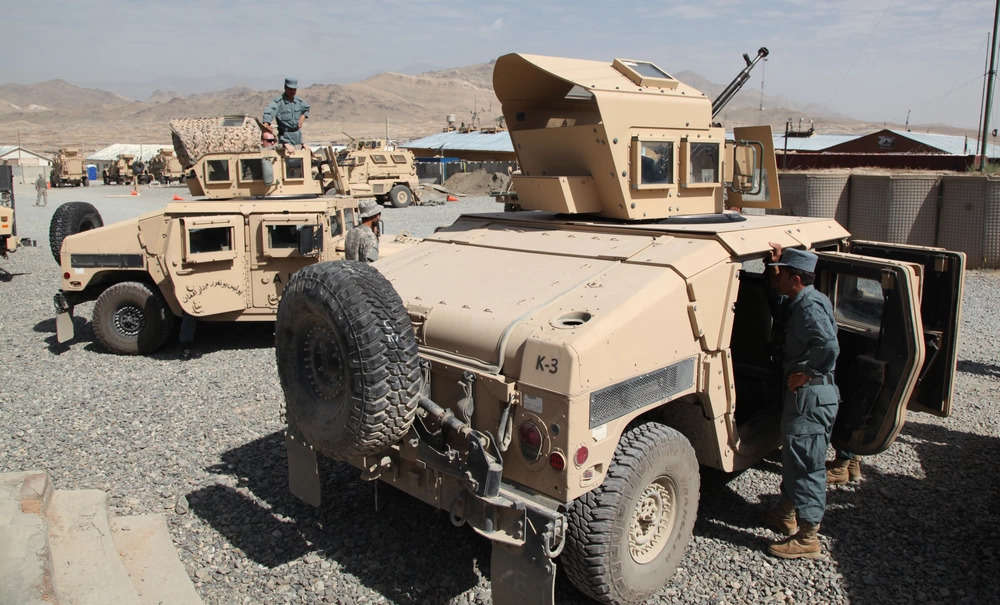
The United States of America’s defense spending has been by far the largest in the world for decades. It has surpassed the combined total of many other regional powers, such as China and Russia, and even adjusted for population and GDP size, it regularly ranks near the top of the list. For the first time in America’s history, it appears that its military budget may exceed 1 trillion dollars. President Trump’s most recent proposal calls for an increase of hundreds of billions in the Pentagon’s budget to roughly 1.5 trillion dollars, by far the highest in American history. This comes in the wake of his continually unpopular war in Iran, for which Congress is already requesting hundreds of billions of dollars. And this would only add to the deficit that has surpassed $1.7 trillion in recent years, further inflating the bloated national debt. Meanwhile, a significant share of the American population lacks access to health insurance and essential services, as well as quality public transportation, which is more pronounced than in any other developed country. Yet conservatives regularly rally against proposals such as Medicare-For-All and expanding public transportation due to required tax hikes and budget deficits.
Trillions of dollars have already been spent on wars thousands of miles away since 1945, and this investment has hardly generated a successful return. American involvement in the Korean War failed to defeat Kim’s regime, all while killing millions of innocent civilians through massive and inefficient bombing campaigns. In the Vietnam War, the United States failed to ensure the survival of the South Vietnamese government due to the North Vietnamese Armies’ guerilla tactics. Although the United States was successful at defeating Saddam Hussein and Muammar Gaddafi’s regimes in Iraq and Libya, its intervention failed to bring political stability to either of those countries in recent years. The failures of the British Empire and Soviet Union to establish sustained control over Afghanistan should have warned the United States that doing so would be an expensive task, even as a superpower. Perhaps predictably, the Afghanistan War ended with the American-backed Islamic Republic of Afghanistan falling to the Taliban after being given massive quantities of American weapons and training for almost 20 years. All in all, it is estimated that the War on Terror in the Middle East has cost $8 trillion. But Trump and the hawkish factions of the Republican Party insist that Iran will be the exception to America’s historic failure to accomplish its foreign policy aims.
Much of this failure can possibly be attributed to waste, corruption, and fraud in the Pentagon’s finances and contracting, hinted by its inability to account for hundreds of billions of dollars it was assigned in recent years. And despite the Department of Defense’s requests for gargantuan budgets consistently being met, the needs of the veterans who have served in America’s wars are far from being met. Tens of thousands of veterans face homelessness, and many more face PTSD, substance abuse, and permanent disabilities. If we can’t afford to take care of our veterans later on, we certainly can’t afford to send more Americans to war.
Since the second half of the twentieth century, Sweden and Finland consistently spent considerably less on their militaries than the United States, adjusted for GDP, even before joining NATO. Switzerland and Ireland, two countries with long standing policies of pacifism and neutrality that stood even during the World Wars, have seen even smaller military budgets relative to their economies. Yet none of these European countries have faced significant threats to their security or invasions during that time period. Therefore, a budget for the Pentagon spent purely on defensive preparation probably could be reduced even further. Even more reassuringly, no country beats America in civilian gun ownership thanks to our constitution’s second amendment, so even without an official military, any invading force would be met with significant resistance.
Acknowledgement: The opinions expressed in this article are those of the individual author, not necessarily Our National Conversation as a whole.
1 Comment
Excellent op-ed piece. The US civilian population has been ravaged by war profiteers and left with the true cost in broken infrastructure, broken men, and broken families.