
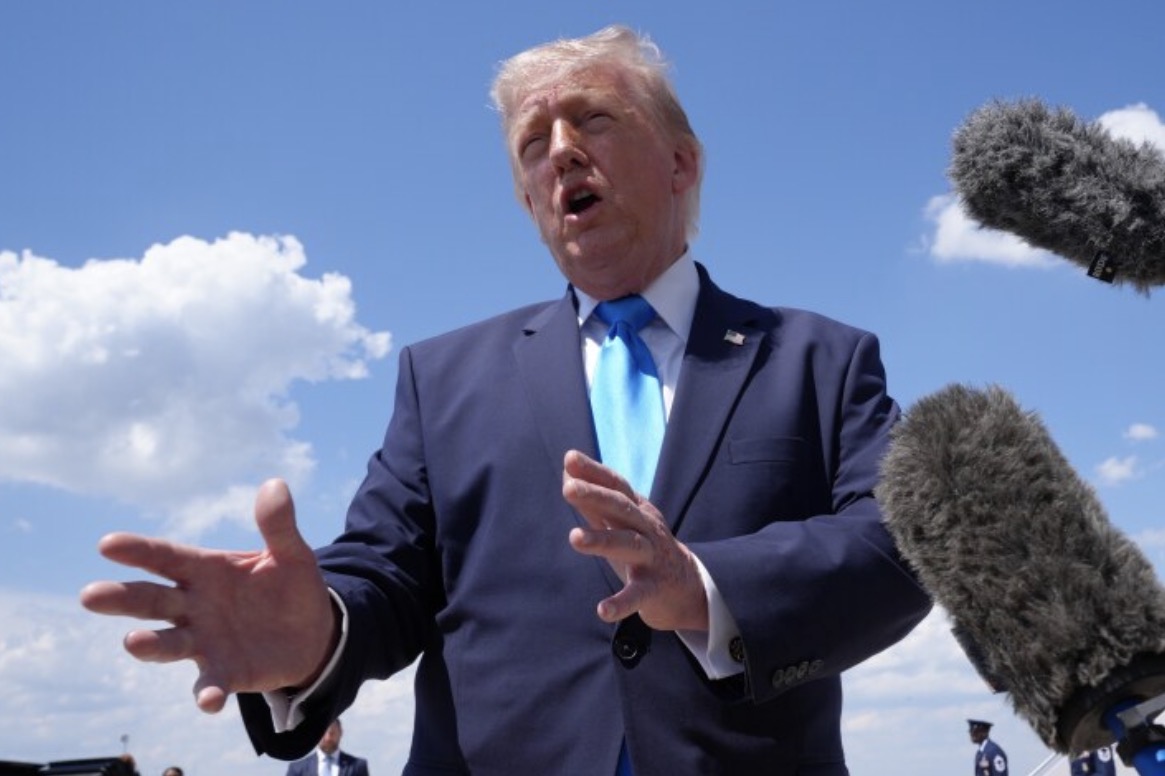
The most recent round of primary elections on May 19th presented a disappointing reality for opponents of the President. Donald Trump, despite falling approval ratings, once again proved the power of his endorsement within the bounds of his own party. Thomas Massie (R-KY), an incumbent Congressman, lost his re-election bid to a Trump-backed challenger, Ed Gallrein. Other candidates endorsed by Trump either won their primaries, like Andy Barr (R-KY), or advanced to runoffs, like Barry Moore (R-AL) and Burt Jones (R-GA).
Gallrein’s victory over Massie was perhaps the most telling of these races because it illustrates not only an example of a Trump-endorsed candidate winning, but the weight of Trump’s endorsement as compared to other political advantages. From 2012 to 2024, Massie won all 7 of his primary elections with an average vote share of 82.4%, signifying his popularity within his own district. Combine that popularity with 14 years of incumbency and Massie seems like a well-positioned career politician. However, those advantages were not enough to keep him from losing handily to Trump’s chosen candidate.
Coupled with the recent primary loss of incumbent Senator Bill Cassidy (R-LA), Massie’s loss raises a debilitating question: Are individual communities choosing which candidates appear on their ballots in November, or is that now the choice of the President? Certainly, voters have the choice to accept or reject Trump’s preferences. However, American federalism separates power vertically between the three branches and horizontally between federal, state, and local institutions. Concerning that norm, the head of the federal executive branch having such an overbearing presence in an individual district’s or state’s primary election is disconcerting, especially when that presence is defined by so much financial backing at the executive’s behest. While Trump’s intervention in these primaries is not unconstitutional, as the Constitution nor its amendments even mention such elections, unconstitutionality is the worst manifestation of injustice, not the threshold. In order to preserve the Presidency as an office worth respecting, the bar for Presidential behavior to be condemnable must be lower than violations of the law. The bar lies with breaking normative standards, which has been the basis of Trump’s entire political career. The President sticking his neck in primaries because of personal grudges is just his latest norm violation and must be condemned as such.
However worrying President Trump’s power plays against Republican incumbents may be, they have already started to backfire on him and may continue to do so. Trump is dealing with slim majorities in both chambers of Congress. Republicans outnumber Democrats (or Independents that caucus with Democrats) by 6 and 5 members in the Senate and the Houserespectively. With these numbers, Democrats only need to get 4 Republicans to defect in the Senate to block Trump on any given bill. Now that Bill Cassidy has been ousted on Trump’s revenge tour, the Louisiana Republican has nothing to lose by spending the rest of his term voting against Trump when he sees fit. Cassidy has already taken advantage of this leverage, joining 3 other Republicans and 46 Democrats in successfully voting to advance a war powers resolution that would limit Trump in the Iran war. By casting out incumbent Republicans like Cassidy, Trump is giving those incumbents the autonomy to oppose him. In the case of the war powers resolution, that autonomy has strengthened Trump’s opposition to a point where they can win votes in the Senate. In the wake of Massie’s recent loss, the Kentucky Republican too has no restraints for the remainder of his term, and he can become for the House what Cassidy became for the Senate. If, by the time Cassidy and Massie end their terms in Congress, Democrats come to control at least one chamber of Congress after the upcoming midterms, then Donald Trump’s tenure as a de facto lame-duck has already begun.