

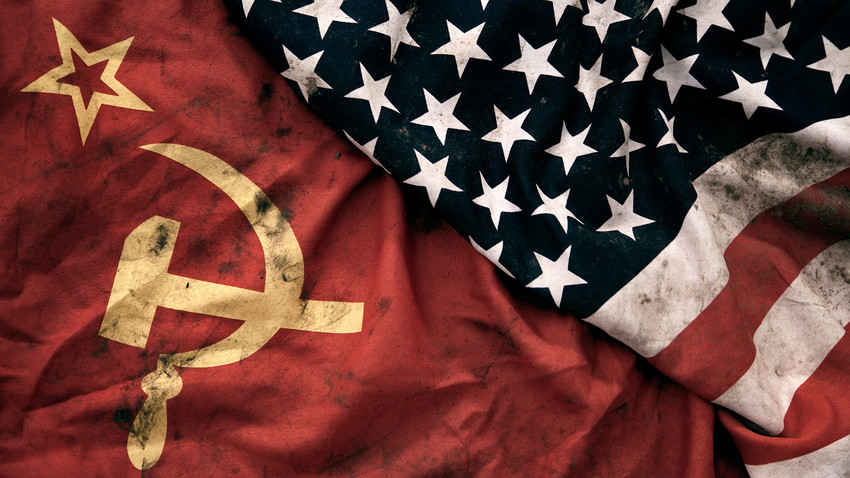
It is no mystery how the whisper of communism still sends shivers down Americans’ spines. This reaction has been long conditioned and refined since the initial wave of panic following the First World War, coined as the First Red Scare. This innate fear was triggered by two major events: the 1917 Bolshevik Revolution in the USSR led by Vladimir Lenin as well as a surge in organised labour strikes and a nationwide bombing campaign led by anarchist groups in 1919. Both these events terrorised the public, perpetuating the idea that communism was indeed a poison—one that welcomed chaos and sought to destroy the glossed image of the American lifestyle.
The US government responded quickly with the Palmer Raids, where they arrested thousands of individuals tied to leftist ideologies or believed to be involved in radical movements. Though controversial, this move seemed an adequate proposition as the public trembled in disdain against anything remotely communist, true or not. This fear resurged after the Second World War on a much larger, more paranoid scale. This beckoned the coming of the Second Red Scare (also known as McCarthyism) which was powered by nuclear tensions with the Soviet Union and the rise of communism across China.
Though these events seem buried in the past, the impacts have not been so easily forgotten. In modern times, there is still a sour taste in Americans’ mouths when discussing socialism or Karl Marx in almost any context. It has forever driven a wedge in American politics and formulated a political landscape that continues to vilify socialist ideology. Furthermore, the political right continuously heightens hysteria on the left regarding ties to radical affiliations, forcing the Democratic Party towards the centre to avoid, though arbitrary, accusations of harbouring far-left ideologies.
The very idea that the seemingly left-aligned political party is pushed to the centre because of the possible associations that could be made seems nonsensical on the grounds of legitimate democracy. Though it appears this idea of legitimate democracy is thus one based on that same notion of communist disdain. What is humorous is not this fact but that the line between left and radical has been so blurred that in modern and post-war America, it equates to identical ideological standpoints. The opposition party, as well as the government, have created such a successful campaign, leaving the supposed left-leaning party too afraid to lean to the left. Why? Because of that same fear that was ignited over a century ago, the unchanging contempt America just cannot seem to shake. This historic anxiety has not collapsed following that of the Soviet Union, but has been carried into a modern environment.
Religion has had a part to play in keeping this hatred alive. In response to the “godless” nature of communism, Congress purposely added the phrase “under God” to the Pledge of Allegiance in 1954. In 1956, Congress then adopted “In God We Trust” as the official national motto and then accelerated its reach in 1957 by placing the motto on all paper currency. These actions aimed to tie religion to American patriotism and identity to boost morale, but also remind that it would not fall to a communist regime under any circumstances.
By introducing religion, the government placed the opposition as not just an enemy of the American people but God himself. This is powerful because it shreds any ideological debate about communism being a mere political regime; it was consequently turned into a direct deviation from Christianity. The fight had been transformed into one of good versus evil, with the Lord as their witness. Modern political rhetoric follows the same framework, frequently labelling progressive social politics as secularist, Marxist, or communist threats. Leftist ideology has become a weapon of unspoken nuance and history that is wielded against almost anything that deviates from the theology of America.
Corporate leaders and conservative ministers also joined forces during the Red Scare to fight the invasion of unwanted leftist politics. They framed unregulated capitalism as a divine right and necessary for a functioning America while painting socialism as a sin. This alliance gave birth to modern Christian libertarianism which heavily impacts today’s political relations between the conservative Christian base and free-market capitalists.
Through factors such as these, it is no surprise that the average American is still panic-stricken when discussing socialism. The Red Scare did not solely cause temporary fear; it aided the construction of a national identity in which Christianity and capitalism became fused to a common enemy: communism. Modern America was carved from this inheritance of national values, leaving behind a society that treats leftist ideology as something intrusive. The Soviet Union may have fallen, but the shadow it left behind still haunts America today. The lasting influence of The Red Scare is not sustained through memory alone, but also through the language of political grammar today.