
“Politics” has become an umbrella term. What is meant by the “political” could range from moral convictions, pragmatic concerns, educational values, or religious beliefs. Perhaps the reason for partisan stand-offs is the use of politics as a stand-in for the existential—a distraction from questions we would rather not ask.
Recent pro-life efforts have revived the abortion debate, advocating for policies that would criminalize the actions of the doctor performing the abortion and the woman receiving it. A series of less publicized choices have been brought to light, showing that what is characterized as a bitter political battle actually has very little to do with politics. Beyond the decision to abort, pro-choice policies have allowed for the determination that certain types of potential life are less desirable than others.
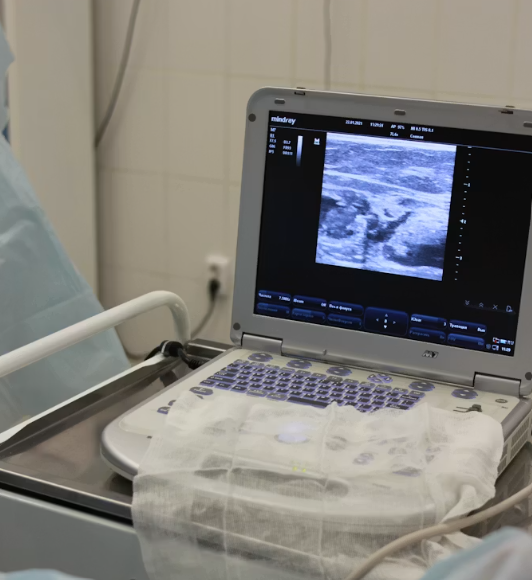
Between 60% and 90% of pregnancies that receive a prenatal diagnosis of down syndrome end in abortion—the selective prevention of life. If left to natural development, these pregnancies would have resulted in the lives of down syndrome children. The fact that these children with down syndrome are terminated before birth is an ethical concern, one that cannot be explained by typical pro-choice reasoning. In these cases, the decision to abort was not prompted by a positive pregnancy test, but upon knowing the child would possess particular genes. Aborting on this basis does not merely degrade life inside the womb, but also life outside of it.
One’s reaction to the thought of intentionally preventing down syndrome births likely depends on how they answer an old question: If someone will experience suffering, is it better for them to have never been born?
If someone says ‘no’, they may view suffering as an inevitable facet of the human experience, one that nurtures virtuous character, strong will and a meaningful legacy. Intertwined with this view may also be the belief that preventing any and all hardship is not within human capacity, and thus is not justification to absolve someone of life. If someone answers “yes,” perhaps they consider it cruel to allow someone to endure preventable suffering, and believe that quality of life is depleted by pain rather than refined. Even within the school of conservative Christian thought—a large portion of pro-life advocacy—there is disagreement on such principles. Any hope of bipartisan understanding depends upon a collective willingness to grapple with our most profound assumptions. To that end, we must regard the normalization of assigning discriminant value to unborn lives with severe caution.
Children born with any disability or special condition no doubt require a heightened level of care. Prospective parents face real fears of lacking proper emotional and financial capacity to ensure the child’s well-being. Wondering whether one is capable of being a good parent comes with the territory of having a family, as do overwhelming waves of self doubt. This healthy fear reflects recognition that taking care of a child—one with down syndrome nonetheless—is a serious commitment. Parents also realize the heartbreaking reality that they cannot protect their child forever, despite all their best efforts. Hardship is inevitable, and is not a determinant of life’s value. No one has lived without being subject to challenges, and those who have overcome them often say they would not change the past. As a culture, we cherish stories of redemption, revere the resilient and crave a reason to hope. If potential suffering is a reason to prevent new life, then hope is denied possibility. Choosing to abort out of fear for the child’s happiness may eliminate difficult experiences, but it also demeans the beauty, joy and profound good that could have been possible for them.
Carrying children to term based on their certain qualities sets a devastating precedent, suggesting that only certain types of children are worthy to be born. Rather than argue the nature of conception or sentience, particular lives are implicitly deemed as less valuable or desirable than others—the heart of all discrimination—as the vast majority of down syndrome pregnancies are terminated. Aborting on this basis does not merely degrade life inside the womb, but also life outside of it. Selective abortions may not be actively celebrated as Nazi-era eugenics once were, but indifference is tragic in its own right.
While the left is known to usually be against discrimination, the pervasive aborting of down syndrome children has been exclusively criticized by conservatives. At first glance, outrage on the right seems typical for a pro-life ethic. Yet, those with a liberal moral framework should be concerned about this subset of abortion policies. The left often has advocated for expanding the inclusion and dignity of the marginalized, giving all people, regardless of race, gender, wealth or disability, equal respect.
The down syndrome community should hold a prominent place in the pursuit of toppling stereotypes and recognizing the innate value in a diverse humanity. In fact, the promotion of diversity stems from the belief that human differences add a beautiful dimension to society and the world at large. When confronted with stories of struggle, the natural reaction is not “it’s a shame you were born” but admiration. If this is so, then why do we think that we should end unborn lives to prevent their suffering? This is not a question of partisan loyalty. By packaging the abortion debate as political, we avoid something far more profound. Abortion, even in the name of mercy, assumes that a good life is void of hardship. If deciding which lives are worthy of being born is considered a human right, there is no limit to what actions humanity can justify.