

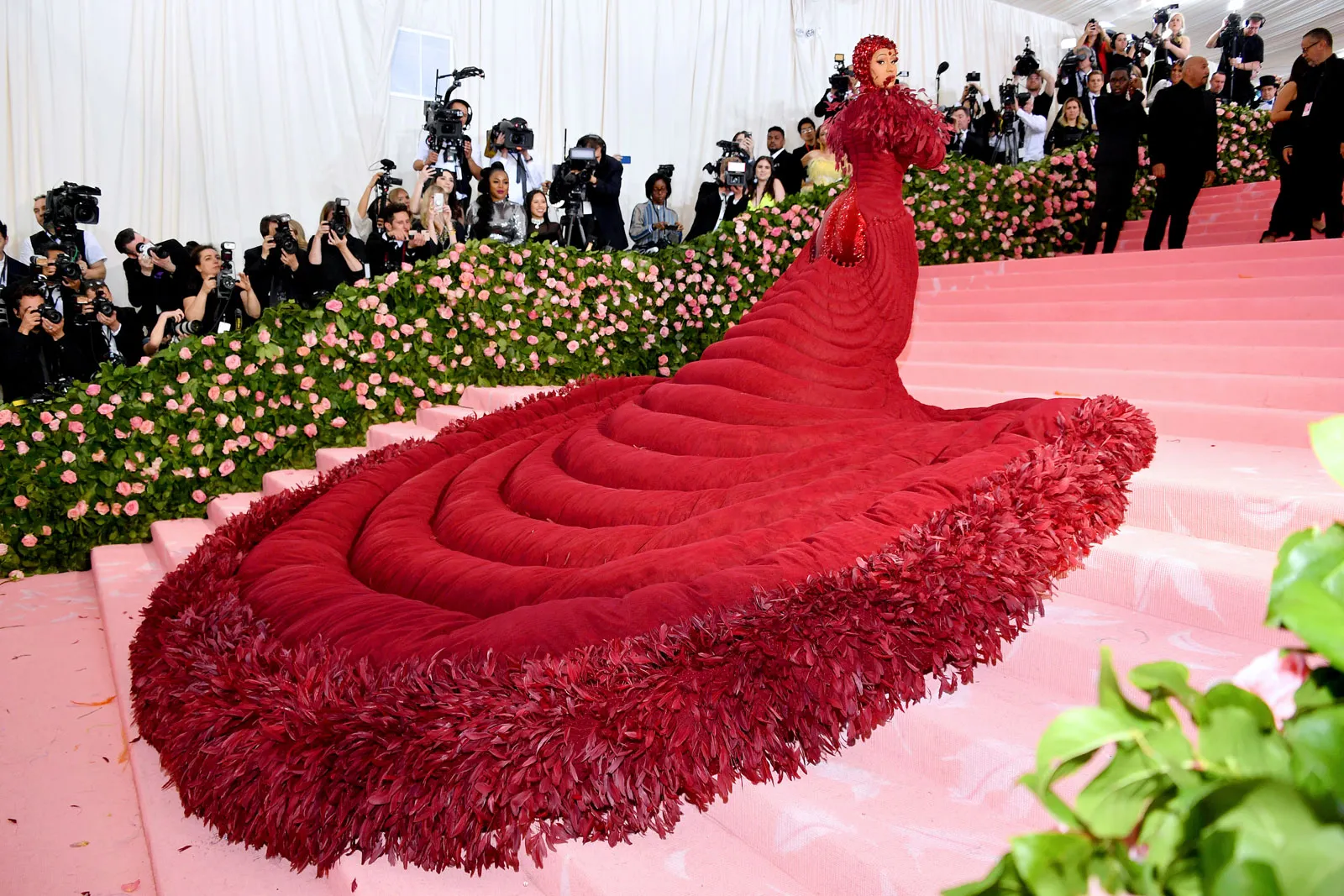
Every year, the Met Gala transforms the steps of New York’s Metropolitan Museum of Art into one of the biggest fashion stages. Designers, celebrities, and cultural figures gather around an exhibition meant to celebrate fashion as an art form, often honoring the people and movements that have shaped the industry. But the subject of the 2027 exhibition is already raising a more complicated question: Who deserves to be celebrated?
The Metropolitan Museum of Art has announced that its 2027 Costume Institute exhibition, ‘John Galliano: Horizons’, will examine the career of John Galliano, one of the most influential and theatrical designers in modern fashion. From his years leading Dior to his celebrated return at Maison Margiela, Galliano’s work has helped shape decades of runway fashion and continues to influence designers today.
But Galliano’s legacy extends beyond the clothes he created. In 2011, Dior fired him after allegations of racist and antisemitic verbal abuse and the emergence of a video showing him making antisemitic remarks. Later that year, a French court found him guilty of public insults based on race, religion, ethnicity, or origin.
More than 15 years later, Galliano has returned to fashion’s highest ranks. Now, one of its most powerful institutions is putting his work center stage. The question surrounding the 2027 Met Gala, then, is not whether John Galliano influenced fashion history. It is whether acknowledging that history requires celebrating the man behind it, and where the fashion industry should draw the line between recognition, redemption, and accountability.
But Galliano’s influence on modern fashion is difficult to ignore. Throughout his career, particularly during his time at Dior, he became known for turning runway shows into elaborate theatrical productions that blended history, storytelling, and extravagant design. Even after his dismissal in 2011, his influence never completely disappeared. He returned to the industry in 2014 as creative director of Maison Margiela, where he spent the next decade rebuilding his reputation and eventually received widespread acclaim for his 2024 Artisanal collection.
In many ways, Galliano’s return shows that the industry has already given him a second chance. He has apologized for his behavior, spoken publicly about his struggles with addiction, and spent years rebuilding a career that once appeared to be over. The question now is not necessarily whether Galliano deserves the opportunity to continue creating, but whether redemption should eventually lead to celebration.
That distinction is what makes the 2027 Met Gala particularly complicated. Museums have a responsibility to document influential figures, including those with troubling histories, and ignoring Galliano’s contributions would leave out an important part of modern fashion. But the Met Gala is more than a museum exhibition. It is a glamorous global spectacle, where celebrities and designers will gather around a night inspired by Galliano’s work.
Perhaps the Met does not need to erase John Galliano from fashion history. His influence can be acknowledged alongside the harm caused by his words and actions. But recognition and celebration are not necessarily the same thing. As fashion prepares to revisit one of its most influential and controversial figures, the 2027 Met Gala will ultimately have to confront whether honoring Galliano’s art can truly be separated from honoring Galliano himself.
Acknowledgement: The opinions expressed in this article are those of the individual author, not necessarily Our National Conversation as a whole.