

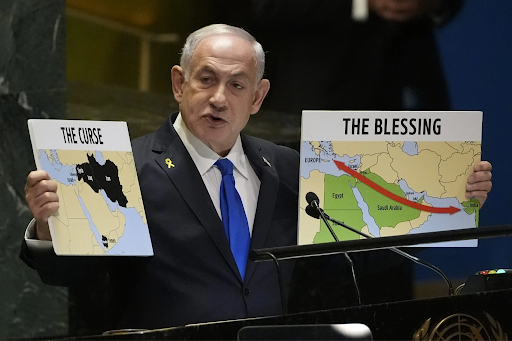
The United Nations’ contradictory and hypocritical imposition of sanctions on Iran and Israel demonstrates a massive lapse in applying international laws and statutes with consistency and fairness. Iran has faced a slew of sanctions in the last 20 years affecting their military and economy, while Israel has not faced any considerable or comparable sanctions, despite decades of avoiding nuclear weapons transparency and damning allegations of human rights abuses in both the Palestinian territory and Lebanon. The circumstances regarding the two Middle Eastern nations and their accused offenses are certainly different, but regardless, it prompts the question:
Why has Iran faced a mountain of UN sanctions and condemnation from the international community, while Israel remains with practically no UN sanctions and comparatively better standing?
Nuclear Program Oversight and the NPT
Iran is one of the clearest examples of UN sanctions being put in place regarding nuclear activities. In 2006, the UN Security Council adopted Resolution 1696, demanding Iran suspend uranium enrichment, after the International Atomic Energy Agency raised concerns. It did not take long for the Iranians to refuse this demand. Subsequently, in December 2006, the UN Security Council adopted Resolution 1737, which banned the supply of enrichment-related materials and froze assets of companies assisting in Iranian uranium enrichment. Additional UN sanctions were put in effect after Iran’s long-standing refusal in 2007, 2008, and 2010, which now included an arms embargo and travel restrictions on the nation.
Interestingly enough, Iran has been a member of the Nuclear Non-Proliferation Treaty (NPT) since 1968, which seeks to foster peace through safe and legal nuclear development. Israel has never signed the Treaty and has expressed no intent to do so. They maintain nuclear ambiguity, refusing to acknowledge the existence of a nuclear program or weapons arsenal. As most can likely infer, despite its denial, Israel is widely suspected of possessing an estimated 90 nuclear warheads. This should make it evident to the world that Israel is just as dangerous, if not more than Iran, when it comes to the question of nuclear capability. Israel often cites Iran as a dangerous power with unknown nuclear capabilities, when in reality, that description also fits Israel quite well.
What often fuels the one-sided concern and fear over Iran is that they can be held to the NPT. Israel’s absence from this treaty, coupled with their nation only being recognized in 1948, often results in concerns being downplayed by the international community. This is unacceptable, as all member states should be shown the same consideration under international law. Further biased treatment by the UN will most likely result in the UN’s global integrity falling.
Human Rights Abuses
Nuclear proliferation and oversight are not the only factors regarding the case for increased sanctions on Israel. Not only has current Israeli Prime Minister Benjamin Netanyahu been issued an arrest warrant by the International Criminal Court (ICC) in 2024 for crimes against humanity, but the UN Commission on Human Rights concluded in 2025 that Israel had committed genocide in the Gaza Strip.
A more concerning factor in the abuse of human rights lies in Israel’s continued use of white phosphorus against civilians in Lebanon and Gaza. White phosphorus is a munition that burns at 1,500 degrees Fahrenheit and can instantly melt flesh and bones. Protocol III of the Convention on Certain Conventional Weapons (CCW) outlaws the use of White Phosphorus in densely populated civilian areas. Unsurprisingly and similarly to the NPT, Israel has never signed this agreement. Israel has also employed other tactics against civilians, including the shelling of an IVF clinic, blocking of humanitarian aid, purposeful starvation, murder, bombing of hospitals, and sexual abuse committed against prisoners by both the IDF and guards in Israeli prisons. The UN Commission on Human Rights has found Israel guilty on every single account, leading to the conclusion of genocide.
The Question of Selective Punishment
The conditions here are very clearly different, but the principle of legal violations is certainly not. Iran has faced a mountain of sanctions from the UN regarding its nuclear program and capabilities. Israel faces mere scrutiny over a plethora of crimes that the international community still does not fully acknowledge, while also likely concealing its own nuclear program and arsenal.
Sanctions are intended to penalize countries that violate international law and do not apply only to nuclear activities. Israel has repeatedly shown a lack of regard for international humanitarian law and investigations into such abuses, as they continue to condemn organizations like the United Nations Relief and Works Agency and Amnesty International, which have played a pivotal part in protecting and upholding human rights around the world for decades.
Ultimately, if the UN wishes to maintain its credibility as a legitimate diplomatic world body that applies international law with consistency and fairness, it needs to hold Israel accountable for the genuine violations of international law. The UN must uphold the law in all areas of its jurisdiction, regardless of political consequences, as that is the only avenue for true peace.
Acknowledgement: The opinions expressed in this article are those of the individual author, not necessarily Our National Conversation as a whole.