

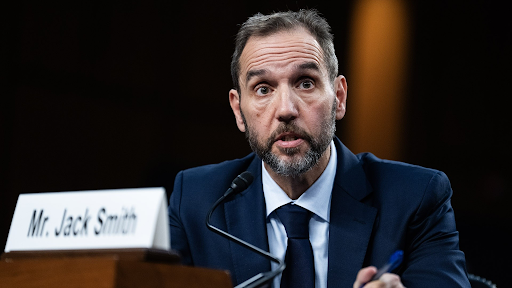
Jack Smith, Former Special Counsel, appeared before the Senate Judiciary Committee on Tuesday, September 29, to answer questions about his investigations and criminal prosecutions of President Donald Trump. During the hearing, Smith testified, defending the decisions and investigation methods he and his team used against President Trump.
Attorney General Merrick Garland appointed Smith special counsel on November 18, 2022. His primary responsibilities were to oversee two investigations: one investigation concerning Trump’s efforts to interfere with the transfer of power after the 2020 U.S. election and another investigation involving classified documents and presidential records at Mar-a-Lago resort.
Political polarization has become increasingly familiar in American public life, shaping how people view political opponents and national issues. Americans have expressed frustration on issues such as the government’s handling of the economy, inequalities of wealth, and polarization over domestic issues.
Even though both of Smith’s cases were dismissed in 2024, the questions surrounding them remain. Moreover, last Tuesday’s hearing shows the controversy over Smith’s actions has not faded from the political spotlight.
The circumstances surrounding those cases raise a larger question: What should congressional oversight look like when the investigation itself has already ended? In my view, congressional oversight means shifting the conversation toward the issues and evidence being examined rather than personal attacks on those who testify.
During Tuesday’s hearing, Republican senators argued that Smith’s decision to bring criminal charges against Trump during the 2024 election cycle was politically motivated. The Trump campaign has characterized Smith’s prosecutions against him as “witch hunts”.
The Senate Hearing also included personal attacks directed at Smith. Senator Eric Schmitt (R-Missouri), called Smith “a total dirtbag”. In my view, personal insults shift the discussion away from the investigations and toward personal attacks.
A congressional hearing should examine how much power federal prosecutors should have when investigating a president and what limits should apply regardless of which political party occupies the White House.
That, in my view, is what makes Tuesday’s hearing more significant than the political arguments surrounding it. The hearing should not simply become another chapter in the continuing political battle between President Trump and his opponents.
Senator Ted Cruz (R-Texas) was another Senator present before the Senate Committee that challenged Smith over his team’s use of phone records from Republican lawmakers. Smith responded that obtaining the records wasn’t abuse of power, and he said he won’t remain silent in the face of ongoing threats directed at him. The exchange illustrates how difficult it can be for congressional oversight to remain separate from partisan conflict when lawmakers disagree over the conduct being investigated.
How then should the House and Senate approach Congressional hearings? Congress should create an environment where lawmakers can scrutinize government actions, question witnesses and debate the limits of federal power without allowing personal attacks to overshadow the issues at hand.
Acknowledgement: The opinions expressed in this article are those of the individual author, not necessarily Our National Conversation as a whole.
2 Comments
Felipe, I resonate very much with this article. The amount of political theater and grandstanding put to play, particularly in the senate, is overriding their ability to serve the American people. People like Ted Cruz think that getting loud, loud, and louder will give their arguement more credence. Also to note, Senator Cruz’s allegations towards Smith of a political witch hunt, shows his immaturity, especially when asking loaded questions like “is it a crime to be a republican?”. The many Americans who watched this incredibly contentous hearing, are surely questioning if their government really prioritizes them or if they priotize “gotcha” moments for rude and disingenuous politicians like Cruz, who seem to enjoy smearing and defaming hardworking public servants like Jack Smith. Great job!!
Felipe, thanks for your article. I agree with you that congressional hearings have become more of a theater than an avenue for productive discussions on finding solutions to pressing issues.
Perhaps it was always like this, but Senator Schmitt’s conduct was especially embarassing. But his unwillingness to apologize when he realized he was wrong illustrates what is wrong with politics today. Admitting mistakes is seen as a weakness, and it poisons good faith discourse.