

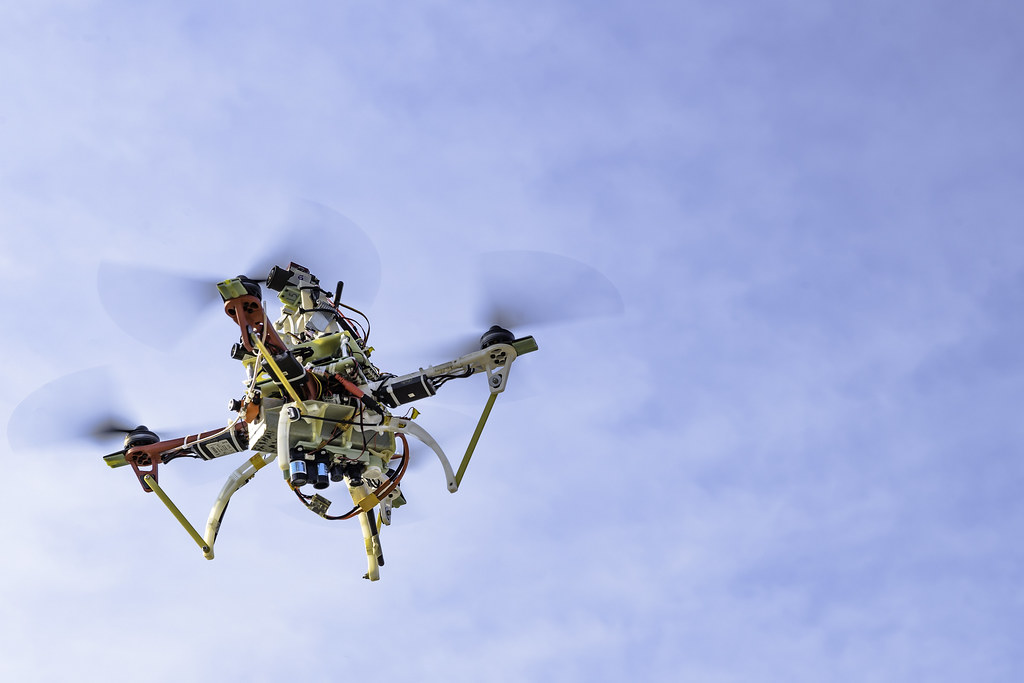
A decade ago, drones seemed to be just the latest toy on the market. Who knew then that they would become AI-powered killing machines?
AI-powered drones, referred to as autonomous weapons, identify and fire at targets based on information gathered by artificial intelligence. The fully autonomous models do not require human input before shooting a combatant.
Low-cost drones have changed the character, economics, and speed of war. AI is being used by the military to pinpoint locations, prioritize their importance, and evaluate whether the targeting is lethal. This shortens the amount of time between a target being identified and struck, which allows more targeted attacks per day. Drones are also small, effective, and a fraction of the cost to manufacture compared to a missile or military aircraft.
These characteristics have made them popular in many recent military conflicts, including those in Ukraine, Gaza, Venezuela, and Iran.
United Nations Institute for Disarmament Research (UNIDR) Director Robin Geiss said that AI is “on track to crowding out human decision-making” in the defense sector.
America has been investing in AI for years. The Defense Department has allocated $75 billion to AI-driven programs since 2016, and the Pentagon requested $13.4 billion to develop autonomous weapons in 2026 alone
One of the main AI systems the military uses is called the Maven Smart System. The Maven Smart System has been in development for over a decade between the tech industry and the Defense Department.
Despite all of this invested time and money, the AI remains imperfect. In 2024, Maven’s algorithms could only detect a tank in good weather 60% of the time and in snowy conditions 30% of the time. On top of this, foundation models have created false or misleading analyses that sound persuasive, but are inherently wrong. During the heat of war, action could be taken on these suggestions without true analysis, casting unforeseen threats to both troops and civilians alike. The algorithm also has hidden biases towards muslim and black individuals that leads to the misidentification of civilians as combatants.
According to The Independent, five children a day are killed or injured by explosives around the world, and that number is increasing due to autonomous weapon attacks.
In 2024, the White House released a memorandum issuing certain guardrails for AI use in national security, but also gave agencies the ability to waive these safeguards if they “create an unacceptable impediment to critical agency operations.”
The Pentagon has its own directive on autonomous weapons which requires senior Defense Department leaders to review the weapons judgment before signing off on its use. The number of leaders, however, have now been cut in half after the Office of the Director of Operational Test & Evaluation restructured. This restructuring was ordered by Pete Hegseth in collaboration with the Department of Government Efficiency last year. This comes at a time when the military is looking to further expand AI use in operations.
The Department of War announced a new Autonomous Warfare Command called AUTOWARCOM last week that will be operational by October 1, 2027. The heads are the current director of the Defense Innovation Unit, Owen West, as the CEO, and Navy SEAL Senior Chief Max Strasiser as the COO.
“We face an … urgent revolution,” wrote West and Strasiser. “Since the Cold War, American power projection has rested on a small number of sophisticated, expensive weapons. That model has been disrupted.”
At what point does having an advantage over adversaries justify the cost of innocent human lives?
Our federal government needs to reevaluate the true military necessity of autonomous weapons before it kills more innocent people.
Acknowledgement: The opinions expressed in this article are those of the individual author, not necessarily Our National Conversation as a whole.