

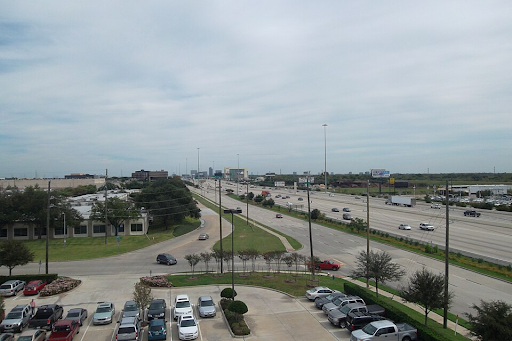
Governments in America constantly build far more new infrastructure for cars than for cyclists, trains, or pedestrians.
It is no secret that the United States of America is an outlier in car-dependency. Americans rank near the top – if not the highest – per capita in yearly distance driven, vehicle ownership, and car-dependent commuters. American cities overwhelmingly prioritize making themselves quickly navigable by car instead of via public transportation in comparison to their European counterparts. But despite its popularity, car-dependent cities produce a wide range of negative externalities and result in worsened economic output for small businesses. And worse, they may not even be the most efficient for the drivers who are left with no other transportation options.
Often, when traffic on a wide road is frequently strained, city planners will propose adding new lanes. After all, more space should mean a less clogged roadway, leading to reduced traffic jams. But what traffic planners fail to consider is the phenomenon of induced demand. Similar to how the higher price of a good in a perfectly competitive market incentivizes new businessmen to become its suppliers, the immediate drop in commute times following the new lane results in new drivers flooding into it, demanding the use of a public good. In both cases, equilibrium is restored in the long run after the change in profit opportunities or commute times reverts to zero as a result of new producers or consumers, respectively. Therefore, it should come as no surprise that widening roads has only widened the traffic jams on them while keeping their duration virtually unchanged, if not worse. And adding new road networks altogether is not the answer either, as explained by Braess’ Paradox. Clearly, a substitute for the least efficient mode of transport by surface area must be prioritized.
Bicycles and trains can carry far more commuters per unit of surface area than cars, and also are much less prone to traffic jams due to their narrowness and fixed schedules, respectively. Thus, adding a lane on a road for cyclists and trams would actually improve congestion for its future drivers by taking current ones away into new methods of transportation. It would also make the experience for commuters safer, as a car trip of the same distance is magnitudes more likely to be fatal than a train journey. Americans have far higher traffic fatality rates than inhabitants of most European countries, costing hundreds of billions of dollars in productivity annually. Especially when commuters are parked, the space efficiency is more visible. Parking minima have resulted in parking lots devoid of businesses and economic activity consuming huge shares of American cities, also raising rents by leaving less land available for apartments. While small businesses suffer from these city plans, there is one major beneficiary of car-infested cities: big-box stores.
Big-box stores take advantage of the massive parking lots required by parking minima that suit their structural needs in order to drive out competing small and locally owned businesses. This results in less sales and property tax revenue going to local governments, depressed wages through a monopsony, and contributes to the suburban sprawl that demands more car dependent cities. In contrast, pedestrian-friendly cities allow a high density of mostly small, locally owned businesses to thrive in close proximity to a dense area of customers, generating far greater tax revenue per acre for municipalities. And as cars are far more massive than bikes or their drivers, infrastructure for the latter two suffers less wear and tear, thus lowering repair costs on taxpayers. All in all, moving away from car-dependency is a major step towards fiscal and economic sustainability for cities.