

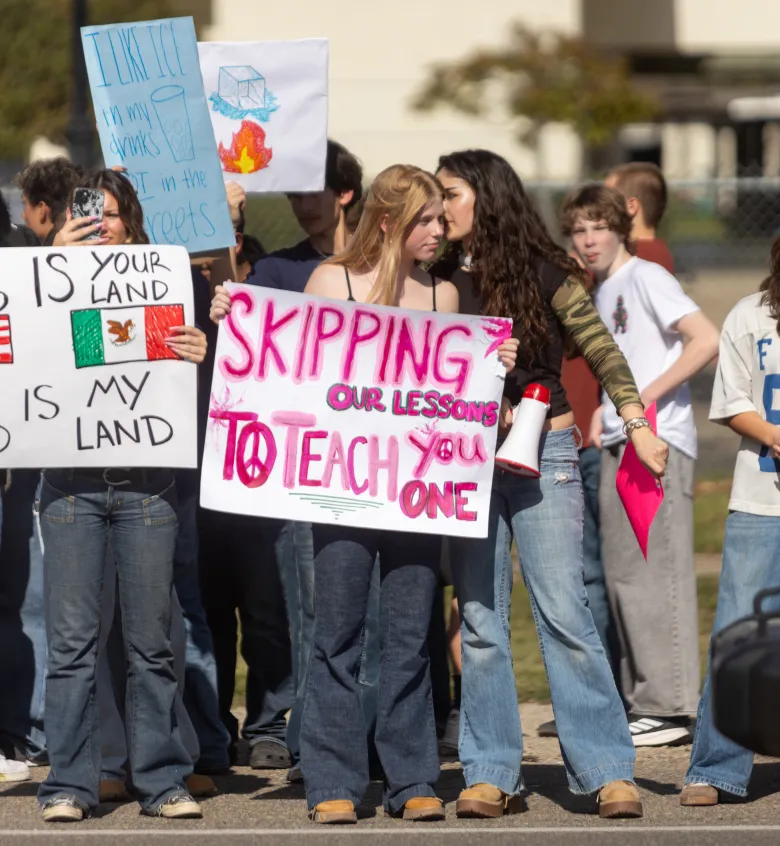
The aftermath of the shooting of Renee Nicole Good and Alex Jeffrey Pretti has caused a widespread conversation on abolishing Immigration and Customs Enforcement (ICE).
According to a new YouGov poll taken on Jan. 24, 22 percent of Republicans and 55 percent of American adults across the political spectrum voiced support for abolishing ICE.
This is a striking difference from another YouGov poll conducted in June 2025. During that time, only nine percent of Republicans and 27 percent of Americans believed ICE was too harsh. This means that the Trump administration’s tactics and their account of events that took place is facing bipartisan scrutiny.
Good and Pretti’s deaths caused high emotions throughout the political spectrum. Especially after Pretti, multiple Republicans have joined Democrats in calling for an investigation. Representative Michael McCaul (R-TX) and Senators Thom Tillis (R-NC), Bill Cassidy (R-LA), Susan Collins (R-ME) and Lisa Murkowski (R-AK), encouraged further information. Murkowski called for an investigation, stating that ICE agents do not have carte blanche in carrying out their duties. Sen. Pete Ricketts (R-NE), a staunch ally of President Donald Trump, also called for a transparent investigation.
White House press secretary Karoline Leavitt made a statement following the shooting of Pretti. Leavitt made it clear that the shooting Pretti in Minneapolis occurred as a “result of a deliberate and hostile resistance by Democrat leaders in Minnesota.” It is clear the administration refuses to accept the part they play in the violence in Minnesota. They’d rather blame the violence on Democrats. Trump stated just days before that he had a productive phone conversation with the Minnesota Gov. Tim Walz, even though White House officials have said the violence is a consequence of Democratic leadership. Journalists and investigators have raised questions about the accuracy of ICE’s initial reports of the incidents.
On the other hand, supporters of ICE argue that eliminating the agency would hinder national security, compromise immigration enforcement, and dismantle specialized operations. This divide highlights a larger national debate: whether reform is sufficient or whether ICE, as it currently exists, is beyond repair. The sharp rise in public support for abolishing ICE suggests that for many Americans, the reform the administration is attempting to execute no longer feels adequate. Even among supporters the raids have gone too far. Latino favorability toward Trump crashed from 45% in April to just 25% by Oct. 2025, signaling a dramatic reversal after 2024’s surprising GOP surge.
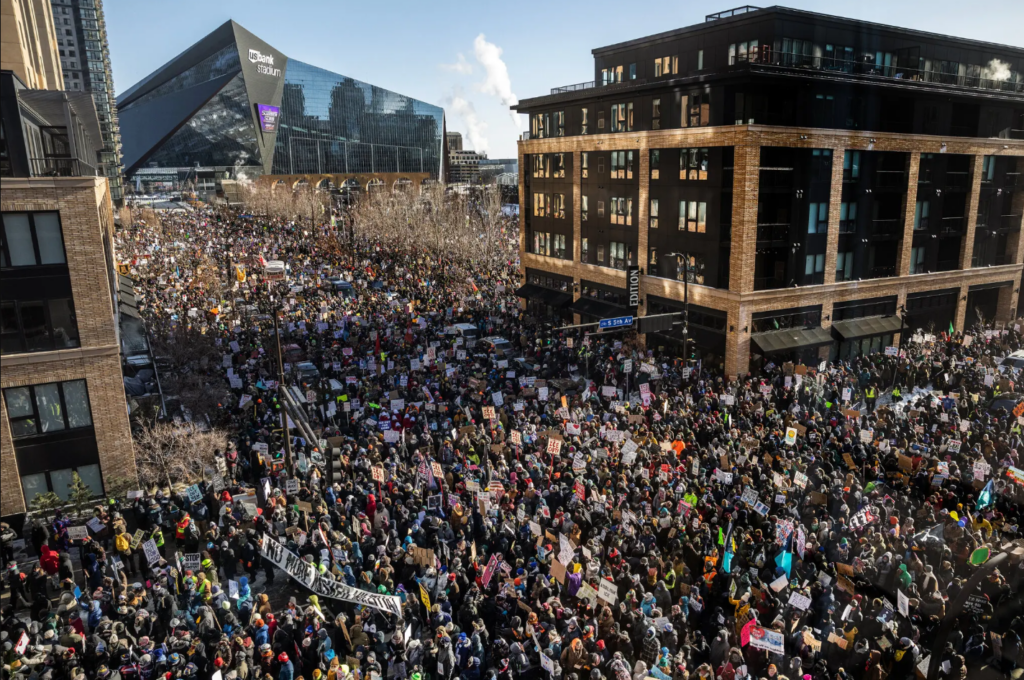
Public reaction has extended far beyond elected officials. Protests have erupted across the country as people demand justice for Good and Pretti, ultimately calling for systemic changes to immigration enforcement. On Jan. 23, a day that started with temperatures as low as minus 20 Fahrenheit, people got out in the streets of Minneapolis demanding justice. As many as 50,000 people took to the streets. Many protestors gathered indoors at the Target Center and a sports arena with a capacity of 20,000 that was more than half full. Thousands took to the streets and an estimated more than 300 businesses closed.
The growing public support for abolishing ICE reflects a shift in how Americans view immigration enforcement as a whole. What was once considered a distant position has increasingly entered mainstream political discourse. Lawmakers who once avoided the topic now find themselves addressing it directly, as citizens contact them asking for answers.
The dramatic increase in support shown in shows that the shootings acted as a sort of catalyst, accelerating an already growing dissatisfaction with the agency. The reckless actions of ICE, and other federal law enforcement agencies during these raids have undermined the legitimacy and public trust in law enforcement. The administration’s failure to address concerns openly could deepen political polarization and public distrust.
For many Americans, the question is no longer whether reform is needed, but how much longer communities can endure this dark period of history.
