

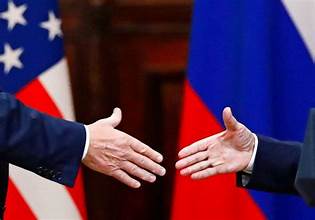
As the world watches, US-Russia relations are poised at the edge of a new frontier. After decades haunted by the ghosts of the Cold War, the bitter rivalry between the US and Russia appears to be winding down.
Since taking office, President Donald Trump has made his affinity for Russian President Vladimir Putin well known. Trump’s favorable rhetoric toward Putin, dismissal of concerns over Russia’s role in global conflicts, and advocacy for policies that would ease sanctions on Russia have been met with criticism and disgust by actors across the globe.
Trump’s sharp departure from traditional American attitudes towards Russia has shocked the world, leading many critics, particularly American allies in Europe, the US intelligence community, and Ukrainian officials, to question Trump’s approach, stating it is a dangerous concession to Russia’s actions on the global stage, including its annexation of Crimea, involvement in the Syrian conflict, and alleged interference in Western elections.
The US’s increasingly friendly approach toward Russia under Trump’s leadership has destabilized long-standing relationships with Western powers, which view Russia’s actions as a threat to regional stability.
In the wake of Trump’s disastrous meeting with Ukrainian President Volodymyr Zelensky, European Union members, already weary of Moscow’s aggressive posturing, have found it challenging to align their policies with a U.S. administration that seemingly overlooks Russia’s destabilizing influence in Europe.
The Argument for a US-Russia Alliance
Despite the controversy, easing tensions with Russia could open new diplomatic and economic avenues.
With the US and Russia’s decisive military capabilities and significant geopolitical influence, a shift toward cooperation could lead to a more productive dialogue on nuclear disarmament, regional security, and trade. Additionally, a more stable US-Russia relationship could alleviate some pressure on global security, reducing the likelihood of a new arms race or escalating conflicts in regions like Eastern Europe or the Middle East.
However, the risks of straying too far from America’s traditional relationships with its EU allies and neighbors, such as Mexico and Canada, are concerning.
The Case Against Russia
The delicate balance of power in global diplomacy relies heavily on alliances cultivated over decades.
The transatlantic partnership, in particular, has been the cornerstone of European and American security for generations, helping establish norms and frameworks for resolving conflicts. A departure from these longstanding alliances in favor of a more isolated approach towards Russia risks alienating key partners who are critical not only to American influence in global affairs but also to the stability of international institutions like NATO and the European Union.
Furthermore, the growing divergence between the U.S. and its traditional allies could embolden adversaries beyond Russia.
Strengthening ties between Russia and countries like China—often seen as an adversary to American interests—could exacerbate the geopolitical power struggle, leading to a new era of bloc politics reminiscent of the Cold War. The U.S. may face increasingly coordinated opposition from powerful, non-Western coalitions, leaving the country more vulnerable in an already volatile world.
This shift in U.S. foreign policy also has profound implications for neighboring countries like Mexico and Canada. As America distances itself from its northern and southern neighbors, the stability of North America could be at risk.
The North American Free Trade Agreement (NAFTA) and its modern iteration, the USMCA, have bound the three countries’ economies together. A decline in cooperation would weaken trade and threaten mutual security and environmental agreements. Straying from these relationships could invite instability at home, particularly as the world’s economic and geopolitical landscapes grow more complex.
Conclusion
While the potential for thawing US-Russia relations may offer diplomatic opportunities, it is crucial to consider this shift’s broader impact on America’s relationships with its closest allies. Straying from these ties risks eroding decades of hard-won cooperation and weakens the West’s collective influence in shaping the global order.
As history has shown, a divided front is often more susceptible to exploitation by rival powers, and the U.S. must carefully navigate its foreign policy to avoid sowing division at home and abroad.
