

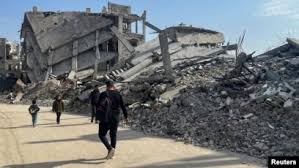
In the dimming light of 2025, as the year draws to a close amid the usual swirl of holiday distractions and political maneuvering, President Trump’s announcement that the members of his proposed Gaza “Board of Peace” will not be revealed until early 2026 arrives. One that, for those attuned to the rhythms of American conservatism, might prompt a quiet reevaluation of our longstanding commitments in the Middle East.1 2 This board, envisioned as a transitional oversight body to guide Gaza from the ruins of conflict toward some semblance of reconstruction, was initially floated with the optimism of a pre-Christmas unveiling, complete with international involvement to train Palestinian security forces and manage aid distribution.3 4 Yet the delay, attributed to unresolved negotiations between Israel and Hamas over the plan’s second phase, extends a fragile ceasefire into an uncertain limbo, where relative calm is punctuated by ongoing airstrikes and the harsh realities of displacement.5 6
For conservatives of a certain stripe, those who trace their lineage back to the fiscal prudence of Eisenhower or the non-interventionist instincts of Buchanan, this postponement is less a setback than an occasion for reflection. Why, after all, should the United States continue to underwrite a process that perpetuates dependency, when our own national debt mounts and domestic needs press? The board, as
outlined in the United Nations Security Council Resolution 2803, adopted last month, is meant to frame Gaza’s redevelopment until the Palestinian Authority can step in, but the holdup only amplifies the human toll: recent UN reports document hundreds killed and injured in the weeks following the truce, with storms compounding the misery in makeshift camps.7 8 9 Since the war’s onset in October 2023, UNRWA (United Nations Relief and Works Agency for Palestine Refugees in the Near East) has recorded 382 of its own colleagues killed in Gaza, a stark marker of the conflict’s breadth, though the full civilian casualties still run far higher, into the tens of thousands.10
This moment invites conservatives to reconsider the Palestinian cause not through the lens of progressive activism, but through core principles of self-determination and limited government. Polling this year reveals a subtle shift: while Republicans remain broadly supportive of Israel, sympathy for Palestinians has edged upward, with some surveys showing a decline in unqualified backing for Israeli actions. 64% sympathize more with Israel compared to 9% for Palestinians, yet down from previous highs. Isolationist currents within the party, amplified by figures like Tucker Carlson, Marjorie Taylor Greene, and Candace Owens, question the wisdom of entanglements that drain resources without clear returns, echoing Trump’s own “America First” doctrine.11 In this view, advocating for Palestinian priorities, i.e., economic autonomy, secure borders, or a path to governance free from perpetual oversight, aligns with a conservatism that prizes independence over indefinite aid.
The under-reporting of such nuances in mainstream outlets only heightens the need for this discussion. While headlines trumpet the plan’s progress, they often sideline the Palestinian perspective, framing delays as mere procedural snags rather than extensions of hardship.12 Conservatives, drawing on a tradition wary of neoconservative adventurism, could lead here: press for a board that ensures fair representation, fosters market-driven recovery in Gaza, and ultimately reduces U.S. involvement. As the new year approaches, this delay might yet become a pivot toward a more balanced, self-reliant peace—one that honors conservative values without forsaking the vulnerable. Potentially even helping to secure midterm wins especially.
- Prevention, Investment and Reform in Healthcare Bring Economic Prosperity.” The European Sting, 11 Dec. 2025, https://europeansting.com/2025/12/11/prevention-investment-and-reform-in-healthcare-bring-economic-prosperity/. Accessed 12 Dec. 2025.
- Humanitarian Situation Update #345: Gaza Strip. United Nations Office for the Coordination of Humanitarian Affairs, www.ochaopt.org
11. “Support for Israel among U.S. Conservatives Is Cracking.” NPR, www.npr.org
