

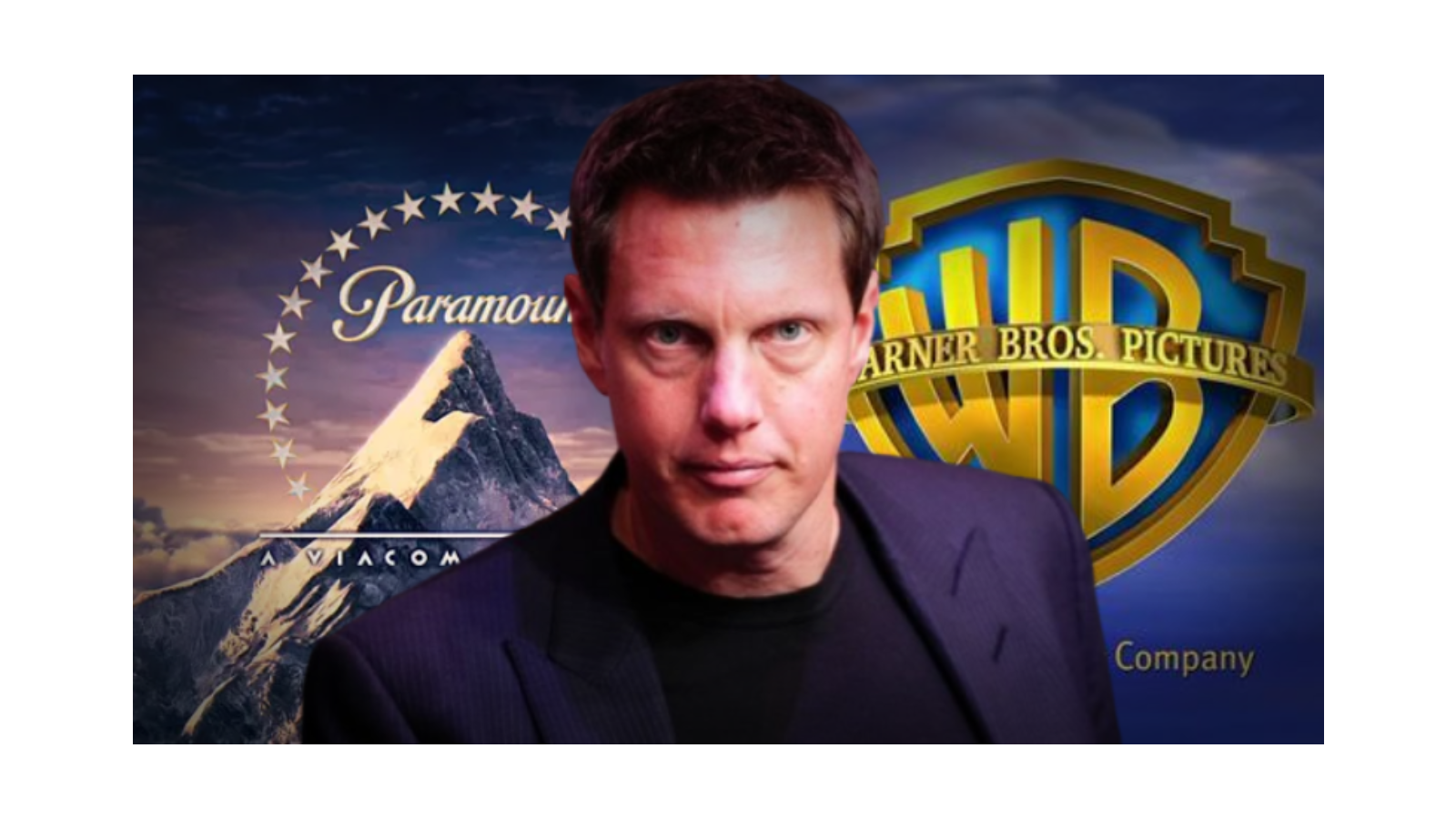
When Paramount Skydance outbid Netflix to acquire Warner Brothers (WB) Discovery in February, many film fans celebrated. Netflix, they thought, would apply their streaming model to future WB content, delivering a fatal blow to the fragile movie theater industry. However, Paramount’s acquisition was the worse outcome simply because it is a poorly run business.
When CEO David Ellison took over Paramount in 2025, he promised that he would have 15—and eventually 20—theatrical releases per year. In 2026, there are only 11 films on the slate, and they are not all going to theaters. Combining the four films Paramount has released in theaters so far in 2026 (Primate, Scary Movie (2026), Scream 7, and Jackass: Best and Last), the studio has grossed roughly $500 million since January at box offices worldwide (however, this figure does not take into account the movies’ marketing and production budgets). Other major studios—such as Disney, Universal, Lionsgate, and Amazon MGM—have released individual films this year that have far surpassed the total of Paramount’s 2026 slate thus far. Even WB, which is not among these studios, broke box office records last year and still has highly anticipated films like Dune: Part Three on the way. In comparison, Paramount’s lineup is rather lackluster. As a fan of both movies and movie theaters, I do not want Ellision’s Paramount handling the extensive IP and catalog of Warner Brothers when they cannot even handle their own.
As it turns out, film fans may not have to worry about Ellison getting a chance to drive another cinematic giant into the ground. In mid-July, 12 State Attorney Generals filed a joint lawsuit alleging that the pending Paramount-WB merger would constitute a monopoly under the Clayton Act, which prevents mergers that “substantially lessen competition.” On July 20th, a federal judge put a 14-day restraining order on the deal until a preliminary injunction hearing can take place on August 3rd. During the hearing, the Court will decide whether to pause the deal indefinitely until the suit is judged upon. Though an injunction is not guaranteed, Judge Araceli Martínez-Olguín’s language implies that it is more than likely, claiming “the Court is persuaded that it can presume the proposed merger is likely to violate antitrust laws.”
If the merger is indefinitely paused via an August 3rd injunction, then Ellison will feel the weight of his poorly crafted deal with WB. Without any delays, the combined entity of WB and Paramount would emerge with approximately $80 billion in debt. However, if the deal does not go through by September 30th, and it most definitely will not if an injunction is granted on August 3rd, Paramount will have to pay WB shareholders roughly $7 million every day the deal remains unfinished. Furthermore, David Ellison’s financial backing for this deal comes from father Larry Ellison’s Oracle, which is currently in freefall at the stock market. With looming costs and no way to pay for it, Paramount may have to cut its losses and back out, leaving WB independent.
This outcome would not just be cause for celebration for film fans, but great for capitalism and its defenders. There are two basic arguments for a free market that are supported if Ellison’s merger fails:
1. Competition is good for the economy—and capitalism facilitates competition;
2. Businesses do not need hyperregulation because the market itself will punish poor decisions.
The first point is applied easily. If WB and Paramount—two industrial giants with control over movie studios and cable news channels—stay separate, then their products can compete with each other.
The second point is, admittedly, more difficult to apply. If the merger fails, it will not be solely because of the market, but antitrust laws and regulations as well. However, I would argue that the disastrous costs of a lawsuit, which Ellison should have seen as a possibility, are self-imposed because of his agreement to the aforementioned $7 million per day fee. He deserves to fail for his oversight, for relying on the unstable backing of his father’s money, and for trying to buy another film studio when he cannot productively operate the one he already has. As a businessman, Ellison has made bad choices and the negative consequences are in accordance with those choices. That is how capitalism is supposed to work, and David Ellison’s failure will reaffirm that function.