

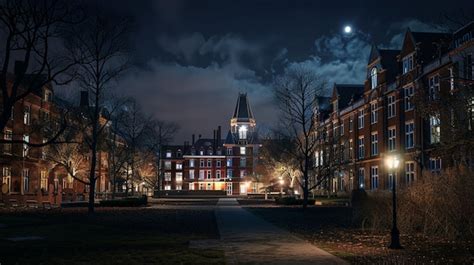
As a junior at California State University, Northridge (CSUN), I’ve walked this campus at nearly every hour: during morning classes, in the late-afternoon rush, and long after the sun has gone down.
Throughout these walks, I’ve noticed one thing: how safe I feel depends heavily on how illuminated the path ahead of me is.
During my morning and afternoon classes, daylight does the work. Walkways properly guide me to my classes, and buildings look like regular campus buildings — not towering shadows that obstruct my view. I’m not anxious about where I’m headed, nor am I contemplating whether to take the shorter, darker route or the longer, brighter one.
But as soon as the sun sets, everything seems to turn upside down.
Without sunlight, walkways are no longer reliable paths that I follow without a second thought. Instead, I navigate them carefully and deliberately, wary of my every step, moving as quickly as I physically can without breaking into a run. Areas surrounding Sierra Hall, the B3 parking structure, the orange orchard, and the pond become almost unrecognizable compared to their daytime appearance.
Even if there is no immediate danger around me as I walk to class or to my car, I wouldn’t know for sure: inadequate lighting limits what I can see. I rely solely on scattered streetlights that light up only portions of the walkways, leaving stretches of darkness in between.
With each illuminated section comes a sense of security, only for it to disappear as quickly as it came when the path ahead fades back into darkness. In some areas, even that brief sense of security is absent, as entire stretches of campus remain poorly lit.
This uncertainty about my surroundings leaves me questioning whether campus is really as safe as administrators make it out to be.
For many students, balancing work with school means attending classes after the sun has set. Therefore, taking nighttime classes may be a matter of necessity. With CSUN scheduling classes as late as 9:45 p.m., students should be able to walk on their campus without the additional burden of worrying about their safety.
As a woman, these concerns are especially prominent. After speaking with other students about this issue, I’ve realized that many women share similar experiences. Some describe clutching pepper spray in their fists as they walk to their cars, using their phones as flashlights to navigate poorly lit areas, or constantly scanning their surroundings for potential danger — all of which I have done myself countless times over the years.
Blue-light emergency phones and call boxes are limited in the amount of safety they provide. I say this because, while these systems serve a crucial purpose, they are designed to assist students when an emergency arises. But what about prevention? Adequate lighting is a preventative measure that reduces opportunities for danger. The goal should transcend providing students with resources to use when their safety is threatened. Instead, it should be to create an environment where students are less likely to feel the need to use blue-light emergency phones and call boxes in the first place.
If I’ve silently carried concerns about my own safety throughout my time at CSUN and the students I’ve spoken with have similarly kept their experiences to themselves, how many others feel the same way?
Although my firsthand experience and conversations with students are limited to CSUN, concerns surrounding inadequate campus lighting extend far beyond Northridge. Students at the University of California, Santa Barbara (UCSB), University of California, Davis (UC Davis), California State University, Los Angeles (Cal State LA), California Polytechnic State University, San Luis Obispo (Cal Poly SLO), and California State University, Monterey Bay (CSUMB) have also raised concerns about lighting conditions on their respective campuses.
What initially appeared to be an isolated concern at my own university begins to look like a broader issue affecting students across California.
If students across multiple California universities are raising similar concerns, what does that say about the priorities of university administrators? More broadly, what does it say about the responsibility of California’s elected representatives?
When something as fundamental as lighting remains a concern, the question should shift from why students feel unsafe to why those with the authority to address these conditions have yet to resolve them.
In The Daily Sundial, CSUN Environmental Health and Safety Director Daniel Castellon emphasized the importance of student participation in identifying campus safety concerns, stating, “Without their feedback, there’s not gonna be any change.”
While student feedback is undoubtedly valuable and always will be, should meaningful improvements to campus lighting depend on students’ efforts in the first place? To suggest that students must come together and voice their concerns for this issue to receive attention places the responsibility on the very students these institutions are meant to serve. This overlooks the role of university administrators, who should be proactive in identifying and addressing such conditions.
Student efforts and advocacy should serve as an additional means of identifying campus concerns, not as a prerequisite for administrators to address them.
Administrators should be able to see with their own eyes just how poorly lit areas of their campuses are. Part of their job is to maintain an environment where students can pursue their education without worrying about their safety. Are pitch-black stretches of walkways and insufficient lighting really conditions they consider acceptable? I find that hard to believe.
Although CSUN conducts nighttime safety inspections and provides maintenance services for campus lighting, the continued presence of poorly lit walkways raises questions about whether these efforts are sufficient. Identifying lighting deficiencies and malfunctions barely break the surface; ensuring that they are addressed through timely repairs and additional lighting where needed is equally important. These are basic improvements that should be prioritized so students can navigate their campuses with greater confidence.
California’s elected representatives also have a role to play, as they are responsible for representing the interests of their constituents. Among those constituents are younger generations of Californians pursuing higher education — the very generations who will shape the future. Students should not have to navigate poorly lit campuses while pursuing an education that will ultimately contribute to the nation’s future. Through funding decisions and oversight of public universities, elected representatives can help ensure that campus infrastructure receives the attention it needs.
Whether a student is going to class or to study in the library, or walking to their car after a long, stressful day, feeling safe should not depend on the time of day. Ensuring that students feel secure on campus should not be something they have to advocate for; it should be a fundamental responsibility of the institution entrusted with their education. University administrators and California’s elected representatives have a major role to play in acknowledging these concerns. Inadequate lighting should not remain an obstacle to a student’s peace of mind.
After all, every student walking on campus should be able to focus on the path toward their future — without worrying about whether they can see the path directly in front of them.
Acknowledgement: The opinions expressed in this article are those of the individual author, not necessarily Our National Conversation as a whole.
6 Comments
I went to college in southern California, and I had a job there with shifts that began at 6:30 AM. I was approached more than a few persons of questionable intent. It really would be nice if it were safer to go out at night.
It may be worth seeing if this is a national issue. I have friends who went to Georgia Staye University in downtown Atlanta and there was this sense among them that the campus area wasn’t as secure as it should be. It seems to me like colleges and officials think that the young can handle themselves and that no one needs to take measures to make them feel comfortable. When taken alongside questionable practices like unpaid internships, it gives makes me think that maybe students and the like should join in advocating for better conditions and better treatment.
Similar to Amaan, at my school in Georgia, there are safety concerns about how open my university is to the public, to the point that almost anybody can walk into the buildings, except the dorms. However, with the dorms, there were concerns about people letting strangers into the building, since they know they have to wait for other students to come in. Moreover, with all that said, lighting is a huge factor in registering for classes and affects which route I would take to class, as, with it getting dark earlier, it truly raises questions about safety.
I’m very lucky to say that my campus is very well lit, but I also go to a private school rather than a state school. We must hold our state government responsible for state universities’ upkeep. Everyone deserves to feel safe walking around their campus, and well-lit sidewalks are an essential part of public safety.
This concern about lighting on campuses is exactly why I always opt for parking spots underneath streetlights if I plan to be out after dark. It may sound silly to those who don’t have to proceed with caution as us women do, but something so simple as more lighting can make a world of difference for our safety.
I went to UCSD and walking at night was always wary. Being an open campus, anyone could come on campus at anytime. I even rubber one time being told by my RA that an unhoused person was in the bottom floor stairwell so be cautious. I feel if there’s anywhere on campus I should feel safe it should’ve been the dorms, but the bottom floor was accessible without a key card. There’s definitely an issue with safety and being able to feel safe on college campuses, so thank you for bringing light to this.