

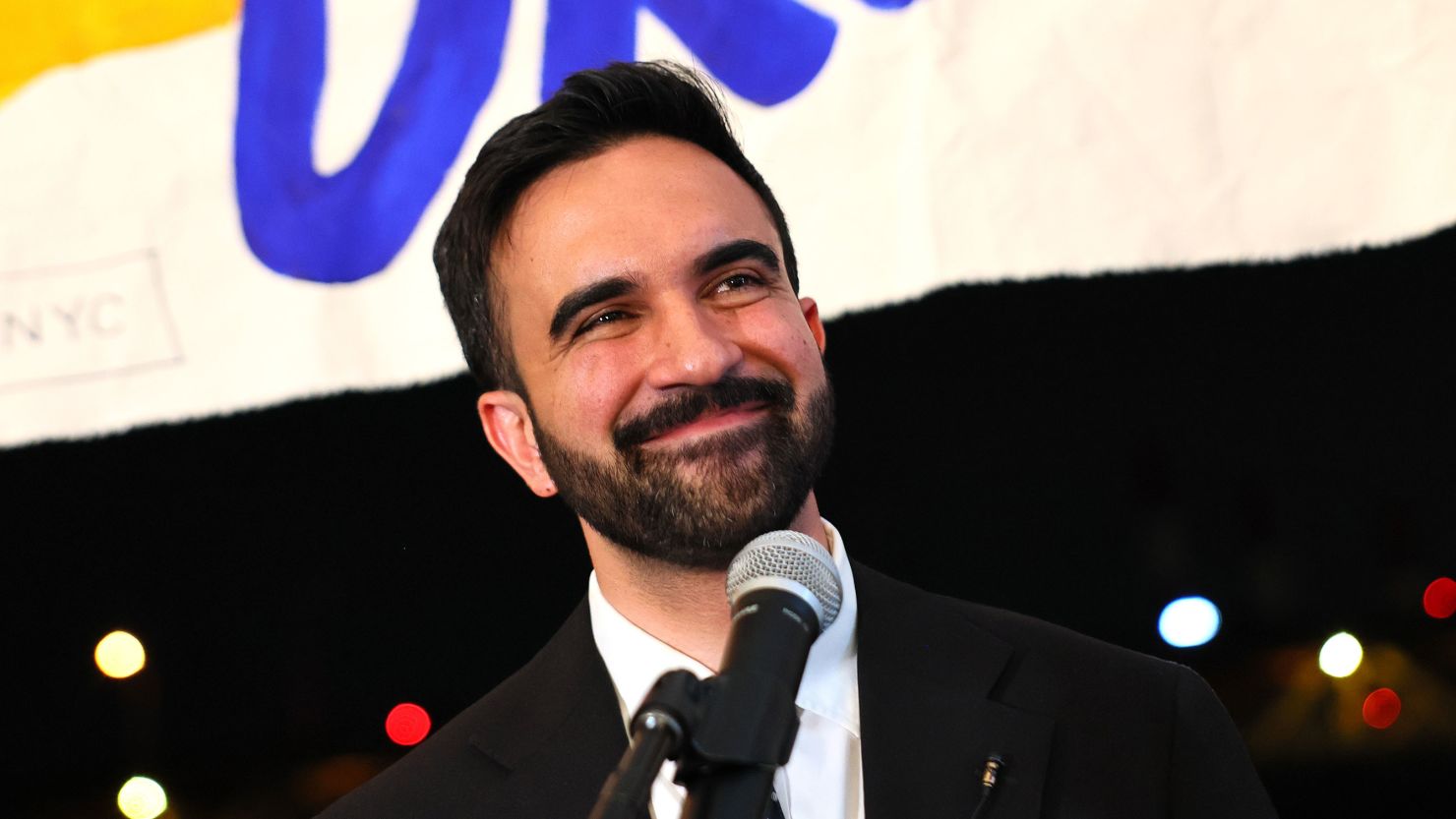
As election day for the next mayor of New York crawls near, Democratic primary winner Zohran Mamdani’s policy is leaving a legacy that stretches far beyond the most populated city in America.
Since his historic win as the Democratic candidate for mayor of New York City, Assemblyman Zohran Mamdani’s Democratic-Socialist views have drawn a range of responses. Aside from racist perspectives, his ideas have uncovered concerns from Americans across the political spectrum. He has proposed many plans for NYC families, such as free bus fares and childcare, but one has received more attention than the others. Many citizens have been forced to spend more time and money traveling to get access to fresh food. Their only alternative is to rely on cheaper options, like fast-food chains or processed foods. If elected, Mamdani promises to create a pilot program that will place government-run grocery stores in every borough of NYC.
Opposition to Solutions
In light of many benefit cuts under the Republican-majority House, Mamdani argues that government-run grocery stores offer more affordable, accessible options for residents of food deserts. To remedy this, Mamdani proposes bringing well-stocked, affordable grocery stores to more neighborhoods. The competition is the biggest challenge, but there is existing legislation to ensure smaller grocers can survive against larger chain stores. Although this may sound appealing to the majority, big plans usually come with equal amounts of opposition. Some people are hesitant to support a politician who claims and promises various administrative changes without proper evidence to support his legislation. Nick Givas of The Western Journal and Annie Gowan of The Washington Post claim that Mamdani is not taking into account previous failures at government-run grocery stores.
Stains Endeavor’s History
KC Sun Fresh
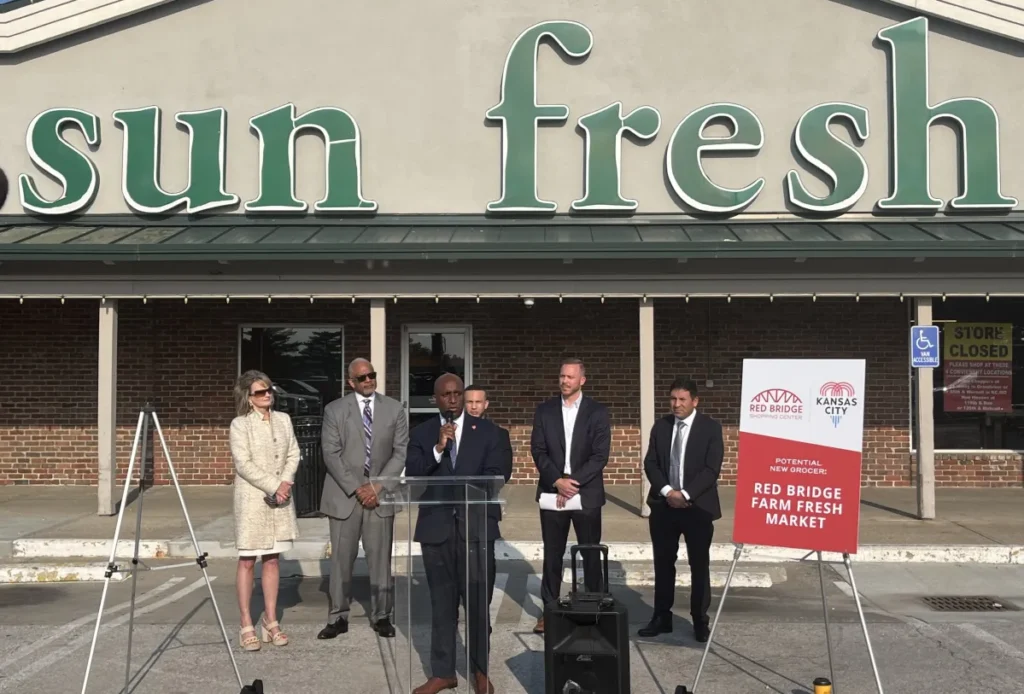
Their thoughts are well-founded. For example, KC Sun Fresh opened in Kansas City, Missouri, in 2018 with the goal to provide a decent supermarket with fresh produce, meals, and other goods to locals. Originally, it was meant to minimize the neighborhood’s transportation needs and to enable commutes to a nearby grocery store. Last week, though, KSHB 41 reporter Alyssa Jackson reported on the state of KC Sun Fresh, after hearing claims that eggs and produce hadn’t been restocked in weeks. Even after millions of dollars were reportedly spent on building and opening the shopping center that includes KC Sun Fresh, the store still stands as a failed money pit. Community Builders of Kansas City, the nonprofit that leases the store’s location, reported it has lost $885,000 over the last year and now serves only about 4,000 shoppers a week, down from 14,000 in years prior. About this, Kansas City local and KC Sun Fresh regular, Taylor, said, “This is pathetic. Every neighborhood deserves a good grocery store. This is the nearest store for six neighborhoods, and this is what we’ve got.” The smell of rotting food and empty shelves across store departments leaves locals worried that the store would close if nothing is restocked or cleaned.
The Baldwin Market
Another example of a failed government-run grocer hails from the town of Baldwin in Jacksonville, Florida. The Baldwin Market opened in 2019 to provide the 1,400 residents with an accessible source of groceries but closed just five years later in March of 2024. Now, locals are required to drive for miles on Interstate-10 to reach the nearest grocery store. Mayor Sean Lynch explained the issues the market faced during its time open, saying, “It was a lot of work to get it going and to see that the idea is great… The biggest problem we’ve had is our buying power… Once it starts costing the town more and more, the writing was on the wall…”
How Would Mamdani’s Stores Rise Up?
After learning from these examples, taking initiative may lead to success. To combat rising costs from competing private grocers and businesses, states like Illinois are both constructing and receiving funding to open non-profit markets and grocers — showing that these grocers are not a complete impossibility. Erion Benjamin Malasi, the Illinois policy and advocacy director for the Economic Security Project, said, “First, we are trying to remove profit from the equation. Second, without that profit drive, a municipal grocery store can compete on prices by wholesaling food.” Without marking food up for the store to make a profit, these grocers would sell food at much lower prices than competing retailers, such as private and corporate grocers.
In 2023, the Illinois Grocery Initiative was passed, with $20 million in equipment upgrades, technical assistance, and grants to grocery stores opening in known food deserts, including public grocers. This past May, Illinois Governor J.B. Pritzker announced $10 million in funding to cover construction and renovation costs for stores in four food-desert communities. This funding would also help cover first-year operational costs, such as wages, utilities, and food inventory. The Progressive reported that one award recipient is a store in Venice, Illinois, and “a downstate majority-Black city of roughly 1,500 residents who currently drive miles to buy fresh food, having not had access to a local grocery store in decades.” This store was granted $2.4 million. This serves as an example of an action that Mamdani and his supporters could mirror to achieve similar goals: opening these stores and keeping them open.
Existing Stores Left High and Dry?
Addressing the concern that small businesses may go under due to larger grocers, we may not have to worry so much. These government-owned grocery stores face many challenges, but the most difficult may be competing with grocery conglomerates such as Kroger and Walmart. The government-run stores would also need to coexist with private bodegas, dollar stores, and delis. The National Grocers Association (NGA) argues that public grocers and smaller businesses do have the means to survive amidst bigger corporations.
In their white papers, the NGA explains how independent grocers already bring benefits to surrounding communities: better produce and food quality, greater employee growth and availability, and greater efficiency. Buying at wholesale prices and using centralized warehousing can bring down costs. Utilizing vacant properties or building new tax-exempt ones are a few solutions. This would help to keep these stores open, while allowing mom-and-pop grocers to thrive alongside them.
Another goal is to create and elect a “Mom-and-Pop Czar,” which would promote small businesses via funding increases to New York’s Business Express Services Teams, who can help with permitting and compliance for
these shops. Revamping the My City Business Portal – which is notoriously dysfunctional – and investing $20 million in services to help mom-and-pop businesses through the city’s complex permitting processes was revealed as part of the “Mom-and-Pop Czar” plan to the New York Daily News back in May.
Almost There
Following Mamdani’s win, the concept of public grocers is coming closer to fruition. While they face opposition and may sound like a challenge, public grocers can make New Yorkers’ lives easier and healthier. Zohran Mamdani has already advocated for issues pertinent to improving the city of New York for the working class. This includes his platform to raise the minimum wage to $30 an hour by 2030, expand outreach resources for the uninsured, provide no-cost childcare, implement fare-free buses, and tax the top 1 percent of wealthy individuals. Now, he is setting out to make public grocery stores a reality. The positives include providing fresh food to those who struggle to afford and find nearby resources, but past examples of government-subsidized grocers that failed occurred in smaller communities and still serve as cautionary tales. Of course, blindly agreeing to allocate millions of city funds to a business plan with a risky history is foolish. The innovation is seen and appreciated; it’s just the execution that leaves many doubtful about the results. Fresno State University sociology professor Justin Myers explains that these stores are an introduction to something new, “helping us reimagine what type of food system we want.”
Acknowledgement: The ideas expressed are those of the individual author.
