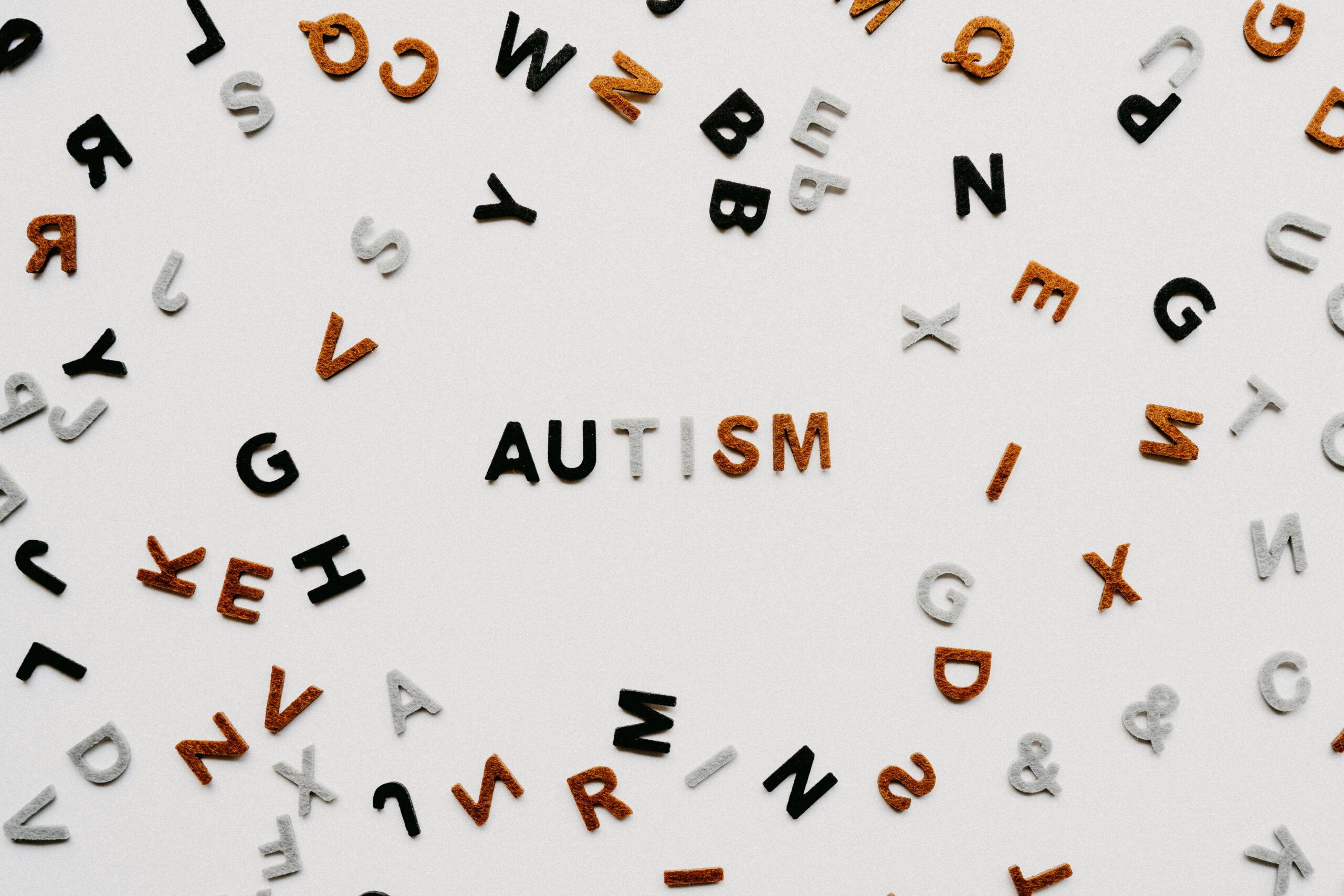
On Monday, September 22nd, President Donald Trump stood at the pulpit in the Roosevelt Room to deliver a speech about autism spectrum disorder (ASD), a neurodevelopmental condition affecting roughly 61 million people globally. Seconds into his speech, Trump referred to the rise in autism diagnoses, which, according to the Centers for Disease Control (CDC), spiked from one in 150 children in 2000 to one in 36 children in 2020, as a “horrible, horrible crisis.” Then, minutes later, he claimed that “there are certain groups of people that don’t have vaccines, and don’t take any pills, that have no autism.” He subsequently turned to his staff and asked, “Is that a correct statement?”
No, it is not a correct statement. Secretary of Health and Human Services, Robert F. Kennedy Jr., briefly mentioned that studies have found an absence of autism diagnoses among isolated groups such as the Amish. Amish families, in fact, do choose to vaccinate their children, but they vaccinate at lower rates than nearby non-Amish communities. A 2011 study found that 68% of 359 Amish families in Holmes County, Ohio, reported having immunized all of their children with at least one vaccine. An International Society for Autism Research study identified 25 Amish children with ASD among a group of 1899 who were screened. Later in the press conference, Trump said, “It [autism] doesn’t exist with the Amish community.” He also said, “This is based on what I feel.” Indeed, everything he proclaimed was based solely on his feelings, not facts. Most concerningly, he believes that cracking down on autism will be the most important thing he has ever done.
I am the middle child of my family, and both of my brothers have autism. The older brother works as a cashier at a small coffee shop that employs exclusively adults with ASD. The mission of that business is to spread kindness and love to its customers. He also works at a grocery store, pushing carts and bagging groceries. After arriving home from a long shift, he’ll do chores around the house before allowing himself some downtime when he usually plays Plants vs. Zombies, reads a book, draws pictures of his friends, or solves an eight-layered Rubik’s Cube. The other day, my mother sent me a video of him karaokeing to the famous Kenny Loggins tune “Danger Zone,” which plays in the 1986 Tom Cruise flick “Top Gun.” He never swears, he doesn’t like beer, but he loves Dr. Pepper. He is currently interested in having a girlfriend. He says he would love to be the partner of someone kind, compassionate, and a great cuddler. He loves movies as well. He’ll sometimes playfully run at me and pretend to be Wolverine with claws unsheathed and ready for an epic battle. The Shawshank Redemption is his favorite movie, and he loves Tom Hanks as an actor. Many people have said he even looks like Hanks. He also loves to call family members to ask them how they’re doing, and he sometimes makes an effort to involve me in the conversations. Even though I often accept his offers grudgingly, I’m always glad to have spoken with whoever my brother called, and I seriously admire the effort he makes to check in with the people he loves.
My younger brother has more severe autism than my older brother, as the condition exists on a spectrum. He watches children’s shows on his iPad and loves to sing, speak, and physically move along with what he is watching. He’s nonverbal, though he can make noises that convey the emotions he feels, and he sometimes can recite a word or two. I can confidently say that I have never seen anyone look more awesome wearing a pair of sunglasses and a bucket hat than my little brother. He looks like a certified “boss,” as his babysitter described it. He also loves the water and sometimes takes impromptu baths when he is bored. He has a few rituals he goes through around the house that help him feel a little more regulated, as he can sometimes become overstimulated by his iPad. He will unplug a chord in one part of the house, replace it with another chord, and then put everything back the way he initially found it. I sometimes wonder if these routines help him find a sliver of control in a world in which the feeling of power is scant for a boy who can’t express himself verbally. The idea that my little brother will experience life in a way that others in the world, who possess the ability to express themselves through language, would find hard to imagine feels poignant to me. Despite his limited verbal ability, however, he feels an enormous range of emotions deeply, just like any other person, and he enjoys the simple pleasures of life, such as snacking on delicious delicacies and listening to his favorite music, just like anyone else. It is not his speech that defines him; it is his kind, gentle, and playful disposition that makes him wonderful.
People with autism are not a “crisis,” and attempting to contain autism is not an “important” endeavor by any stretch. Trump has always been callous and close-minded to those with disabilities, whom he sees as weak, incompetent, inferior, and strange. A Bloomberg poll conducted in 2016 concluded that, of all the controversial statements made by Trump during his campaign thus far, voters were most displeased by his mockery of a reporter named Serge Kovalesk, who has a congenital condition known as arthrogryposis, which causes joint contractures. Trump stood on stage at a South Carolina rally in 2015 and impersonated Mr. Kovaleski by contracting his arms and flailing them around to impersonate the reporter’s disability. Thus, Trump has been fueling a stigmatization, misunderstanding, and fear toward people with disabilities since the start of his political career.
Studies find that the autism community experiences significant stigmatization: a phenomenon whereby a personal attribute is perceived as unfavorable, leaving specific individuals with the reputation of being less valuable to society than others. The condemnation of autism creates shame and fear among a group of people who live with a condition they didn’t choose to have. The same research examines the effects that stigmatization has on people with autism and finds that children on the spectrum often experience fewer friendships during adolescence than their neurotypical peers; adults with autism have a more difficult time finding employment opportunities than those not on the spectrum; and people with ASD experience high rates of bullying and loneliness. Poor public and professional knowledge of autism, traits characteristic of people with autism, and the coupling of unusual behavior with a normal physical appearance (those with Down syndrome are more easily identifiable than those with autism), all contribute to an amplified stigmatization of autism. Societies around the world perceive autism in different ways — some even attribute the condition to supernatural or spiritual imbalances — and diagnostic instruments used to identify autism are heavily concentrated in Western, affluent countries, leaving low- and middle-income nations, where most of the global autistic population lives, insufficiently equipped to diagnose, treat, and support people with autism. In a collection of semi-structured interviews conducted in the United Kingdom, participants, with a lay understanding of ASD, shared their thoughts about autism. Here are some of the interviewees’ responses:
“If they have no social and intellectual skills, they might not be able to do basic skills, shopping, maintaining a job, a career, meeting somebody, and having a family. And they might be rejected by their parents…not being a participant in the human race basically.”
“…and that somebody would have no perceptions as to when they should be quiet, when they should behave in such a way.”
A researcher asked a participant if they believed autism was a mental illness. They said yes. Autism is not a mental illness. Researchers also asked about the first thing that came to mind when people heard the word “autism.” Many participants answered “Rainman.” The same research also cites a study finding that parents with children on the spectrum experience criticism from other adults, especially in moments when their child behaves in a socially peculiar way that others may find irritating, offensive, or strange.
Clearly, there is a need to better inform the public about what autism truly is: not a mental illness, not a condition that would prevent one from holding a job (as evidenced by my brother), and not a failure on the part of a parent or child. I could not provide an adequate, detailed analysis of autism in one article, so I recommend a book titled “Unmasking Autism,” written by Devon Price, a social psychologist diagnosed with autism who also holds a PhD in applied social psychology from Loyola University Chicago. I will, however, share a brief story about a man with autism.
Jacob Barnett began regressing at the age of two, and doctors told his mother that he would likely never learn to tie his shoes or learn to read. By third grade, it was apparent that the doctors had underestimated Jacob. He needed more challenging classes to satisfy his brilliant intellect, so his mother enrolled him in college classes at the age of eight. After a semester’s worth of astronomy, Jacob aced the final. By fifth grade, Jacob dropped out of high school, having taught himself a high-school math curriculum in a matter of weeks. Indiana University accepted him as a student when he was ten years old. He is a prodigy in mathematics, with an IQ score of 170, which is higher than Einstein’s. He gave a TED Talk in 2012, and, within the first few minutes, he said, “My main reason for coming out here today is to do some quantum mechanics!” Today, he is completing a post-doctoral research fellowship in mathematics and quantum physics at the Basque Center for Applied Mathematics (BCAM) in Spain. Interestingly, he is certainly not the only genius with ASD. Institutions dedicated to education and research of autism conclude that several consequential historical figures were likely on the spectrum, including Albert Einstein, Issac Newton, Nikola Tesla, Michelangelo, Ludwig van Beethoven, Emily Dickinson, Thomas Jefferson, Lewis Caroll, and Charles Darwin. Thus, harmful stereotypes and a lack of empathy for people with autism only contribute to greater hardship and isolation for the autism community, and distract from a more expansive and accurate paradigm of the condition.
President Trump dared to connect vaccines and acetaminophen (Tylenol) to rising diagnoses of autism. Studies have found that the increase in autism diagnoses is not necessarily due to any “real increase” in cases, but more so due to better data collection and detection methods, as well as increased awareness. In other words, the number of people with autism has most likely not increased substantially; scientists have simply gotten better at identifying people with ASD. Additionally, there is no reputable research linking vaccines to autism, and the CDC only cites one study on the association between the use of Tylenol during pregnancy and autism, which only concludes that the results warrant further investigation. Study after study confirms that neither acetaminophen nor vaccines causes autism. Trump vehemently exclaimed from the pulpit that mothers should “fight like hell” to not take Tylenol when pregnant. According to the Health and Human Services, if a pregnant mother is experiencing a fever, Acetaminophen is the only safe over-the-counter fever reducer. Fevers pose numerous health risks for pregnant mothers, such as neural tube defects and preterm birth. Mothers, however, according to a 2021 consensus statement, should take Acetaminophen only if its use is indicated by a physician or pharmacist, and should limit their use to small doses.
My mother has given birth to three children. Two of them have autism, and the middle child (me) is neurotypical. She took Tylenol when she was pregnant with each of us, and I ended up with no autism. Indeed, this throws a massive wrench in Trump’s claims about Tylenol. My mother also decided to have my older brother’s vaccines administered all at once, while doctors administered my younger brother’s vaccines one at a time. Trump claimed that overwhelming a “beautiful baby’s” system with “a vat of 80 different vaccines” would ruin the child’s health, and that mothers should administer immunizations over a more extended period of time, saying to wait until the child is at least 12 years old to inject them with the Hepatitis B vaccine. The reality is quite the opposite. A 2024 report published by The Lancet found that vaccines have likely saved over 154 million lives since 1974, with 95 percent of these lives saved being those of children under the age of five. My little brother had his vaccines administered over a more extended period of time than my older brother, and yet, he has a more severe form of autism than my older brother. Studies have conclusively determined that administering numerous vaccines to a child does not adversely affect or compromise their immune system, and certainly does not cause autism. My family is living proof that Trump’s claims about a, in his words, “very increase risk of autism”, and that “it can only good happen” if mothers don’t take Tylenol during pregnancy, are entirely false and predicated on a preposterous, inaccurate understanding of the condition.
Speaking on a personal level, my brothers are not a crisis to the world. They are compassionate, kind, and loving people with beautiful minds. I am thankful every day I have the brothers I have. To hear the president, a man who should always lead with empathy and hold sympathy for all, contribute further to society’s misunderstanding and apprehension of people with autism, sickens me. My brothers, in my mind, are greater men than Trump has ever been. Autism is not something to be ridiculed and eradicated from society, an idea that stems from the exact type of eugenicist thinking that groups such as the Nazis adopted before killing millions. It is something to be understood, accepted, and embraced by society. Trump’s claims about autism are false and dangerous, and my family is proof of that. The next time Trump makes a false statement about autism, I’d love to see him solve an eight-layered Rubik’s Cube with my brother, or complete a doctoral degree in astrophysics, or, more simply, recognize the dignity of other people.
Acknowledgment: The ideas expressed in this article are those of the individual author.