

January 2025 marked the hottest January on record. Global warming, once projected to unleash its worst effects in a century, may now strike within 20-30 years. NASA’s James Hansen, who warned of an overheating planet in 1988, notes that temperatures have risen faster than expected over the last 15 years. The fallout includes floods, droughts, heat waves, and the potential collapse of the Atlantic Meridional Overturning Circulation (AMOC), amplifying hazards for humanity.
The AMOC is an ocean system that circulates warm water northward and cold water southward in the Atlantic, regulating global climate. However, it risks shutting down due to global warming’s rapid Arctic melt, which floods the North Atlantic with freshwater, disrupting the flow. This could cause sudden sea level surges along the U.S. East Coast, crop-destroying extremes in Europe, and dramatic cooling there, while equatorial waters stagnate. Broader disruptions may fuel more intense heat waves and droughts, floods, storms, heat-related diseases, and accelerated sea level rise, endangering lives, agriculture, and ecosystems.
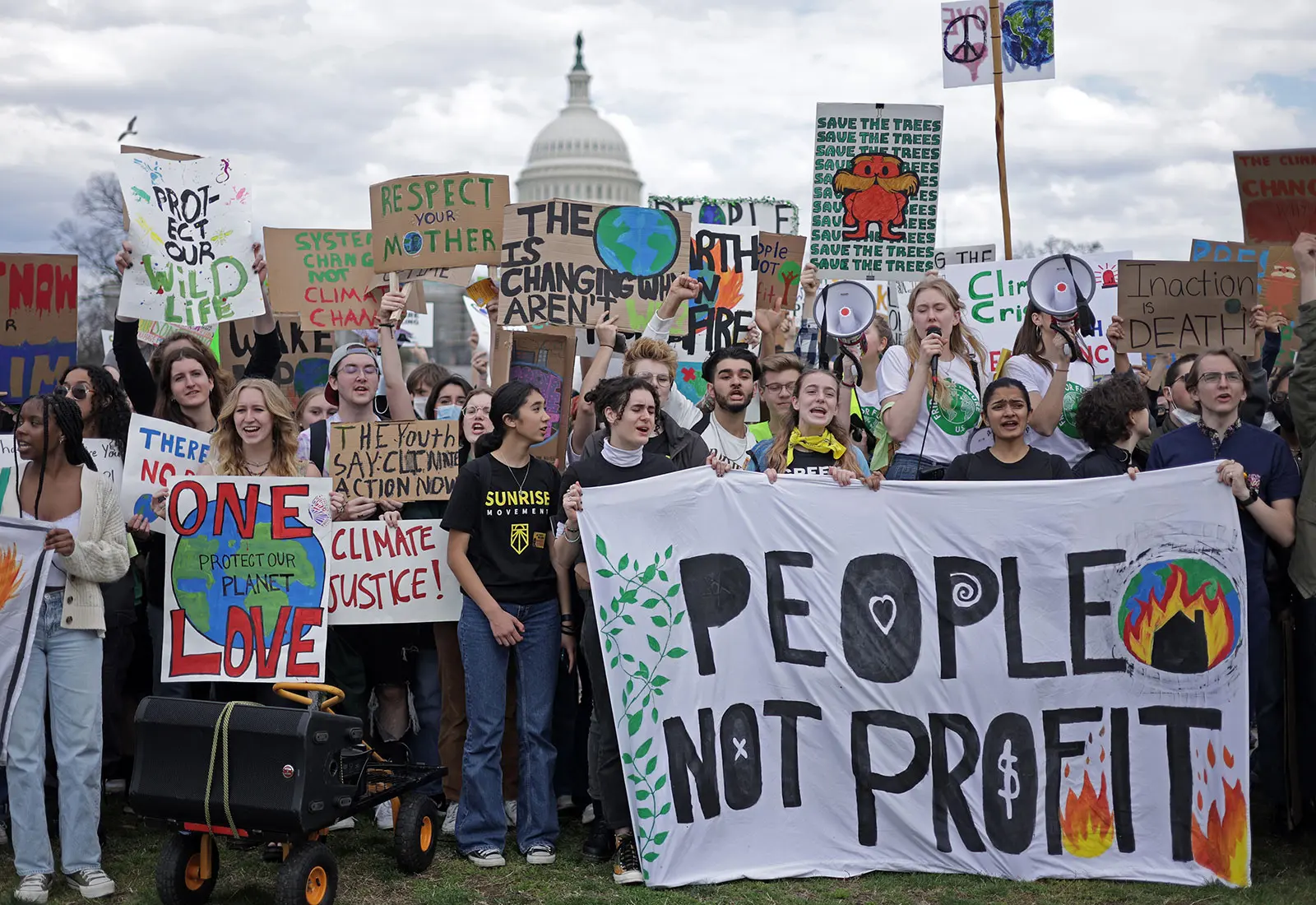
Experts insist the fix is immediate cuts in greenhouse gas emissions. Hansen remains hopeful, citing young people’s power to sway politics without special-interest money.
However, is the U.S. government doing enough? Under the Trump administration in 2025, the answer is a resounding no—it is actively backpedaling.
The U.S. withdrew from the Paris Agreement in January, repealed limits on power plant emissions (the second-largest greenhouse gas source), reversed the EPA’s endangerment finding on greenhouse gases, and slashed subsidies for renewables, electric vehicles (EVs), and solar grants.
Renewable investments dropped 36% in the first half of the year, while fossil fuel production was prioritized via executive orders such as “Unleashing American Energy.”
Similarly, funding for climate science and disaster preparedness was gutted, and projections now show only 19-30% emissions cuts by 2030 from 2005 levels—far short of what is needed and worse than prior trajectories. Even with some ongoing reductions (15% over the past decade, driven partly by market shifts), global carbon dioxide (CO2) emissions reached a record high in 2025, underscoring the role of U.S. inaction in the crisis. Independent assessments rate U.S. efforts as “critically insufficient” for limiting warming to 1.5°C.
These rollbacks are shortsighted, prioritizing short-term energy gains over survival.
To turn the tide, the U.S. must urgently reinstate strong federal targets, like cutting emissions 50% by 2030, by restoring Inflation Reduction Act incentives for clean energy and EVs. Next policies should include streamlining permitting for renewables and nuclear power to meet rising demands from AI and data centers, while expanding climate-smart agriculture in the Farm Bill. States should lead via alliances pledging deeper cuts, and youth activism must pressure for bipartisan reforms.
Without this, AMOC’s collapse and worse loom—America cannot afford to drill its way out of disaster.
