

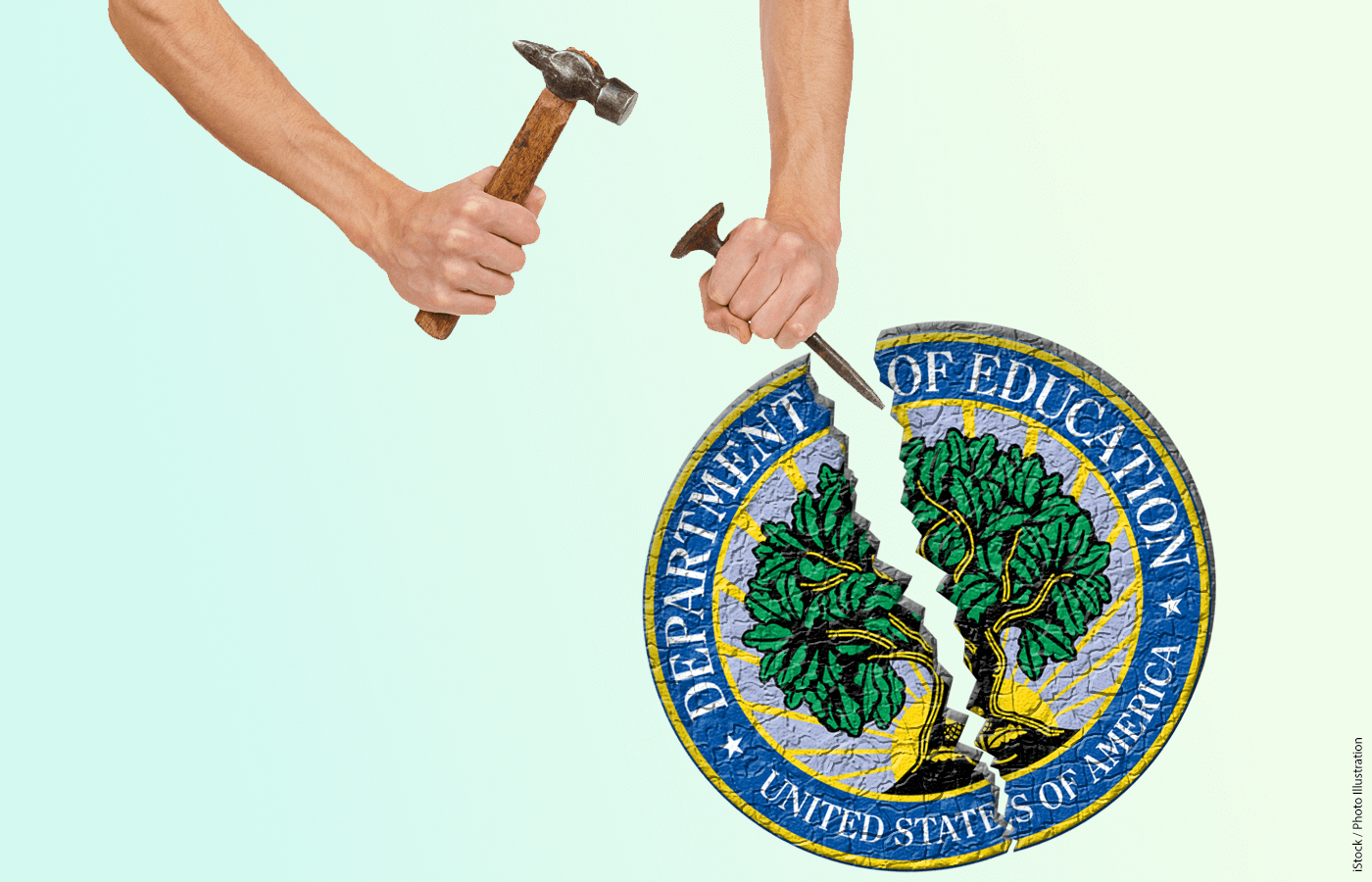
In recent months, the Department of Education has been under question by the current administration and even by its own secretary, Linda McMahon. Now, many are beginning to seriously question if the DOE is even needed at all.
The Department of Education is a federal cabinet-level agency established in 1979 by President Carter that manages federal financial aid, collects data, and enforces civil rights laws in schools. However, many claim that the department’s influence has not helped the American education system, as prices continue to rise while students’ comprehension and understanding of basic skills have declined.
The steadily increasing federal spending has supported a surge in school hiring of non-teaching administrative staff. And since the department’s creation, the number of non-teaching employees has increased by 709%, according to The National Assessment of Educational Progress (NAEP) Long-Term Trend Assessment.
Additionally, since the department’s creation, the cost for colleges has risen significantly, with tuition fees nearly tripling since the 1990s. All the while, federal subsidies have skyrocketed, with spending on student loans rising 328% over the last 30 years.
During 2020, 60% of bachelor’s students completed their four-year degree in six years. After graduation, one-third of these students are underemployed and working jobs that do not require a bachelor’s degree. Employers have also reported over the years that recent graduates are entering the workforce ill-prepared.
But where did all of this begin?
Prior to 1979, American public education was considered the best in the world. However, President Carter, in an attempt to restore his brand after becoming very unpopular due to gasoline shortages and crippling inflation, created the DOE as a new government department, gave it more money, and threatened to withhold funding from schools that did not comply with the bureaucracy. The Department of Education was created primarily to help Carter’s presidency, the Democratic Party, and unions, rather than to teach its own students.
It’s well known now that teachers and the democratic party work hand in hand, and the teachers’ union, in practice, only serves itself. Even F.D.R. considered these government unions “unthinkable and intolerable,” because when these unions go on strike, it is not against the government, it is against the taxpayers. Despite the taxpayers financing the education system, they do not get to decide how it is run.
Additionally, the department has made a point of focusing more on civil rights movements than on education. Currently, the US ranks 28th in math, 36th in literacy, and only 13% of students are proficient in US history. These statistics are alarming because protections for civil rights for students predate the agency’s creation, meaning they would already exist without the DOE. Despite these failings, the US spends around $18,000 per student each year, meaning federal spending has more than doubled since the department’s establishment. Yet, students’ test scores remain the same, as schools do not seem interested in teaching reading, writing, and math. Rather, the unions are gaining more jobs, the Democrats are gaining more votes, and the department can instill more democratic ideals in American youth.
The DOE has been siding with the Democratic Party since its inception, leading many to call out its corruption. Some argue that America can fund its schools by providing funds to the states through the Treasury Department, making the DOE unnecessary.
In March of 2025, President Trump signed an executive order calling for the closure of the DOE. The order cited bureaucratic inefficiency and negative student performance. Additionally, the Department of Education’s Secretary, Linda McMahon, has expressed her desire to significantly limit the department’s authority, return education to the states, and empower parents to determine their own children’s education.
In a press conference, McMahon defended the dismantlement of the DOE, stating:
“Our final mission as a department is to fully empower states to carry the torch of our educational renaissance. Education is local. It should be overseen locally by those who best know local needs.”
“We are not ending federal support for education. We are ending federal micromanagement.”
Some of the offices that could be moved out of the agency include the Office for Civil Rights, the Office of Special Education and Rehabilitative Services, the Indian Education Program, the Office of Elementary and Secondary Education, and the Office of Postsecondary Education.
Recently, McMahon launched the “Returning Education to the States Tour,” spotlighting the administration’s goal to reduce government influence, stating:
“I think every school system needs to work within its own community to decide what curriculum works best there. What are the ways that their students can learn? And that’s why it’s imperative that education be returned to the states.”
She also argued that the months-long government shutdown only further proved that the Education Department is unnecessary. She explained that teachers and students do not need Washington bureaucrats micromanaging their classrooms.
Overall, the Department of Education has proven itself inefficient, unnecessary, and failing at its main goal: educating America’s youth. If the government is truly concerned about young people and their future, it would be in their best interest to dismantle the DOE and return education to the parents and the states.